Movie
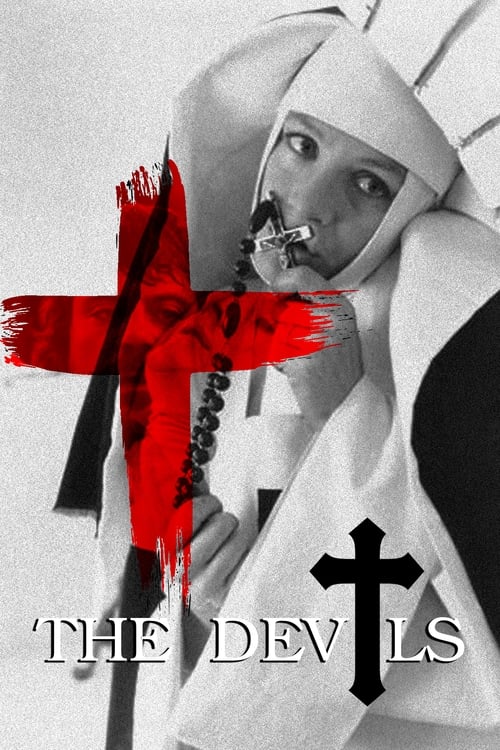
The Devils
Cultural messages
The System Is Rigged
highThe Catholic Church and French state — institutions that should deliver justice — are revealed as wholly corrupt tools of political power. Grandier, a priest, is framed by his own Church hierarchy at Laubardemont and Richelieu's direction; the trial is explicitly rigged to serve political ends (demolishing Loudun's walls). Every attempt to work within the system fails: Grandier's legal challenge to Laubardemont is ultimately overridden, his refusal to confess under torture changes nothing, and the show trial convicts him regardless. Mignon's public declaration of Grandier's innocence exposes the conspiracy within the official body, but too late. Justice never arrives — a darker inversion of the trope's fifth signal — and the true political objective is achieved the moment Grandier is executed.
About this message: Institutions meant to protect people — governments, corporations, law enforcement, the justice system — are depicted as corrupt, incompetent, or actively harmful. Heroes must work outside official channels.
Movies that share these tropes




Full plot (spoilers)
Set in 1634 France, The Devils follows Father Urbain Grandier, a charismatic but dissolute Catholic priest in the fortified town of Loudun. Cardinal Richelieu, seeking to consolidate royal power across France, wants all provincial city fortifications demolished — but Loudun's walls are protected by a prior promise from King Louis XIII to the town's Governor, blocking Richelieu's plans. When Baron de Laubardemont arrives with orders to raze the walls, Grandier successfully forces him to wait for direct royal confirmation, making powerful enemies in the process. Meanwhile, Sister Jeanne des Anges, the hunchbacked abbess of the local Ursuline convent, has developed a fervent sexual obsession with Grandier, fantasizing about him in sacrilegious visions. Her jealousy intensifies when she learns that Grandier has secretly married Madeleine de Brou, a young noblewoman with whom he has also been conducting an affair. Canon Mignon, aware of Grandier's personal scandals, exploits Jeanne's obsession and emotional instability to manipulate her into accusing Grandier of witchcraft and causing demonic possession among the convent's nuns. With Grandier away from Loudun, Laubardemont — who has every political reason to destroy Grandier — summons Father Barre, an inquisitor notorious for his violent and theatrical exorcism methods. The alleged possessions escalate into a public spectacle: the nuns engage in frenzied, sexually uninhibited behavior during mass exorcisms, stripping naked and performing blasphemous acts before crowds of onlookers, with the episode descending into grotesque sacrilege. An attempt to test the possessions using a purportedly holy relic fails to end the hysteria, further feeding the frenzy. When Grandier returns to Loudun with Madeleine, both are arrested. Under torture — including the crushing of his legs — Grandier refuses to confess to witchcraft or to name accomplices, maintaining his innocence throughout. After a rigged show trial serving both religious and political agendas, he is condemned and burned alive at the stake. As Grandier dies, Laubardemont proceeds to demolish Loudun's walls — the true political objective all along. In the aftermath, Barre departs to pursue witch-hunts elsewhere. Mignon, overcome by guilt and publicly declaring Grandier's innocence, is institutionalized. The obsessed Jeanne is left clutching Grandier's charred bones as a relic of her twisted devotion. Madeleine, widowed and dispossessed, walks out alone through the rubble of the destroyed city.
Sources: Wikipedia