Movie
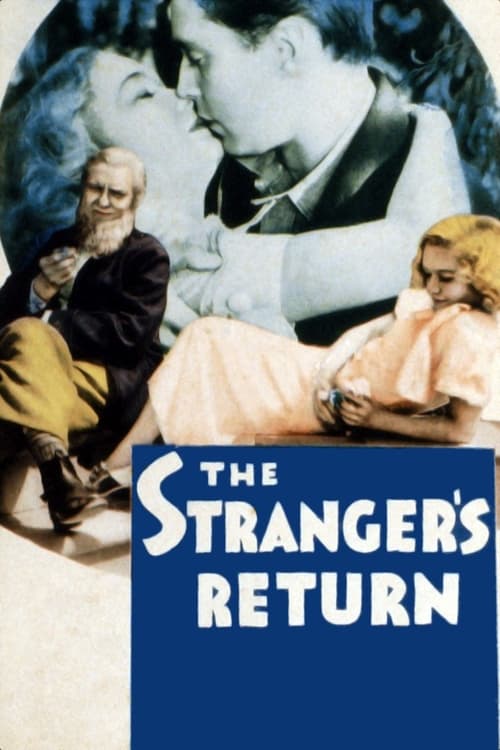
The Stranger's Return
Narrative tropes
A Parent's Shadow
mediumLouise is entirely defined by her relation to Grandpa Storr — a grandfather she has never met yet whose legacy determines the plot's outcome. Inherited responsibility (the farm) creates the central conflict with scheming relatives. The relatives' reserved politeness reflects Grandpa's standing. Louise's resolution is choosing to continue his legacy on her own terms, managing the farm with loyal farmhand Simon rather than returning to city life.
About this trope: A character must grapple with the legacy of their parents or predecessors — living up to high standards, running from expectations, atoning for inherited sins, or forging their own path.
Cultural messages
Power Means Duty
highThe film's stated moral is that duty and responsibility override romantic fulfillment. Louise inherits a significant estate (resources/status) and accepts the obligation to manage the ancestral farm rather than return to New York. Guy sacrifices romantic connection with Louise to honor his marriage vows. Both arcs hit E2 signals: personal happiness sacrificed for duty, an event (Grandpa's will) that explicitly frames inheritance as obligation, and heroes whose identities are defined by accepting duty rather than seizing the power itself.
About this message: Those gifted with extraordinary abilities, wealth, or status have a moral obligation to use them for others — and the weight of that duty can be crushing. Privilege creates obligation.
Movies that share these tropes






Full plot (spoilers)
Louise Storr, a recently divorced New Yorker, travels to Iowa to visit her paternal grandfather, an elderly patriarch named Grandpa Storr (Lionel Barrymore) whom she has never met. He presides over a large farm where various distant relatives reside, and they receive Louise with reserved politeness. Louise meets Guy Crane (Franchot Tone), the educated, married owner of the neighboring farm, and the two form a bond over shared intellectual interests in art and literature. His wife Nettie, however, is a warm and guileless woman who has never left the farm and becomes a genuine friend to Louise, complicating any romantic possibility. Grandpa Storr begins displaying signs of senility — apparently believing the Civil War is still ongoing — which prompts his scheming relatives, led chiefly by his daughter Beatrice, to seek a legal declaration of incompetency in order to seize control of the farm and his finances. His apparent mental decline, however, turns out to be a deliberate ruse to expose their greed. With medical examiners present as witnesses, he alters his will to disinherit the scheming relatives and leave the farm to Louise, then dies peacefully shortly afterward. In the end, Guy chooses to honor his marriage vows: he announces he and his wife will relocate to the city, where he will teach agriculture, effectively ending his romantic entanglement with Louise. Louise accepts the inheritance and commits herself to managing the ancestral farm, aided by loyal farmhand Simon. The film deliberately withholds a conventional happy ending, instead offering a morally complex resolution in which duty and responsibility override romantic fulfillment.
Sources: Wikipedia, IMDb