Movie
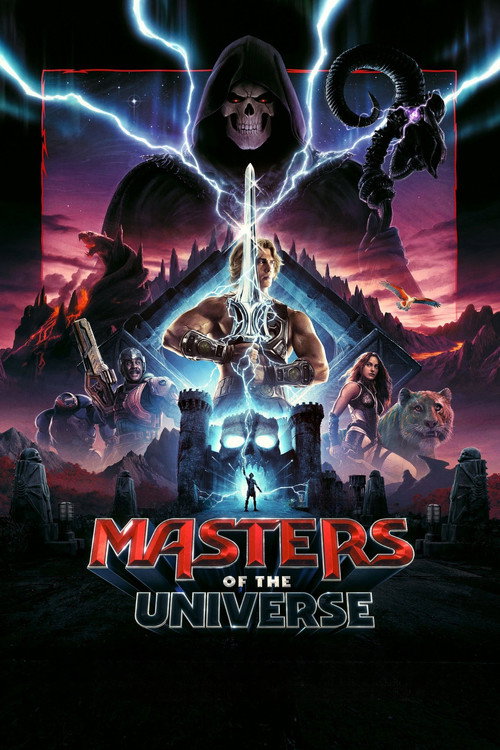
Masters of the Universe
Narrative tropes
Rebels vs. The Empire
highSkeletor has conquered all of Eternia, subjugating its population under cruel dominion. Adam, Teela, and Man-At-Arms form a small resistance—framed unambiguously as heroic—fighting to reclaim the kingdom. The regime is portrayed as evil (skull-faced, brutal), the rebels as brave and righteous, and the entire second half is their battle against overwhelming odds.
About this trope: A small outmatched group rises up against a massive oppressive regime or institutional power. The rebellion is framed as morally righteous.
One Hero Changes Everything
highEternia fell and remains subjugated until Adam returns. No collective resistance could stand against Skeletor—only He-Man, the single individual whose unique power and humanity can turn the tide. The population is passive under occupation; Adam's personal transformation is the decisive factor, and his absence meant total defeat for his world.
About this trope: One exceptional individual matters more than institutions or collective action. Problems affecting millions are solved by a single remarkable person. Everyone else is passive.
Violence Gets Results
highAdam's corporate HR instinct to 'de-escalate' is played for comedy and clashes with Eternia's warrior culture—non-violence is ineffective and laughable in this world. The film pivots to extended battle sequences as the resolution mechanism. He-Man's combat ability is the primary tool for saving his family and defeating Skeletor's forces; the story never questions this framing.
About this trope: The central conflict is ultimately resolved through physical force rather than negotiation, diplomacy, or systemic change. Talking fails; fighting works.
Born Special
highAdam's power and destiny flow entirely from birthright: he is the son of King Randor, and the Power Sword is specifically his by inheritance. The sword signals his presence, identifies him as the one who can wield it, and grants a physical transformation unavailable to anyone else. His greatness is innate—the narrative frames him as the chosen heir, not a self-made hero.
About this trope: Certain characters are inherently special by birth, blood, genetics, or prophecy — not through effort or choice. Greatness is innate, not earned.
A Parent's Shadow
highAdam is defined relationally from the opening scene—son of the captured king, heir to conquered Eternia, child of an Earthborn queen. His parents' imprisonment is the central conflict, his father's lost kingdom is his inheritance, and his entire arc is about accepting versus hiding from that legacy. Reclaiming his birthright and title constitutes his personal resolution.
About this trope: A character must grapple with the legacy of their parents or predecessors — living up to high standards, running from expectations, atoning for inherited sins, or forging their own path.
Cultural messages
Be Yourself
highAdam suppresses his alien/royal identity and lives anonymously in Oklahoma, baffling coworkers who hear his 'alien heritage' stories. The sword-raising declaration ('I have the power') is the explicit self-acceptance transformation. The film thematically anchors the power of He-Man in Adam's authentic humanity—courage and compassion—not in the sword itself.
About this message: A character hides or suppresses their true identity to conform, then finds strength and happiness by embracing who they really are. Authenticity is the real superpower.
Power Means Duty
mediumAdam has been gifted with the most powerful birthright on Eternia yet spent 15 years living anonymously while his world suffered under Skeletor. The film frames his acceptance of the He-Man mantle as a moral reckoning: Eternia's oppression is the consequence of unclaimed duty, and his transformation is presented as shouldering an obligation rather than seizing a prize.
About this message: Those gifted with extraordinary abilities, wealth, or status have a moral obligation to use them for others — and the weight of that duty can be crushing. Privilege creates obligation.
Family Is Everything
mediumAdam's parents were captured in Skeletor's invasion—their rescue is the explicit emotional goal driving the second half. Adam abandons his anonymous civilian life the moment the sword reconnects him to his family's world. Freeing his captured parents and reclaiming the family's kingdom is framed as the resolution of his entire arc.
About this message: Family bonds — biological or found — are ultimately what saves the day, provides meaning, and matters most. Characters who stray from family suffer; those who return are rewarded.
Movies that share these tropes



Full plot (spoilers)
Masters of the Universe opens with a flashback to Eternia, a fantastical alien world ruled by King Randor. Young Prince Adam, son of Randor and his Earthborn queen Marlena, trains alongside general Duncan and his daughter Teela. When the skull-faced warlord-sorcerer Skeletor launches a devastating invasion, Eternia falls and Adam's parents are captured. A sorceress spirits the young prince away to Earth—his mother's home planet—accompanied by the Sword of Power (the Power Sword). During the cosmic journey, Adam and the sword are separated. Fifteen years later, adult Adam is living an anonymous life in Oklahoma City, working a mundane HR office job while obsessively searching online for the lost sword. He's well-meaning but awkward, a fish out of water who tells baffled coworkers about his alien heritage. Adam eventually tracks the Power Sword to a local comic book shop and steals it in a comedic sequence. Recovering the sword sends out a signal: Skeletor's bestial enforcer Beast-Man is dispatched to Earth to retrieve it, while Teela—now a seasoned warrior—also arrives on Earth in response. Teela intercepts Beast-Man, and the film's first major battle plays out on Earth soil. Adam and Teela reunite as old friends and together portal back to Eternia, which they find shattered and subjugated under Skeletor's cruel dominion. On Eternia, Adam joins Teela and Duncan (Man-At-Arms) to mount a resistance. Adam's corporate instincts—attempting to 'de-escalate' rather than fight—clash comically with Eternia's warrior culture. As Adam reclaims the Sword of Power and raises it aloft with the declaration 'I have the power,' he undergoes a physical transformation into He-Man, the most powerful man in the universe. The film frames this transformation thematically around Adam's humanity—his courage and compassion—rather than raw physical might. When Adam asks why Skeletor is so evil, Teela's dismissive reply ('He has a skull for a face') signals the film's approach to its villain: Jared Leto's Skeletor is a flamboyant, campy antagonist without elaborate psychological backstory. The second half of the film pivots to extended action sequences on Eternia as He-Man, Teela, and Man-At-Arms battle Skeletor's forces in an effort to free Adam's family and reclaim his birthright. Adam's twin sister She-Ra appears only briefly, her role left largely open for a sequel. The film ends with post-credits scenes teasing future installments. Specific details of the climax and resolution were withheld by reviewers at time of writing, as the film had just been released.
Sources: Wikipedia, Screen Rant, Variety, Nerdist