Movie
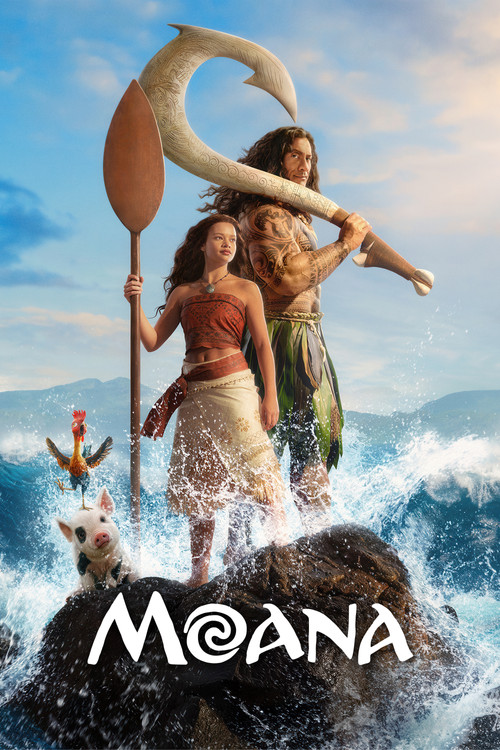
Moana
Narrative tropes
Nature Fights Back
highMaui's theft of Te Fiti's heart is framed as exploitation of nature that directly causes ecological collapse (fish dying, coconuts rotting on Motunui) and unleashes Te Kā. All five signals fire: the theft is the explicit cause of the crisis; Te Kā attacks with apparent intentionality; ecological collapse drives the entire plot; Grandmother Tala explains the causal chain to Moana; and resolution requires physically restoring Te Fiti, healing all darkened islands.
About this trope: Humanity's exploitation or destruction of the environment triggers catastrophic consequences — nature retaliates through disasters, plagues, animal attacks, or ecological collapse, as if the planet itself is punishing human arrogance.
Born Special
highThe ocean chooses Moana as an infant — not through merit but by fate. Her lineage as a descendant of voyagers is presented as the source of her calling. She is explicitly 'the one' the ocean selected; no amount of training qualifies anyone else. The hidden heritage of wayfinding (revealed by Tala) is the ancestry-as-power moment, and her unique qualification is confirmed when the ocean entrusts only her with the heart.
About this trope: Certain characters are inherently special by birth, blood, genetics, or prophecy — not through effort or choice. Greatness is innate, not earned.
A Parent's Shadow
highMoana's entire internal conflict is defined by her relationship to her father Chief Tui: she is expected to carry on his leadership and his policy of isolation. The suppressed voyaging heritage is an inherited secret that reshapes her understanding of her duty. Her arc requires choosing between the version of legacy her father modeled and the older ancestral identity; the resolution redefines the chieftess role to reconcile both.
About this trope: A character must grapple with the legacy of their parents or predecessors — living up to high standards, running from expectations, atoning for inherited sins, or forging their own path.
One Hero Changes Everything
highA world-threatening crisis (darkness spreading across the ocean) is resolved entirely by Moana's solo action at the climax — Maui abandons her, no collective response exists, and the islanders of Motunui are unaware the threat even exists. The ocean designated her specifically; her compassionate insight (recognizing Te Fiti in Te Kā) is the decisive factor no one else possesses or attempts.
About this trope: One exceptional individual matters more than institutions or collective action. Problems affecting millions are solved by a single remarkable person. Everyone else is passive.
Humans Never Give Up
mediumAfter Maui cracks his hook and retreats, Moana is alone before Te Kā with no allies and no plan — surrender is the rational option. She refuses to quit. Her grandmother's spirit renews her resolve, and the emotional climax of the film is this decision to press forward alone rather than the physical restoration itself.
About this trope: Facing impossible odds, humans endure, adapt, and find reasons to keep going. Resilience and refusal to surrender is humanity's defining and most admirable trait.
Cultural messages
Be Yourself
highMoana suppresses her deep pull toward the ocean to conform to her father's prohibition on leaving the reef. Conformity is shown as painful and stifling. Sailing beyond the reef is her self-acceptance moment. Her father ultimately endorses her identity as a voyaging chieftess, and her authentic calling as a wayfinder is precisely what makes her capable of restoring Te Fiti.
About this message: A character hides or suppresses their true identity to conform, then finds strength and happiness by embracing who they really are. Authenticity is the real superpower.
Power Means Duty
highThe ocean selects Moana from infancy and that gift carries an explicit obligation: restore Te Fiti's heart or the world continues to die. She initially tries to fulfill her father's vision of chieftainship before accepting the call. Grandmother Tala directly frames her connection to the ocean as a responsibility. Personal safety and family closeness are sacrificed, and her final identity as chieftess is inseparable from her duty as wayfinder.
About this message: Those gifted with extraordinary abilities, wealth, or status have a moral obligation to use them for others — and the weight of that duty can be crushing. Privilege creates obligation.
Movies that share these tropes


Full plot (spoilers)
On the Polynesian island of Motunui, the demigod Maui steals the heart of Te Fiti, a living island goddess, intending to grant humanity her creative power. Robbed of her heart, Te Fiti crumbles and transforms into Te Kā, a wrathful volcanic demon. Maui loses both the heart and his magical fish hook in the ensuing chaos, and darkness begins to spread across the ocean. A thousand years later, the ocean itself selects Moana, daughter of Chief Tui of Motunui, as the one destined to restore the heart and save the world. Moana's grandmother Tala reveals the islanders' hidden heritage as great voyagers — knowledge the chief has suppressed — and gives Moana the recovered heart before dying. Driven by duty and the ocean's call, Moana sails beyond the protective reef of Motunui for the first time, accompanied only by her bumbling rooster Heihei. She tracks down the boastful, shape-shifting demigod Maui and eventually convinces him to join her quest. Their journey is treacherous: they survive an assault by the Kakamora, a tribe of fierce coconut-armored pirates, then descend into Lalotai, the Realm of Monsters, where they outwit the glittering giant crab Tamatoa and recover Maui's enchanted fish hook. As they sail onward, Maui teaches Moana the art of wayfinding, and the two grow from reluctant allies into genuine friends. At the volcanic gates of Te Fiti, Te Kā attacks savagely, cracking Maui's hook. Overwhelmed, Maui abandons Moana and retreats. Alone and seemingly defeated, Moana is visited by the spirit of her grandmother Tala, who renews her sense of purpose. In a moment of clarity, Moana recognizes that Te Kā and Te Fiti are the same being — the goddess driven to rage and destruction by the theft of her own heart. Moana calls to Te Kā with compassion rather than force, calming the demon long enough to place the heart back in her chest. Te Kā dissolves and Te Fiti is reborn as an avatar of life, healing the darkened islands and restoring the ocean's bounty. Maui receives his fish hook, renewed and whole. Moana returns to Motunui, where she is formally coronated as chieftess in a ceremony that reclaims the islanders' voyaging identity. The film closes with Moana leading her people out beyond the reef as wayfinders once more. The live-action version adds a new coronation scene and a closing credits song not present in the 2016 animated original; otherwise the narrative follows the animated film very closely, described by critics as nearly a shot-for-shot remake.
Sources: Wikipedia, IMDb, Screen Rant, WebSearch synthesis (Just Jared, Comic Basics, RIOTUS, Taipei Times)