Movie
The Violinist
Narrative tropes
Humans Never Give Up
mediumFei refuses to accept Kai's post-war disappearance and sustains a decades-long search even as the trail grows cold — a situation where giving up would be entirely rational. The mutual hope of reuniting explicitly sustains both protagonists through the horrors of occupation. The film's emotional climax is not a victory but the defining question of whether to continue the search, and the journalist's framing of Fei as a celebrated figure validates the heroism of her persistence.
About this trope: Facing impossible odds, humans endure, adapt, and find reasons to keep going. Resilience and refusal to surrender is humanity's defining and most admirable trait.
Rebels vs. The Empire
highThe Japanese occupation of Malaya/Singapore functions as a classic empire-vs-resistance backdrop: an overwhelmingly powerful occupying force oppresses a civilian population ('horrors of occupation'), a small Allied spy network operates against impossible odds, Kai's decision to abandon his music career and join the resistance is framed as a morally righteous sacrifice, the occupation is depicted as cruel and dangerous (Fei must navigate 'dangers of life under Japanese military rule'), and the regime is ultimately defeated when the war ends. All core detect criteria and four of five signals are met, though this pattern serves as structural context for the central love story rather than its primary focus.
About this trope: A small outmatched group rises up against a massive oppressive regime or institutional power. The rebellion is framed as morally righteous.
Movies that share these tropes






Full plot (spoilers)
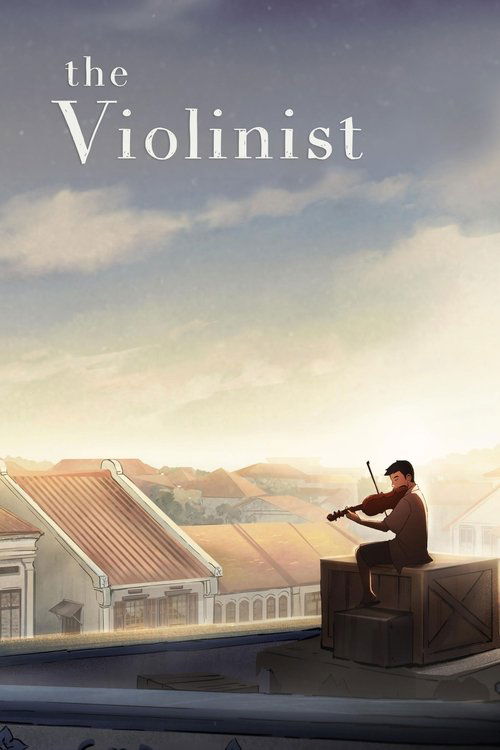
Framed by a present-day interview in which an elderly, celebrated violinist named Fei is asked by a Spanish journalist named Hugo Fernandez why she has played the same violin for more than sixty years, the story unfolds in flashback across roughly eight decades of Singaporean and Malayan history. The main narrative begins in 1932 in British Malaya. Kai, an orphan taken in by a servant of Fei's family, is discovered to have perfect pitch. The two children grow inseparable, bonding over their shared passion for the violin, and in time become romantic partners as well as musical collaborators, both aspiring to careers as concert violinists. Their world is shattered when Japan invades Malaya in late 1941 and subsequently occupies Singapore. The two are forced onto divergent paths: Kai chooses to abandon his music career and join the anti-Japanese resistance, working as a spy for Allied forces, while Fei remains in occupied Singapore, safeguarding Kai's violin and navigating the dangers of life under Japanese military rule. Their mutual hope of one day playing together again sustains both of them through the horrors of occupation and war. When the war ends, however, Kai does not return and his whereabouts are unknown. Refusing to accept his disappearance, Fei embarks on a decades-long search, touring as a violinist across Southeast Asia and using every performance as an opportunity to seek news of him. As years stretch into decades and the trail grows cold, Fei is ultimately confronted with a defining question: whether she must relinquish her search and discover her own musical voice to give meaning to the years that remain to her. The film presents her resolution to that question through the frame of her conversation with the journalist, with Kai's violin — the one she has carried for sixty years — at the heart of the answer.
Sources: Wikipedia (stub), NowToronto TIFF review, Rotten Tomatoes, Web search aggregated descriptions (Baidu wiki, search snippets)