Movie
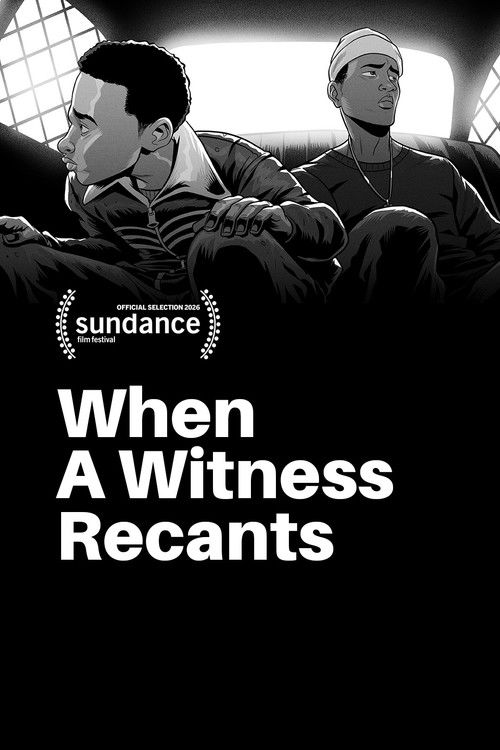
When a Witness Recants
Cultural messages
The System Is Rigged
highThe Baltimore Police Department and criminal justice system — institutions meant to protect — are shown as corrupt and complicit: lead detective Kincaid coerced child witnesses through threats of violence and imprisonment, long-suppressed evidence was withheld, and three innocent men served 36 years before the cover-up unraveled. Justice required decades of persistent effort by Chestnut working against the institution from inside prison, a formal witness recantation, intervention by the state's attorney, and a civil lawsuit against the BPD — every signal that working within the system failed and true accountability demanded external pressure.
About this message: Institutions meant to protect people — governments, corporations, law enforcement, the justice system — are depicted as corrupt, incompetent, or actively harmful. Heroes must work outside official channels.
Movies that share these tropes
Full plot (spoilers)
When a Witness Recants is a 2026 documentary directed by Dawn Porter and executive produced by author Ta-Nehisi Coates, who frames the story through a personal childhood memory of learning about a murder at his Baltimore middle school. In November 1983, 14-year-old DeWitt Duckett was shot and killed at Harlem Park Junior High School in Baltimore during a robbery of his Georgetown University jacket — the first murder in Baltimore City Public Schools history. Three 16-year-old boys — Alfred Chestnut, Andrew Stewart, and Ransom Watkins, known as the Harlem Park Three — were convicted of the crime and sentenced to life in prison. Their convictions rested entirely on testimony from two child witnesses, Ron Bishop and Edward Capers, who were coerced by lead investigator Donald Kincaid through threats of violence and imprisonment. The three men spent 36 years incarcerated for a crime they did not commit, growing up and aging behind bars while the community outside moved on. After decades of persistent effort by Chestnut, long-suppressed evidence surfaced and witness Ron Bishop formally recanted his testimony in 2019, triggering an exoneration process advanced by then-Baltimore State's Attorney Marilyn Mosby. The film weaves together present-day interviews with the three exonerated men, deposition footage from their subsequent civil lawsuit against the Baltimore Police Department, archival images, and graphic novel-style animation illustrated by Dawud Anyabwile to depict events from a child's perspective where no visual record exists. Rather than following a conventional wrongful-conviction arc, the documentary's emotional core lies in the men confronting the human complexity of the witnesses who condemned them. In a pivotal late sequence, Chestnut, Stewart, and Watkins meet Ron Bishop face-to-face in a raw conversation that reveals the psychological cost of coercion on both sides and makes clear that freedom from prison did not end their pain. The film examines police misconduct, the vulnerability of juvenile witnesses, the community-level damage of false narratives, and what accountability and forgiveness can — and cannot — look like decades after an injustice.
Sources: Wikipedia, IMDb, KPCW, IndieWire, Sundance Film Festival, Cinema From the Spectrum, Rotten Tomatoes