Movie
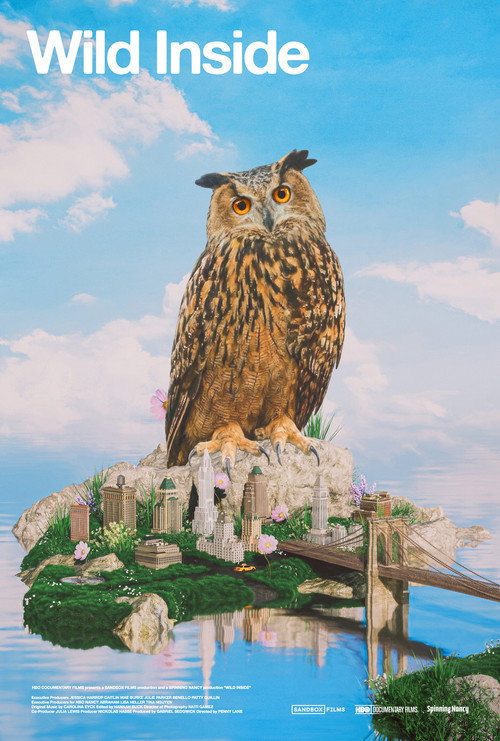
Wild Inside
Cultural messages
Be Yourself
highFlaco's entire arc is built on suppressed authentic nature: thirteen years of captivity prevented him from expressing his wild instincts (the forced conformity), the escape functions as the transformation/reveal scene, his immediate hunting success proves his identity was always intact, and the film's explicit thesis — 'the wild had never left him' — frames authenticity as the source of his power. New Yorkers' embrace follows naturally from his self-expression. All three core conditions and four signals are satisfied.
About this message: A character hides or suppresses their true identity to conform, then finds strength and happiness by embracing who they really are. Authenticity is the real superpower.
Nature Knows Best
mediumThe documentary frames captivity (the managed, institutional environment) as the inferior alternative to wild freedom, satisfying the nature-vs.-modern-life contrast. Flaco's natural hunting instincts outperform all zoo-managed recapture technology (WCS traps and recordings fail; his instincts succeed). The film's broader examination of the ethics of keeping large birds of prey in captivity explicitly validates nature over institutional control. Three signals land: nature idealized tonally, natural capacity outperforms technological intervention, and Flaco finds strength by returning to his natural mode of existence.
About this message: The natural world, indigenous peoples, or pre-industrial life is portrayed as inherently wise, pure, morally superior, or spiritually richer than modern civilization. Nature is a source of truth that technology has replaced.
Movies that share these tropes




Full plot (spoilers)
Wild Inside is a 2026 documentary directed by Penny Lane that chronicles the remarkable true story of Flaco, a male Eurasian eagle-owl — the world's largest owl species — who had lived his entire life in captivity at the Central Park Zoo in Manhattan. On February 2, 2023, an unknown vandal cut through the protective netting of Flaco's enclosure, and the owl, who had been held at the zoo since 2010, escaped into the city. Zoo staff and the Wildlife Conservation Society launched immediate recapture efforts, using baited traps and recordings of owl calls, but all attempts failed. Within days, Flaco did something remarkable: he began successfully hunting rats on his own, demonstrating survival instincts that his years of captivity had never extinguished. The WCS ultimately abandoned recapture efforts and shifted to monitoring his welfare. Flaco quickly became a cultural phenomenon. New Yorkers tracked and shared his whereabouts on social media, crowds gathered to watch him, and he inspired murals, poetry, and tattoos across the city. By November 2023, Flaco extended his range beyond Central Park for the first time, venturing into the East Village and Lower East Side — possibly in search of a mate during breeding season — and was famously spotted peering through apartment windows. The film explores the outpouring of public delight and fascination, as well as the concern for his welfare, from millions of people in New York City and beyond. The documentary also broadens its scope to examine Flaco's origins and family tree, the ethics and nature of keeping large birds of prey in captivity, and the biology of Eurasian eagle-owls as a species. Then, on February 23, 2024 — exactly one year after his escape — Flaco collided with a building on the Upper West Side. A necropsy revealed dangerously high levels of rodenticide in his system and the presence of pigeon herpesvirus, both contributing factors to his fatal crash. His remains were donated to the American Museum of Natural History. Flaco's death sparked a wave of legislative action in New York, with multiple bills introduced addressing bird-friendly building design, rodenticide regulation, and light pollution — collectively called 'Flaco's Laws' — and a rat contraceptive pilot program was launched in 2025 partly inspired by his story. The documentary frames Flaco's year of freedom as a transformative odyssey: an animal discovering that, despite a lifetime in captivity, the wild had never left him.
Sources: Wikipedia (Flaco article), IFC Center film page, Web search aggregated results (Variety, Timeout, Gothamist, NY1, CentralPark.com)