Movie
Angel and the Badman
Narrative tropes
The Girl Is the Prize
highPenny Worth has no independent goals or storyline — she exists entirely as the romantic object of Quirt's arc. Romance emerges through proximity during his recovery and gratitude for his heroism, not mutual character development. The plot explicitly frames her alongside 'the peaceful life' as what Quirt earns by choosing to protect the family ('fight to protect the peaceful life — and the woman — he has come to value'). Her own feelings are never developed. Removing her would leave the Laredo/Marshal plot intact.
About this trope: A female character functions primarily as a reward for the male hero's success — part of the victory package alongside saving the world — rather than as a character with her own arc and agency.
Violence Gets Results
mediumQuirt's primary tool throughout is the credible threat of violence: he 'leverages his notorious reputation' to coerce a belligerent neighbor. The climax is a 'standoff' against Laredo's armed gang with no negotiation path presented. The film pointedly departs from the 1947 original's peaceful resolution (the marshal quietly taking Quirt away), strongly implying the 2026 version resolves through force. No diplomatic alternative to Laredo's armed threat is shown or attempted.
About this trope: The central conflict is ultimately resolved through physical force rather than negotiation, diplomacy, or systemic change. Talking fails; fighting works.
Cultural messages
Family Is Everything
mediumThe Worth family is the moral and narrative anchor: Quirt is drawn into their 'rhythms of quiet, principled frontier life,' and Laredo's threat to burn the homestead is the climactic crisis. Quirt explicitly chooses family life over his outlaw identity, and his motivation to protect this found family drives the resolution. The structure — dangerous outsider redeemed by being folded into a loving family unit — is the engine of the entire plot.
About this message: Family bonds — biological or found — are ultimately what saves the day, provides meaning, and matters most. Characters who stray from family suffer; those who return are rewarded.
Movies that share these tropes


Full plot (spoilers)
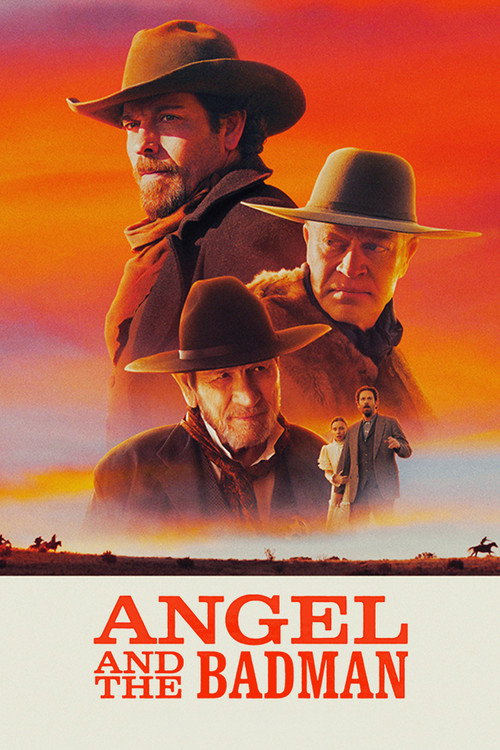
Angel and the Badman (2026) is a remake of the 1947 John Wayne Western of the same name. Feared outlaw Quirt Evans (Zachary Levi) buries a chest of stolen Confederate gold at an abandoned mission before being shot during a confrontation. Badly wounded, he rides until he collapses in front of the Worth family farmhouse, where he is discovered by the rancher's daughter Penny Worth (Meg Fraser) and her family — her mother Irene, grandmother Harriet, and brother Johnny. Against the odds, the Worths take him in and nurse him back to health. As Quirt recovers, he is drawn into the rhythms of their quiet, principled frontier life and develops feelings for Penny. He begins pulling his weight around the property, at one point leveraging his notorious reputation to bring a belligerent neighbor into line. Two threats close in simultaneously: Laredo (Neal McDonough), a ruthless gang leader who knows about the buried Confederate gold and intends to take it by force, arrives with a crew of henchmen prepared to terrorize the ranch; and Marshal Boone McClintock (Tommy Lee Jones) grows increasingly suspicious of the wanted man sheltering with a respectable family. With Laredo threatening to burn the Worth homestead to the ground and the law tightening around him, Quirt must decide whether to revert to the violent identity that has defined him or fight to protect the peaceful life — and the woman — he has come to value. The film ends with Quirt making a choice that resolves the standoff, though critics note the conclusion is abrupt and departs from the ending of the 1947 original.
Sources: web search (multiple outlets), infinitebrief.com review, keithandthemovies.com review, TMDb overview