Movie
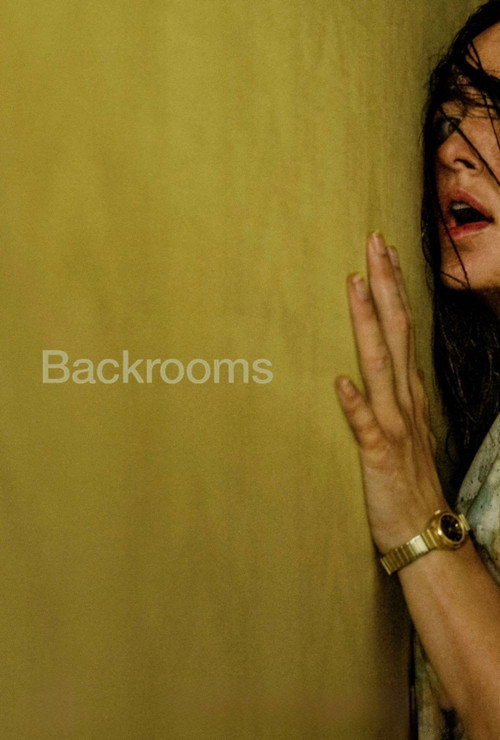
Backrooms
Cultural messages
Science vs. Faith
mediumThe film stages a clear rational-vs-experiential tension: Clark attempts to document the Backrooms scientifically (camera evidence) to convince his therapist, while being drawn back by an irrational, intuitive 'pull' he cannot explain. Dr. Kline begins as the skeptic (scientific/rational pole) but is gradually pulled into the mystery herself — her skepticism is defeated by direct encounter rather than evidence. The camera documentation explicitly fails to persuade, framing scientific instruments as inadequate to grasp the truth. Clark's obsessive, reason-defying returns are the motor of the plot, and the Backrooms are posed as a potential portal to 'meaning or deliverance' — metaphysical categories that exceed rational analysis. Three signals are met: the scientific character's skepticism is proven wrong by events; science is portrayed as limited and unable to capture the full truth; and a character must trust an irrational pull rather than reason to engage with the central mystery.
About this message: Characters face a choice between rational/scientific thinking and spiritual/intuitive belief. The story typically validates faith or emotion over cold logic — the scientist is wrong, the believer is vindicated.
Movies that share these tropes



Full plot (spoilers)
Set in 1990, the film follows Clark (Chiwetel Ejiofor), a divorced, alcoholic furniture store owner and failed architect who runs a pirate-themed showroom called "Cap'n Clark's Ottoman Empire." Lonely and depressed, he spends his evenings drinking and sleeping on display beds in the empty store. While attempting to fix the store's faulty lighting, Clark accidentally passes through a wall and stumbles into the Backrooms — an apparently infinite maze of interconnected abandoned office spaces defined by musty yellow carpeting, buzzing fluorescent ceiling panels, and walls of faded urine-yellow paint. The dimension contains stacked furniture, laundry piles, and labyrinthine partitioned areas. Clark returns obsessively every night, drawn in by the strange pull of the space. He attempts to document the Backrooms on camera to prove its existence to his therapist, Dr. Mary Kline (Renate Reinsve), a successful self-help author whose philosophy centers on "loops and windows" and self-reinvention. Mary is initially skeptical but is gradually pulled into the mystery alongside Clark's employee Kat and Kat's boyfriend Bobby, as the group tries to map and understand the shifting dimension. The setting's 1990 timeframe removes smartphones and the internet, heightening isolation and making documentation difficult. As exploration deepens, the Backrooms grow increasingly unsettling and disorienting; an unnamed inhuman entity lurks within the space. The film examines whether Clark has found a portal to meaning, deliverance, or something hellish — and probes the gap between self-perception and reality. Full resolution details are limited given the film's just-released status.
Sources: Wikipedia, Variety, Screen Rant, Heaven of Horror, IMDb