Movie
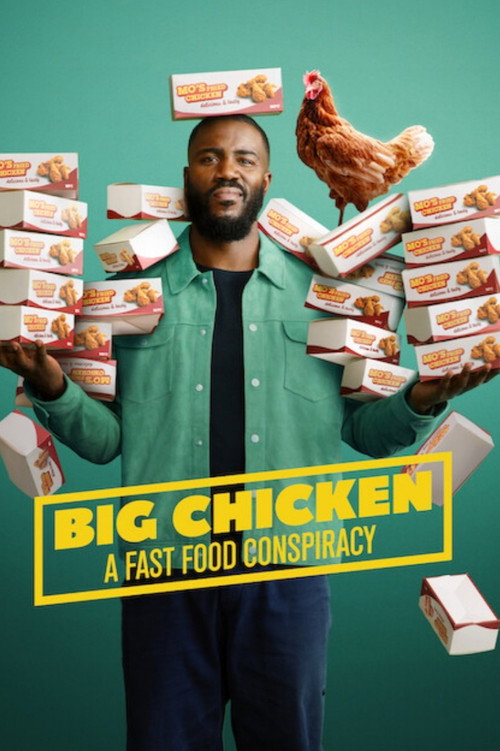
Big Chicken: A Fast Food Conspiracy
Cultural messages
The Rich Are the Problem
highThe film centers on a stark divide between a $100B fast-food industry and low-income communities trapped in food deserts with no nutritious alternatives. The industry is portrayed as exploitative throughout: labor abuses involving undocumented workers and minors, racialised marketing targeting Black communities, and indifference to public health. Gilligan, a South London working-class comedian, is the sympathetic moral voice against corporate profiteering. The documentary's exposure of industry practices serves as the resolution, framing the system as designed to extract value from the poor while insulating the powerful.
About this message: Wealthy elites are portrayed as exploitative, callous, or predatory, and extreme inequality is the central injustice driving the story.
The System Is Rigged
highThe food industry and its regulatory apparatus are shown as complicit rather than protective: farm-welfare labels are questioned as misleading, labour abuses go unchecked, and food deserts persist in plain sight. When Gilligan attempts to visit a British chicken farm, security is tightened to block access—working within the system fails. The documentary format itself is the workaround, exposing industry practices through journalism rather than official channels. A cover-up dynamic is explicit in the gap between welfare branding and documented conditions.
About this message: Institutions meant to protect people — governments, corporations, law enforcement, the justice system — are depicted as corrupt, incompetent, or actively harmful. Heroes must work outside official channels.
Movies that share these tropes
Full plot (spoilers)
Big Chicken: A Fast Food Conspiracy is a 96-minute Netflix documentary in which BAFTA-winning British comedian Mo Gilligan undertakes a self-imposed 28-day experiment eating fried chicken three times a day—84 meals in total—to investigate how his favourite takeaway became a global phenomenon and what it is truly costing him, society, and the planet. What begins as an apparently enjoyable challenge quickly reveals unexpected physical and psychological tolls, prompting Gilligan to ask increasingly serious questions of the industry behind the craving. Travelling from South London to the American South—with stops in Houston (framed as the modern fried-chicken capital), New Orleans, and Arkansas—Gilligan traces the supply chain backwards from the street-level chicken shop to the factory farm. The film charts fried chicken's historical arc from a dish perfected by enslaved Black cooks to a $100 billion global business, and Gilligan, as a Black British comedian, explicitly interrogates the cultural appropriation and racialised marketing that have surrounded the dish. Along the way he visits food deserts in low-income US neighbourhoods where fast food is abundant but nutritious options are scarce, and consults experts on industrial farming practices, including the revelation that mass-produced American chicken generates enough faecal waste annually to cover London, and that an additive used in processed chicken also lubricates condoms. Gilligan attempts a late-night visit to a British chicken farm in Lincolnshire alongside animal-rights activists but backs out when security is tightened. The documentary also surfaces allegations of labour exploitation in the supply chain, including the use of undocumented workers and minors. Acknowledging his own past complicity in promoting fried-chicken brands, Gilligan questions industry leaders and holds space for his own contradictions throughout. The film closes with a measured call to eat less meat, scrutinise ingredients, and interrogate whether farm-welfare labels reflect actual conditions.
Sources: The National News review, FoodFacts.org article, WebSearch aggregated results (Netflix Tudum, Rotten Tomatoes, Pajiba, OutNow)