Movie
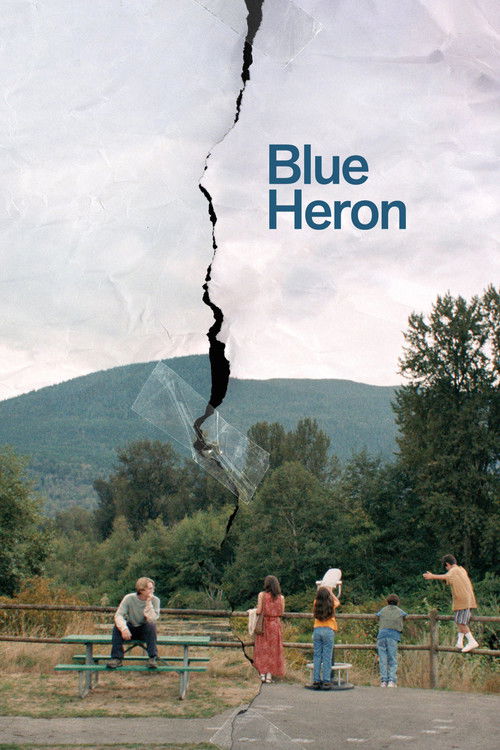
Blue Heron
Narrative tropes
Kids See the Truth
mediumAll three core requirements are met: (1) Sasha is a child whose perspective is the narrative's privileged lens on events; (2) the adults around her are demonstrably wrong or compromised — the mother prioritises social embarrassment over genuine help, the father retreats into work, and the child psychologist gives actively bad advice ('assert firmer authority'); (3) the child's unfiltered witnessing functions as the film's source of authentic truth, most concretely in the beach scene where Jeremy shows gentleness toward Sasha that he withholds from adults. Three signals land clearly: adults' judgment fails while the child's perception is validated; adults are too jaded or self-interested to see the truth; and Sasha's innocence is framed as a form of wisdom — it is her childhood point-of-view, not the professional or parental one, that the adult documentary reconstructs as the real record of what happened.
About this trope: Children possess intuitive wisdom, moral clarity, or a connection to truth that cynical adults have lost. Kids see through lies, sense danger, and understand what really matters.
Movies that share these tropes



Full plot (spoilers)
Set in the late 1990s on Vancouver Island, Blue Heron follows a Hungarian immigrant family of six — parents, and children Jeremy, Henry, Felix, and youngest Sasha (Eylul Guven, around eight years old) — as they settle into a new home. The story unfolds primarily through Sasha's eyes. Jeremy (Edik Beddoes), the eldest child and a half-brother from their mother's first marriage, feels alienated from his younger siblings and exhibits increasingly erratic and dangerous behaviour: shoplifting, tormenting the other children, refusing to speak, stomping on the roof, punching a hole through his bedroom window, and threatening to burn the house down. At one point he lies motionless on the porch 'as though dead.' Despite these episodes, Jeremy also shows brief moments of gentleness, particularly in a scene at the beach with Sasha. The mother, afraid of social embarrassment as much as genuine danger, consults a child psychologist who advises asserting firmer authority; the parents even discuss placing Jeremy in foster care. The father, a photographer, largely withdraws into work, though he documents some of Jeremy's behaviour as a form of evidence. About halfway through, the film shifts register: adult Sasha (Amy Zimmer), now a filmmaker, revisits the childhood events by constructing a documentary — reviewing case files and interviewing child psychologists about Jeremy's condition. Through this meta-cinematic layer she comes to understand that her parents were ill-equipped to help him and that he 'was born at the wrong time to receive proper care.' Jeremy's ultimate fate is left ambiguous but is described as undoubtedly tragic. The film is semi-autobiographical, drawing on director Sophy Romvari's own childhood and an earlier short film she made called Still Processing.
Sources: Wikipedia (search snippet / article sections), Deep Focus Review, Flickering Myth