Movie
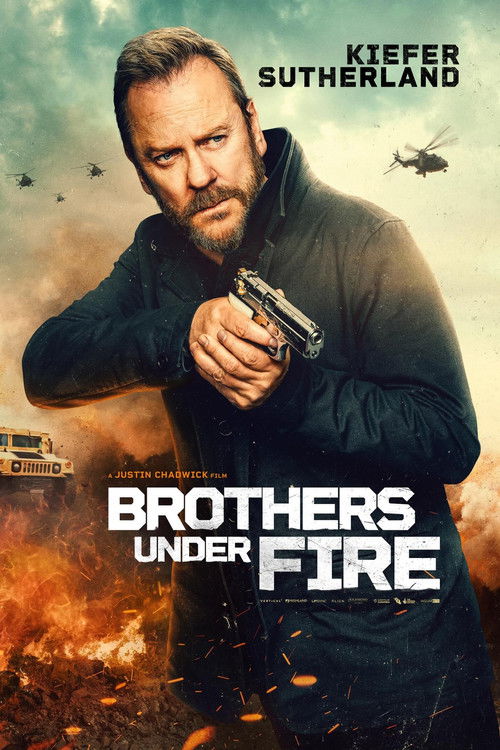
Brothers Under Fire
Narrative tropes
Violence Gets Results
highThe cartel immediately escalates to murder and siege with no negotiation phase — violence is both the cartel's and the squad's primary language. The resolution is framed as an 'open warfare' tactical battle. Jordan's decisive asset is military combat expertise, not diplomacy. The story frames the outcome as 'justice' through force, with no reflection on whether violence was the right path.
About this trope: The central conflict is ultimately resolved through physical force rather than negotiation, diplomacy, or systemic change. Talking fails; fighting works.
Revenge Is Sweet
highAlberto's murder is the explicit emotional engine that 'galvanizes' the squad and drives the plot. The vow to avenge him is presented as righteous and noble. Official law enforcement is absent — the squad must deliver justice themselves. The revenge quest is framed as inseparable from heroism and protection of innocents, ensuring it reads as cathartic rather than troubling.
About this trope: Vengeance is portrayed as justified, satisfying, and morally righteous. The audience is invited to cheer as the protagonist destroys those who wronged them.
One Hero Changes Everything
mediumJordan 'takes command,' 'marshals' his troops, and 'rallies' the passive townspeople — the entire defensive effort flows from his leadership. Without him the soldiers lack direction and the civilians remain helpless. While the squad participates, collective action succeeds only because Jordan organizes and enables it, and his individual military virtue is the decisive factor.
About this trope: One exceptional individual matters more than institutions or collective action. Problems affecting millions are solved by a single remarkable person. Everyone else is passive.
Cultural messages
The Military Are Heroes
highJordan Wright is a 'decorated military officer' leading a squad whose competence and heroism are central to the plot. Alberto's death is honored as a rallying martyr moment. The military expertise systematically dismantles the cartel — a problem civilians alone cannot solve. Baker's cartel is framed as unambiguously evil, fully justifying lethal force. Military culture (squad loyalty, tactical operations, vowing to avenge a fallen comrade) is glamorized throughout.
About this message: The military, intelligence agencies, or law enforcement are portrayed as fundamentally noble, heroic, and necessary. Service members are brave and selfless. Military force is justified and effective.
Movies that share these tropes




Full plot (spoilers)
Captain Jordan Wright, a decorated military officer played by Kiefer Sutherland, travels to Mexico with his squadron for the wedding of one of their own. The celebration is violently disrupted when a ruthless cartel led by a man known as Baker (Omar Chaparro) descends on the town. During the initial confrontation, a squad member named Alberto is murdered, galvanizing the remaining soldiers. Baker's cartel places the town under siege, cutting off escape routes. Jordan takes command and works to lead the survivors — both his men and local townspeople — to safety. As the standoff escalates into open warfare between the small squad and the heavily armed cartel, Jordan marshals his troops and rallies the townspeople, leveraging their collective military expertise to systematically undermine the cartel's grip on the town. The squad vows to avenge Alberto and protect the civilians caught in the crossfire, transforming a personal tragedy into a determined tactical battle for survival and justice.
Sources: web_search_synthesis, screendollars.com, wikipedia_stub