Movie
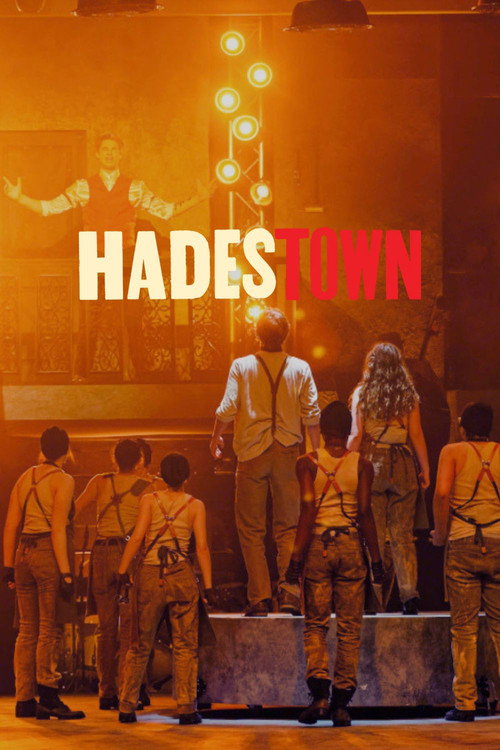
Hadestown: The Musical
Narrative tropes
Humans Never Give Up
highOrpheus descends into an authoritarian underworld to reclaim Eurydice from a god — an objectively hopeless task Hermes signals will fail before it begins ('a tale he warns them they already know'). The story's emotional thesis, delivered by Hermes at the close, is that the courage to try is itself the point — not the outcome. The narrative resets to underscore this cycle of hopeful striving. Four signals present: refusing to quit when surrender would be rational (descending into Hadestown), hope persisting when logic says it shouldn't (attempting this knowing the tragic outcome), the emotional climax being the decision to keep going rather than the victory itself (Hermes honors the attempt, not a triumph), and Orpheus's human hope contrasted against the Fates' declaration that the outcome is sealed.
About this trope: Facing impossible odds, humans endure, adapt, and find reasons to keep going. Resilience and refusal to surrender is humanity's defining and most admirable trait.
Cultural messages
The Rich Are the Problem
highHadestown is built on a stark wealth/power divide: Hades controls an industrial underworld factory-state while Orpheus and Eurydice starve above. Eurydice is driven into Hades's contract specifically by poverty and desperation — the plot's inciting act is a poor woman accepting a labor contract because she is starving. Hades exploits workers through binding contracts in endless toil. The Depression-era and New Orleans jazz aesthetic frame the story explicitly as a class allegory. Four signals present: luxury-vs-poverty contrast (warmth/food offered to the starving), wealthy exploiting the poor (Hadestown's labor system), poor characters portrayed as moral/sympathetic (Orpheus and Eurydice), and the system designed to benefit the powerful at workers' expense. The fifth signal (revolution/escape as resolution) is attempted but fails, marking a partial presence.
About this message: Wealthy elites are portrayed as exploitative, callous, or predatory, and extreme inequality is the central injustice driving the story.
Movies that share these tropes






Full plot (spoilers)
Hadestown: The Musical (2026) is a professionally filmed stage recording of the acclaimed Broadway/West End musical, captured at the Lyric Theatre in London and directed by Brett Sullivan. It features five original Broadway principal cast members — Reeve Carney (Orpheus), Eva Noblezada (Eurydice), Patrick Page (Hades), André De Shields (Hermes), and Amber Gray (Persephone) — alongside the West End ensemble.
Set in a post-apocalyptic world flavored by New Orleans jazz and Depression-era imagery, the story is narrated by Hermes, who welcomes the audience to a timeless tale he warns them they already know. The world above is blighted by cold and famine — a consequence of the fractured relationship between Hades, god of the underworld, and his wife Persephone, who escapes to the surface each season but drinks away her time there, leaving Hades to tighten his grip on Hadestown, an industrial underground factory-state where workers labor endlessly.
Act I: Young musician Orpheus meets Eurydice and immediately asks her to marry him, promising he will finish a song powerful enough to restore spring to the world. Eurydice falls for him, but as winter deepens and their poverty becomes desperate, her faith wavers. Hades arrives above ground and offers Eurydice warmth, food, and security in Hadestown. Desperate and starving, she accepts — signing a contract that binds her as a worker in his underworld — and descends with him, leaving Orpheus behind.
Act II: Orpheus learns of Eurydice's disappearance and resolves to follow her into Hadestown. Guided by Hermes, he descends into the industrial underworld, where workers — including Eurydice — toil under Hades's authoritarian watch. Orpheus confronts Hades and eventually performs his completed song, a melody of such beauty and longing that it moves even the hardened god of the dead, and visibly stirs Persephone's buried love for her husband. Hades, briefly softened, agrees to release Orpheus and Eurydice — but on one condition: Orpheus must lead Eurydice out of Hadestown without looking back. If he turns around to confirm she is following, she will be pulled back to Hadestown forever.
The two set off. As they climb toward the light, doubt gnaws at Orpheus. The silence behind him feels unbearable. At the threshold of freedom, he turns around — and in that instant, Eurydice is drawn back into the underworld. The Fates declare the outcome sealed. Hermes closes the story by acknowledging its tragic end, but frames it as a tale worth telling again: a cycle of hope, loss, and the courage to try regardless. The narrative resets, underscoring the myth's eternal, cyclical nature.
Sources: Wikipedia (Hadestown: The Musical), Wikipedia (Hadestown), Tribeca Festival, IMDb (search metadata)