Movie
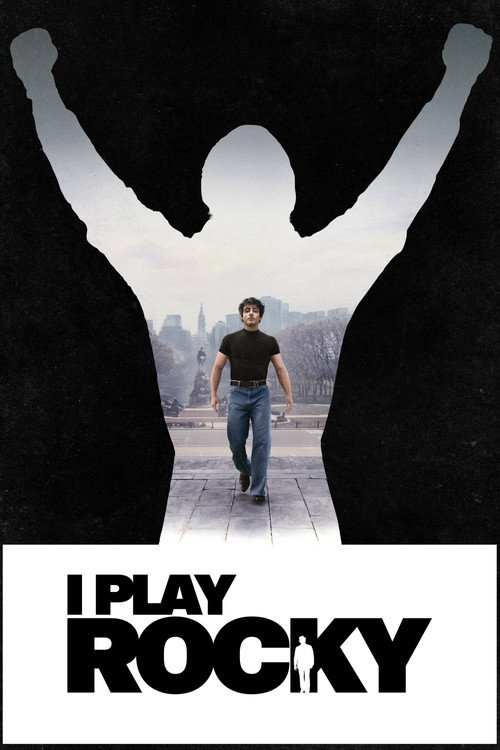
I Play Rocky
Narrative tropes
Humans Never Give Up
highStallone faces objectively hopeless circumstances — near-homelessness, a birth-injury speech impediment, fruitless auditions, selling his dog for groceries — yet repeatedly refuses to quit when surrender would be rational (declining $350K is the clearest signal). Hope persists against logic throughout. The studios' rational calculation (buy the script cheaply, cast a name) is contrasted with Stallone's irrational, human refusal. Resilience and refusal to surrender are the story's explicit moral, vindicated by the Oscar sweep.
About this trope: Facing impossible odds, humans endure, adapt, and find reasons to keep going. Resilience and refusal to surrender is humanity's defining and most admirable trait.
Cultural messages
Hard Work Always Pays Off
highStallone begins in severe disadvantage — near-homeless, speech-impaired, taking degrading roles — and succeeds entirely through personal effort and determination: writing Rocky in 3.5 days, refusing offers up to $350,000 to preserve his right to star, and pushing through physical injuries during filming. Structural barriers (studio bias against unknowns, physical disability) are framed as starting-point obstacles overcome by willpower. The system is ultimately shown to reward his merit when Rocky sweeps the Academy Awards.
About this message: Hard work, talent, and determination are reliably rewarded. The system is fundamentally fair — those who didn't succeed didn't try hard enough. Structural barriers are overcome by willpower alone.
Movies that share these tropes

Full plot (spoilers)
Set in the mid-1970s, I Play Rocky follows the true story of a young, broke Sylvester Stallone struggling to break into acting in New York City. Living on the edge of homelessness while juggling low-paying jobs and fruitless auditions, Stallone is hindered partly by a speech impediment caused by partial facial paralysis—a birth injury from a complicated forceps delivery. Desperate for income, he takes a degrading role in a risqué film. While working at a movie theater he meets Sasha Czack, a coworker who encourages him to write his own scripts and push to star in them. The two begin a relationship, eventually marrying and relocating to Los Angeles, where financial hardship continues. At a low point, Stallone sells his beloved dog Butkus just to afford groceries. His fortunes shift after he watches the 1975 Muhammad Ali vs. Chuck Wepner championship boxing match and is electrified by the underdog challenger's heart and resilience. Staying up through the night, Stallone writes the screenplay for Rocky in roughly three and a half days. The script attracts producers Irwin Winkler and Robert Chartoff, but studio negotiations stall when Stallone refuses to sell unless he is cast as the lead. He turns down increasingly lucrative offers—reportedly up to $350,000—insisting that he, not a name star, must play Rocky Balboa. The standoff forces the budget down to approximately $1 million, a fraction of what the studios originally envisioned. Eventually United Artists agrees to the terms, director John G. Avildsen is hired, and the production moves to Philadelphia for practical and financial reasons. The shoot is grueling: Stallone pushes through physical injuries and illness to keep to schedule, and the production is described as a union-free shoot conducted under unconventional circumstances. A pivotal emotional scene involves Stallone improvising a monologue opposite the actor playing Mickey, channeling long-suppressed anger toward his distant father Frank Sr. into the performance. The film closes with Rocky becoming a cultural phenomenon and sweeping the Academy Awards, vindicating Stallone's gamble on himself.
Sources: Wikipedia, Flickering Myth review, mxdwn Movies, Web search / AboutAmazon promotional coverage