Movie
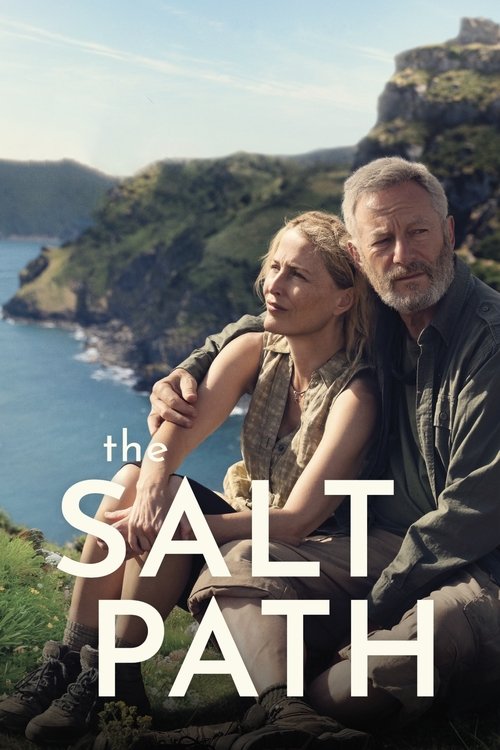
The Salt Path
Narrative tropes
Humans Never Give Up
highAll three core pattern elements are fully met: the couple faces objectively hopeless circumstances (terminal CBD diagnosis, homelessness, £40/week, housing authorities refusing shelter); they choose to keep going by walking 630 miles with minimal gear; and their resilience is explicitly framed as heroic (the memoir becomes a bestseller, turning destitution into 'the foundation of an unexpected new life'). Signals: (1) refusing to quit when surrender would be rational — starting a 630-mile winter coastal walk with a terminally ill partner and a cheap tent; (2) survival against impossible odds is the central plot spine; (3) hope persists against logic — Moth's health improves despite a terminal prognosis; (4) the pivotal emotional beat is the decision to walk, not the eventual success.
About this trope: Facing impossible odds, humans endure, adapt, and find reasons to keep going. Resilience and refusal to surrender is humanity's defining and most admirable trait.
Cultural messages
Nature Knows Best
mediumCore pattern is met: (1) the natural coastal environment is shown as physically and spiritually restorative — Moth gains strength as the walk continues; (2) explicit contrast with the failing modern world (collapsed business, bureaucratic housing system, homelessness stigma); (3) characters find healing and a new life path by immersing themselves in nature and farming. Signals: (1) a character returns to nature and finds strength — Moth's condition measurably improves through walking; (2) natural/physical activity outperforms medical intervention — his health improves after reducing medication while continuing the walk; (3) their resolution is anchored in farming and land, implicitly validating pre-industrial rhythms over the financial and bureaucratic systems that destroyed them.
About this message: The natural world, indigenous peoples, or pre-industrial life is portrayed as inherently wise, pure, morally superior, or spiritually richer than modern civilization. Nature is a source of truth that technology has replaced.
Hard Work Always Pays Off
mediumCore pattern is met: the couple begins from extreme disadvantage (homelessness, terminal illness, near-zero income); they succeed primarily through personal determination (completing the 630-mile walk, taking on farming and shearing work, writing the memoir); and structural barriers, while shown as real, are ultimately overcome through grit rather than systemic change. Signals: (1) their destitution is explicitly framed as a starting point that transforms into 'the foundation of an unexpected new life' — poverty as launchpad, not trap; (2) success flows from their own effort (the walk, the farming work, the writing) rather than external rescue, with Polly's help and the student loan functioning as minor assists rather than the driver.
About this message: Hard work, talent, and determination are reliably rewarded. The system is fundamentally fair — those who didn't succeed didn't try hard enough. Structural barriers are overcome by willpower alone.
Movies that share these tropes





Full plot (spoilers)
Raynor and Moth Winn are a middle-aged married couple who lose their family farm and all their savings when Moth's friend Cooper draws them into a failed business investment. Almost simultaneously, Moth receives a diagnosis of corticobasal degeneration (CBD), a rare and progressive terminal neurological illness. Facing homelessness with only £40 a week in government benefits, and told by housing authorities that Moth's diagnosis disqualifies them from emergency shelter, the couple decides to walk the 630-mile South West Coast Path from Minehead in Somerset through Devon and Cornwall to Poole in Dorset. They set out with minimal equipment — a cheap tent and inadequate sleeping bags — and begin the gruelling trek along England's rugged southwestern coastline. Along the way they encounter the shame and stigma of visible homelessness, receiving scorn from some people they meet but also unexpected kindness from strangers. Despite his degenerative condition, Moth gradually gains physical strength as the walking continues. During winter, the pair meet a woman named Polly who offers them shelter in exchange for renovation work on her property. Raynor takes on sheep-shearing work to earn income. Moth enrols in a sustainable farming course, allowing him to obtain a student loan for living expenses. His health continues to improve after he stops some of his medication, reinvigorating both partners. The couple eventually completes the full coastal walk. Moth finishes his agricultural studies, and both find work in farming. Raynor writes a memoir documenting their entire journey, which is published as The Salt Path and becomes a bestseller, turning their period of destitution into the foundation of an unexpected new life.
Sources: Wikipedia, Web search (Film Fugitives ending-explained article), OMDb API (one-line overview only)