Movie
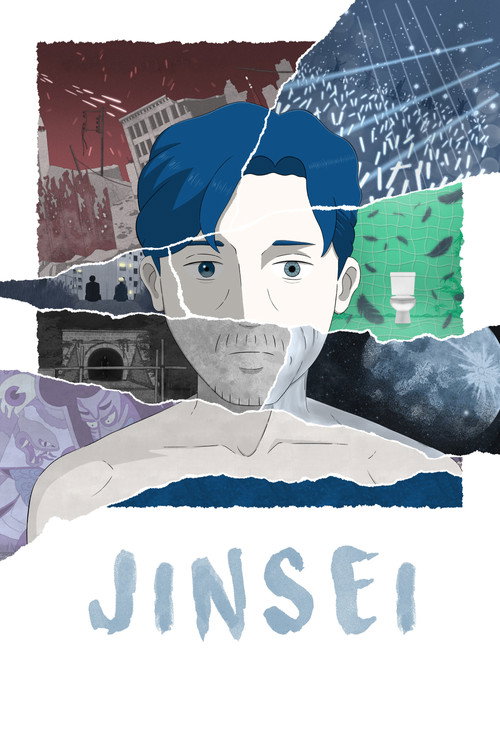
Jinsei
Cultural messages
The System Is Rigged
mediumThe entertainment industry functions as the corrupt institution: the plot gives 'unflinching commentary on agency exploitation and the dark machinery behind idol culture,' directly meeting element (2). The protagonist's fall from celebrated idol to social outcast illustrates working within the system failing him (signal: 'working within the system fails or makes things worse'). Agency figures who exploit young artists satisfy 'authority figures are secretly villainous or willfully negligent.' The mention of 'mysterious deaths of young people' alongside the industry critique implies a cover-up or conspiracy operating within the machinery of idol culture. The protagonist's later trajectory — from outcast to independent leadership figure to oracle — maps onto operating outside institutional rules as the path to a meaningful life.
About this message: Institutions meant to protect people — governments, corporations, law enforcement, the justice system — are depicted as corrupt, incompetent, or actively harmful. Heroes must work outside official channels.
Movies that share these tropes




Full plot (spoilers)
Jinsei (2025) is a hand-drawn Japanese anime feature written, directed, and animated solo by Ryuya Suzuki over 18 months. The title means 'life' in Japanese, and the film is structured as a ten-chapter, hundred-year chronicle (spanning roughly 1994 to 2095) in which the protagonist — voiced by rapper ACE COOL — is never called by his real name; each chapter names him differently depending on who surrounds him and what role he occupies.
The story opens in the early 2000s when the protagonist, then a young boy, watches his mother killed by an elderly driver in a traffic accident that simultaneously leaves his father in a coma. Placed in the care of his stepfather Hiroshi, he grows up largely invisible — an anonymous, bullied child who drifts through life without a stable identity. The turning point comes when a transfer student named Kin enters his life. Inspired also by the memory of his comatose father, the protagonist commits to becoming a J-pop idol, and the early chapters trace his training and rise within the entertainment industry, including unflinching commentary on agency exploitation and the dark machinery behind idol culture.
As the film progresses through its ten chapters, the protagonist's circumstances and the very texture of the narrative shift dramatically. He moves from celebrated idol to social outcast, then to a leadership figure, and finally to an oracle-like presence in an increasingly abstract future. The first half maintains a grounded, realistic register — depicting contemporary societal problems such as reckless elderly drivers, entertainment-industry corruption, and the mysterious deaths of young people — while the second half transitions into speculative science fiction, with surreal and otherworldly visuals that grow more abstract as the timeline moves toward 2095. By the final chapters, the story has left naturalism behind almost entirely, depicting the protagonist as a prophetic or symbolic figure whose life has come to mean something beyond stardom.
Thematically, the film frames this hundred-year arc as a meditation on identity, ambition, and what it means for a single human life to touch the currents of history. The structure — each chapter named for whatever the world is calling the protagonist at that moment — underlines the idea that selfhood is relational and contingent, assembled from the names others give us. Coverage is sufficient for trope classification; specific details of the final chapters and ending remain sparsely documented in English-language sources.
Sources: Anime News Network, Letterboxd, IFC Center, Rotten Tomatoes, TMDb