Movie
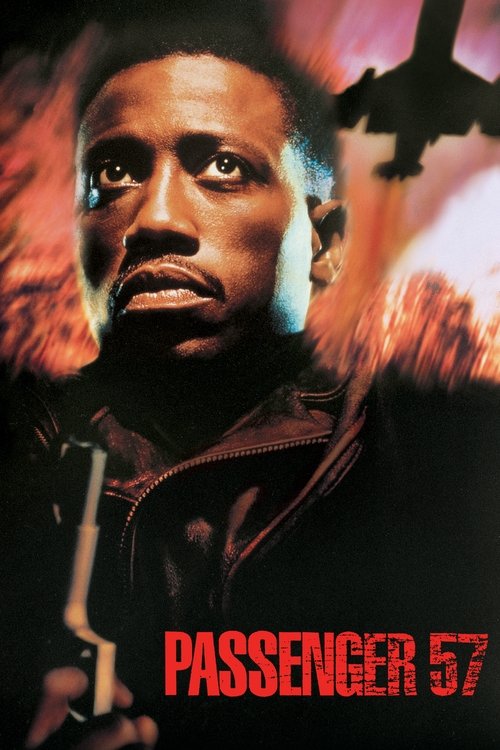
Passenger 57
Narrative tropes
One Hero Changes Everything
highA single security specialist defeats a terrorist hijacking while the FBI escorts are killed, local police are manipulated, and all other passengers are passive hostages. Cutter's personal expertise and initiative are the sole decisive factor; without him the hijacking succeeds. Institutions are shown as incompetent or easily deceived, and no collective action contributes to the resolution.
About this trope: One exceptional individual matters more than institutions or collective action. Problems affecting millions are solved by a single remarkable person. Everyone else is passive.
Violence Gets Results
highThe central conflict is resolved when Cutter physically kicks Rane through an open aircraft door to his death. Negotiations (Rane's staged hostage release, sheriff dealings) are deceptive diversions that fail. Cutter's primary asset is combat skill (self-defense instructor, hands-on fighter). The villain is killed rather than arrested, and the story does not interrogate whether lethal force was appropriate.
About this trope: The central conflict is ultimately resolved through physical force rather than negotiation, diplomacy, or systemic change. Talking fails; fighting works.
The Girl Is the Prize
highMarti exists in the narrative solely in relation to Cutter (former student, flight attendant who shelters with him). She has no independent goals or arc. The story closes with the two escaping together as the emotional reward for Cutter's heroism. Removing the romantic pairing would not alter the plot's mechanics, and her feelings are assumed rather than developed.
About this trope: A female character functions primarily as a reward for the male hero's success — part of the victory package alongside saving the world — rather than as a character with her own arc and agency.
Cultural messages
The System Is Rigged
mediumThe FBI transport is overwhelmed and killed (institutional incompetence); Rane deceives the local sheriff into treating Cutter as the threat, framing the hero and turning law enforcement against him; Cutter operates entirely outside official channels throughout, and justice is only achieved by his solo extrajudicial action.
About this message: Institutions meant to protect people — governments, corporations, law enforcement, the justice system — are depicted as corrupt, incompetent, or actively harmful. Heroes must work outside official channels.
Movies that share these tropes




Full plot (spoilers)
John Cutter, a decorated airline security specialist, is struggling to return to work after his wife was killed during a robbery he failed to prevent. He accepts a position as vice president of an anti-terrorism unit with Atlantic International Airlines and boards Flight 163 to Los Angeles — as the 57th passenger — where his former self-defense student Marti Slayton is working as a flight attendant. Also on board, in FBI custody, is Charles Rane, a notorious British terrorist who was arrested in Miami while undergoing plastic surgery to evade authorities; he is being transported to Los Angeles to stand trial. Several of Rane's accomplices have infiltrated the flight disguised as cabin crew and passengers. Once airborne, they kill the FBI escorts and the captain, then free Rane. Cutter witnesses the takeover, fights off one of the hijackers, and retreats with Marti to the cargo hold. He sabotages the plane's fuel system, forcing an emergency landing at a small Louisiana airfield. On the ground, Rane negotiates with local authorities, offering to release half the hostages in exchange for refueling and clearance to take off, while falsely identifying Cutter to the sheriff as one of his own men who has gone rogue. Cutter sees through the staged passenger release as a diversion, escapes the airfield perimeter, and chases Rane and his men through a nearby county fair. Police capture Rane, and FBI agents arrive to confirm Cutter's true identity. However, Rane's remaining operatives coerce local law enforcement into releasing him and force his return to the aircraft. As the plane begins to take off, Cutter manages to board. During the climactic confrontation in the cabin, Cutter kicks Rane through an open aircraft door, sending him to his death via explosive decompression. The plane returns safely to the ground, and Cutter and Marti escape together.
Sources: Wikipedia, IMDb