Movie
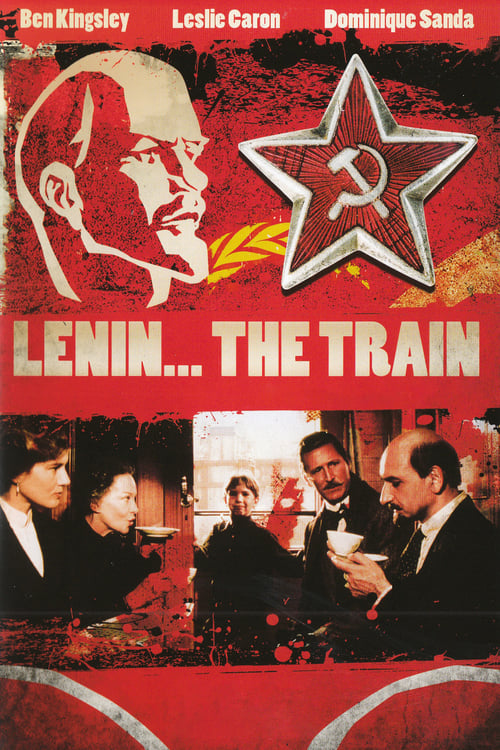
Lenin: The Train
Narrative tropes
One Hero Changes Everything
highThe entire film centers on Lenin's personal journey as the singular catalyst of the Russian Revolution. His arrival in Petrograd is framed as the 'hinge moment between the February Revolution and what will become the Bolshevik October,' with the crowd's response exceeding even the revolutionaries' own expectations. The community awaits and is activated by him specifically; collective action only crystallizes around his presence. His removal would mean no Bolshevik October. The crisis (revolutionary Russia) demands systemic response, but the story resolves it through one man's arrival.
About this trope: One exceptional individual matters more than institutions or collective action. Problems affecting millions are solved by a single remarkable person. Everyone else is passive.
Rebels vs. The Empire
mediumA small band of revolutionary emigrants — Bolsheviks, Mensheviks, and socialist internationalists — makes a covert journey against the backdrop of the vast Russian Imperial system they seek to overthrow. The resisters are framed sympathetically as ideologically committed fighters for workers' rights clashing with entrenched power. The story ends on a triumphant note with Lenin's arrival marking the beginning of the regime's fall, fulfilling the pattern of outmatched rebels achieving meaningful challenge against an oppressive order.
About this trope: A small outmatched group rises up against a massive oppressive regime or institutional power. The rebellion is framed as morally righteous.
Movies that share these tropes





Full plot (spoilers)
Set in March–April 1917, with World War I in its third bloody year, Lenin...The Train dramatizes the famous sealed-train journey that transported Vladimir Ilyich Lenin (Ben Kingsley) and a group of Russian revolutionary emigrants from Zürich, Switzerland, through wartime Germany and Sweden, and on to Petrograd (St. Petersburg). Germany's military and diplomatic establishment, eager to knock Russia out of the war by injecting revolutionary instability into it, covertly facilitates the passage; two senior German officers accompany the arrangement to ensure that everything runs smoothly and that the diplomatic bargain holds. The train itself becomes a pressure cooker of competing revolutionary factions — Bolsheviks, Mensheviks, and socialist internationalists — who argue bitterly over the war, class struggle, and the future of Russia. Workers sympathetic to the revolutionary cause but still anxious about the ongoing carnage clash with more ideologically hardened socialists in heated exchanges that mirror the broader contradictions of the moment. Against this political backdrop, the film traces a personal drama: Lenin's long-standing love affair with the passionate Inessa Armand (Dominique Sanda) comes to an end during the journey, partly under the watchful presence of Lenin's devoted wife Nadezhda Krupskaya (Leslie Caron), who is prepared to take her husband back and does so. A young man played by Jason Connery, an admirer of the beautiful Inessa, introduces further romantic tension aboard the cramped train. The film climaxes with the train's arrival in Petrograd, where Lenin is met by a massive, exultant crowd — a triumphant return that exceeds even the revolutionaries' own expectations and that stands as the hinge moment between the February Revolution and what will become the Bolshevik October. The miniseries is based on Michael Pearson's non-fiction book about the episode and runs approximately 3 hours 18 minutes.
Sources: TMDb overview, Wikipedia, IMDb (search metadata), Letterboxd, Moviefone