Movie
Gangland
Narrative tropes
Revenge Is Sweet
highJared's entire motivation is revenge for Lucifer's gang murdering his wife and children. Official justice is immediately negated (the only law enforcement, two officers, are killed in a single early scene). The revenge quest is framed heroically — Jared is the protagonist, not an antihero. Defeating Lucifer is the emotional payoff, the story presents no moral ambiguity about the quest, and Jared suffers no meaningful consequences for his vengeance.
About this trope: Vengeance is portrayed as justified, satisfying, and morally righteous. The audience is invited to cheer as the protagonist destroys those who wronged them.
Violence Gets Results
highThe central conflicts — gang tyranny and a species-ending virus — are both resolved through physical combat, not negotiation or systemic reform. The three heroes are defined by martial skills (former soldier, two expert martial artists). No diplomatic option is attempted or available. The climax is battling through the Ganglanders to defeat Lucifer. The story treats violence as the self-evident correct solution.
About this trope: The central conflict is ultimately resolved through physical force rather than negotiation, diplomacy, or systemic change. Talking fails; fighting works.
Rebels vs. The Empire
highLucifer's gang has conquered post-apocalyptic Los Angeles, turning the entire civilian population into prisoners and slaves — a totalitarian occupation. Three heroes represent a tiny resistance against this massive armed force. They are portrayed as brave and morally righteous (avenging the innocent, saving humanity). The gang is explicitly cruel and dehumanizing. The heroes ultimately defeat Lucifer and liberate the scientist despite the overwhelming power gap.
About this trope: A small outmatched group rises up against a massive oppressive regime or institutional power. The rebellion is framed as morally righteous.
One Hero Changes Everything
highA city-wide plague and totalitarian gang occupation — crises logically demanding military or governmental response — are resolved entirely by three individuals, with Jared as the narrative center. Law enforcement is wiped out in a single scene, representing institutional collapse. No collective civic resistance exists; the broader population is passive and enslaved. The heroes' personal combat skills are the sole decisive factor; without them, humanity loses both to the gang and the virus.
About this trope: One exceptional individual matters more than institutions or collective action. Problems affecting millions are solved by a single remarkable person. Everyone else is passive.
Movies that share these tropes






Full plot (spoilers)
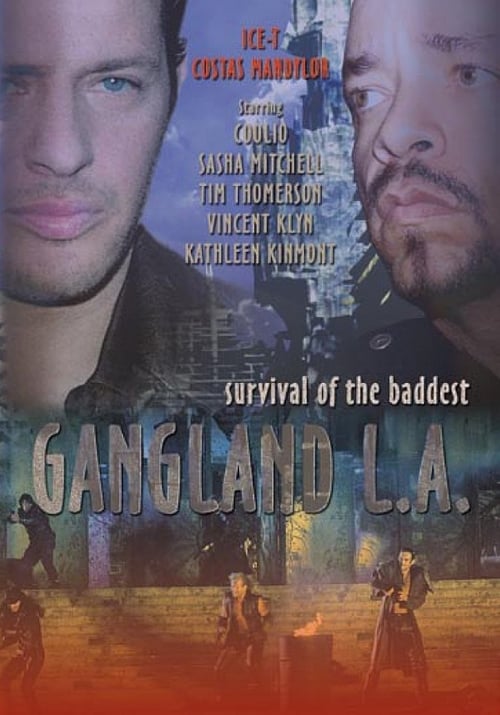
Set in post-apocalyptic Los Angeles circa 2010, Gangland depicts a city under the stranglehold of a brutal outlaw gang led by a villain known as Lucifer, who systematically turns civilians into prisoners and slaves. Simultaneously, a deadly flesh-eating virus is spreading and threatening to wipe out all of humanity. The scientist capable of developing a cure is kidnapped by Lucifer's gang, forced to create the serum for the gang's exclusive benefit. Jared (Costas Mandylor), a former soldier haunted by flashbacks of Lucifer's gang killing his wife and children, seeks revenge. He joins forces with two expert martial artists, Derek (Sasha Mitchell) and Alexis (Kathleen Kinmont). Together, the three heroes battle through the Ganglanders to rescue the scientist, defeat Lucifer, and secure the cure before the virus destroys what remains of humanity. Two police officers (played by Coolio and Ice-T) appear briefly but are killed in a single scene early in the film.
Sources: IMDb, IMDb search results (plot summary), Web search synthesis