Movie
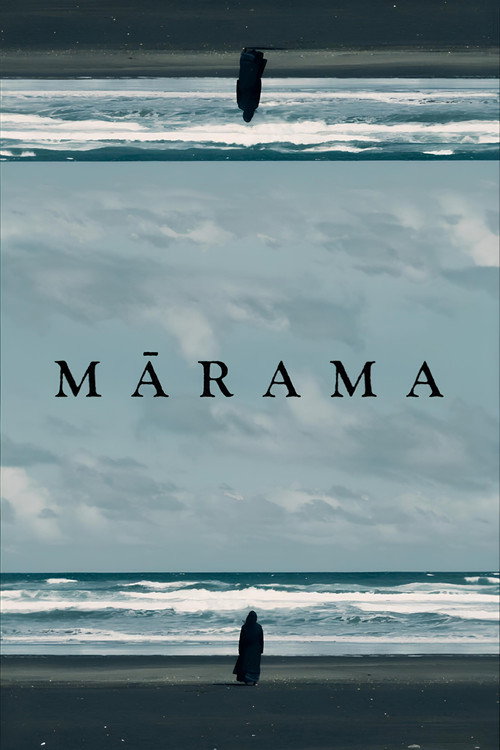
Mārama
Narrative tropes
Revenge Is Sweet
mediumCole's destruction of Mārama's family is the wrong that drives the entire plot. In 1859 colonial England, official justice for an Indigenous woman against a titled landowner is absent, making personal confrontation the only recourse. The climax—confronting and destroying Cole—is framed as righteous payoff, and no meaningful consequences for Mārama's vengeance are indicated.
About this trope: Vengeance is portrayed as justified, satisfying, and morally righteous. The audience is invited to cheer as the protagonist destroys those who wronged them.
Born Special
mediumThe Matakite gift is explicitly described as hereditary, passed through the women of her lineage—ability from bloodline, not training. Ancestry is the direct source of power. The gift is central to the plot's resolution. No other character can replicate it regardless of effort, marking Mārama as innately special by birth.
About this trope: Certain characters are inherently special by birth, blood, genetics, or prophecy — not through effort or choice. Greatness is innate, not earned.
You Can't Trust Anyone
mediumCole presents himself as a benefactor—offering employment, speaking Māori, appearing fascinated rather than predatory—while actively gaslighting and manipulating Mārama. She must 'gradually piece together the truth,' validating suspicion. The true enemy was hiding in plain sight as her employer, and the conspiracy (prior targeting of Māori women, connection to her family) was concealed within an ostensibly trustworthy relationship.
About this trope: Trusted allies, institutions, or authority figures are secretly working against the protagonist. Paranoia is justified because betrayal is real and pervasive.
A Parent's Shadow
mediumMārama's entire journey is defined by her parentage: she travels 11,500 miles to learn about her biological parents, and the conflict's root is Cole's past crimes against her family. Her Māori heritage and Matakite lineage are inherited secrets that create the central dramatic tension. The resolution—reclaiming the name Mārama—is explicitly an act of self-definition against a legacy others tried to erase.
About this trope: A character must grapple with the legacy of their parents or predecessors — living up to high standards, running from expectations, atoning for inherited sins, or forging their own path.
Cultural messages
Be Yourself
highMary/Mārama was raised under an English name with her Māori identity suppressed by white guardians—core aspect actively hidden. External pressure to conform is structural (colonial upbringing, 1859 England). The Haka and reclaiming the name Mārama is the explicit transformation/self-acceptance scene. Her Matakite powers fully awaken only as she reclaims her identity, directly tying strength to authenticity.
About this message: A character hides or suppresses their true identity to conform, then finds strength and happiness by embracing who they really are. Authenticity is the real superpower.
Movies that share these tropes




Full plot (spoilers)
Set in 1859 North Yorkshire, England, Mārama follows a young Māori woman who has grown up in New Zealand under the English name Mary Stevens, adopted as an infant by white guardians who told her little about her heritage or whakapapa (genealogy). When she receives a letter from a man named Boyd claiming to have information about her biological parents, she makes the 11,500-mile voyage alone to Yorkshire, arriving at the port town of Whitby. She discovers Boyd has died before she could meet him. Wealthy, titled landowner Nathaniel Cole—who speaks Māori and houses an extensive collection of sacred Māori artifacts at his estate, Hawkser Manor—steps in and offers Mary employment as governess to his young daughter Ann, effectively trapping her in his household. Cole's apparent fascination with Māori culture soon reveals itself as something more sinister: a fetishistic, predatory obsession. Through gaslighting and manipulation, he keeps Mary off-balance while she gradually pieces together the truth. His 'collection' extends beyond objects to people, and she is not the first Māori woman he has brought into his orbit. His past includes predatory activity along the New Zealand coast, targeting Indigenous women, and his crimes are directly connected to the destruction of her family. As Mary confronts this horrific colonial inheritance, she begins experiencing supernatural visions—peering into reflective surfaces and glimpsing the past and future—manifestations of her ancestral Matakite gift, a hereditary seer ability passed through the women of her lineage. She also navigates a tense but respectful dynamic with Peggy, Cole's West Indian maid, another woman of color navigating survival under Cole's roof. Fully awakening to her Matakite powers and reclaiming her true identity as Mārama, she performs a Haka and moves to confront and destroy Cole, avenging her family and reclaiming what colonialism stole.
Sources: Wikipedia (premise section), Eye for Film review, But Why Tho review, Web search snippets (TMDb overview, horror listings)