Movie
Mary
Narrative tropes
Born Special
highJesus is the archetypal 'born special' figure: the angel Gabriel's Annunciation explicitly identifies him as uniquely destined before birth; his divine conception makes parentage the literal source of his significance; Herod's Massacre of the Innocents is triggered solely by the prophecy of a chosen king; and no training or merit is involved — his extraordinary nature is wholly innate. Mary herself is consecrated to God's service from birth by her parents, reinforcing that the story's central figures are defined by prophetic destiny, not earned greatness.
About this trope: Certain characters are inherently special by birth, blood, genetics, or prophecy — not through effort or choice. Greatness is innate, not earned.
Cultural messages
Family Is Everything
mediumThe Holy Family is the narrative spine: Joseph chooses to stand by Mary despite scandal and public condemnation (choosing family over social standing), the family flees to Egypt together as the only mechanism for surviving Herod's massacre, and the story closes with the family united presenting Jesus at the Temple. Herod's threat functions as the family-endangering force that the family bond itself overcomes through solidarity and flight.
About this message: Family bonds — biological or found — are ultimately what saves the day, provides meaning, and matters most. Characters who stray from family suffer; those who return are rewarded.
Power Means Duty
mediumMary is assigned an extraordinary, divinely mandated duty by Gabriel's Annunciation — an explicit framing of sacred obligation. She pays a steep personal cost (public condemnation, near-mob violence, exile in Egypt), demonstrating personal happiness sacrificed for the greater good. The story's own framing — 'faith, resilience, and maternal courage' — confirms that her identity is wholly defined by duty rather than by any power she wields.
About this message: Those gifted with extraordinary abilities, wealth, or status have a moral obligation to use them for others — and the weight of that duty can be crushing. Privilege creates obligation.
Movies that share these tropes






Full plot (spoilers)
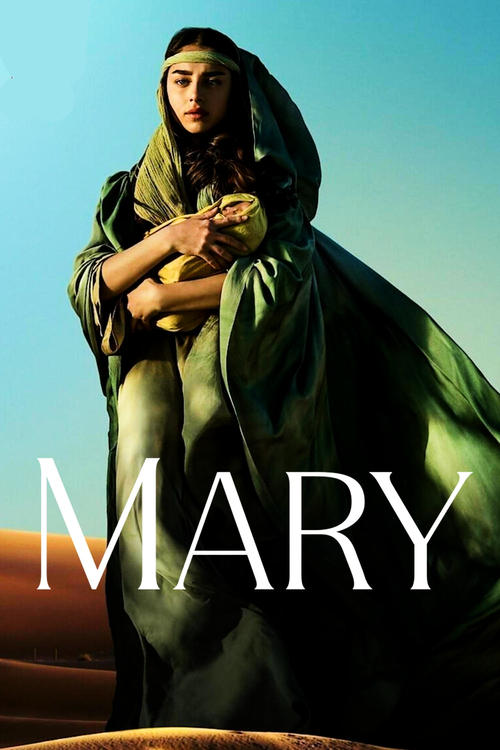
The film opens with the elderly couple Joachim and Anne offering prayers for a child; an angel announces they will have a daughter dedicated to God's service. Mary is born in Nazareth and is later brought to the Temple in Jerusalem for consecration, where she is educated by Anna the Prophetess and Baba ben Buta. As a teenager, Mary meets Joseph at a stream while washing clothes, and he quickly seeks her hand in marriage from her parents. After their betrothal, the angel Gabriel appears to Mary with the Annunciation, telling her she will conceive and bear a son to be named Jesus. When the High Priests discover her pregnancy, they expel her from the Temple. Facing public condemnation and rumor, Mary is nearly set upon by a mob but is rescued by Joseph, who pledges his love and support regardless of the scandal. The couple journey to Bethlehem, where overcrowding forces them to shelter in a stable, and Jesus is born there. Learning of the birth of a prophesied king, Herod the Great orders the Massacre of the Innocents, compelling Mary, Joseph, and the infant to flee into Egypt. The narrative concludes with the family returning to present the child Jesus at the Temple in Jerusalem. The story draws primarily from the Gospels of Matthew and Luke, supplemented by the non-canonical Protoevangelium of James (a 2nd-century apocryphal text), and frames the familiar Nativity story as a coming-of-age epic centered on Mary's faith, resilience, and maternal courage.
Sources: Wikipedia