Movie
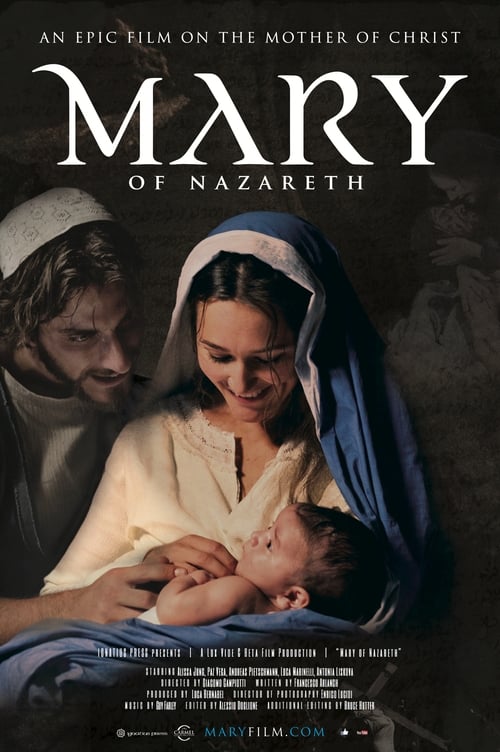
Mary of Nazareth
Narrative tropes
Born Special
highJesus's divine nature is the engine of the entire plot: Gabriel's annunciation establishes a prophecy identifying him as uniquely destined; his virgin birth marks innate, not earned, specialness derived from divine parentage; he is explicitly 'the one' chosen by God rather than by merit; his parentage (Son of God) is the stated source of his power and mission; and his public ministry implies capabilities no other character possesses regardless of effort. All three core-pattern requirements are met: destiny stems from birth/prophecy, inherited status is central, and specialness is innate.
About this trope: Certain characters are inherently special by birth, blood, genetics, or prophecy — not through effort or choice. Greatness is innate, not earned.
Cultural messages
Family Is Everything
mediumThe mother-son bond between Mary and Jesus is the narrative spine of the film, satisfying all three core requirements. Family is threatened and broken repeatedly (violent raid, flight to Egypt, Joseph's death, the crucifixion). The story closes on family reunion as its emotional resolution — Mary's encounter with the risen Christ. Supporting signals: Joseph explicitly chooses family over personal comfort by staying with Mary despite social stigma; the resurrection encounter functions as the family-reunion climax; and Mary Magdalene's integration into Jesus's community extends the found-family dynamic.
About this message: Family bonds — biological or found — are ultimately what saves the day, provides meaning, and matters most. Characters who stray from family suffer; those who return are rewarded.
Movies that share these tropes





Full plot (spoilers)
Mary of Nazareth (2012) is a 180-minute Italian-German-Spanish television film directed by Giacomo Campiotti that traces the life of Mary, mother of Jesus, from girlhood to the resurrection. The story opens in late first-century BC Galilee, where a young Mary survives a violent raid on her village. As she grows, she is betrothed to Joseph, a humble carpenter, and soon after the angel Gabriel appears to announce that she has virginally conceived the Son of God. Joseph, despite the stigma this carries, chooses to remain faithfully at her side. When Caesar Augustus decrees a census requiring all Jews to register in their ancestral towns, Mary and Joseph make the arduous journey to Bethlehem, where Jesus is born. The family subsequently flees to Egypt to escape danger, then returns to Nazareth where Jesus grows up. The film follows Jesus through his public ministry, during which Joseph dies, leaving Mary to witness her son's mission as a single parent. A prominent parallel narrative follows Mary Magdalene, a young woman from the same Galilean town as Mary, who drifts away from God and ends up in the court of King Herod, where Herodias manipulates her into surrendering her innocence to the king's son. Mary Magdalene's life is transformed when Jesus intervenes on her behalf—rescuing her from a crowd about to stone her—turning her from a fallen woman into one of his most devoted followers. The film culminates in the Passion: Mary watches helplessly as Jesus is crucified. The story closes with Mary's encounter with the risen Christ after the resurrection, framing the entire narrative as a story of enduring maternal faith.
Sources: Wikipedia, TMDb overview