Movie
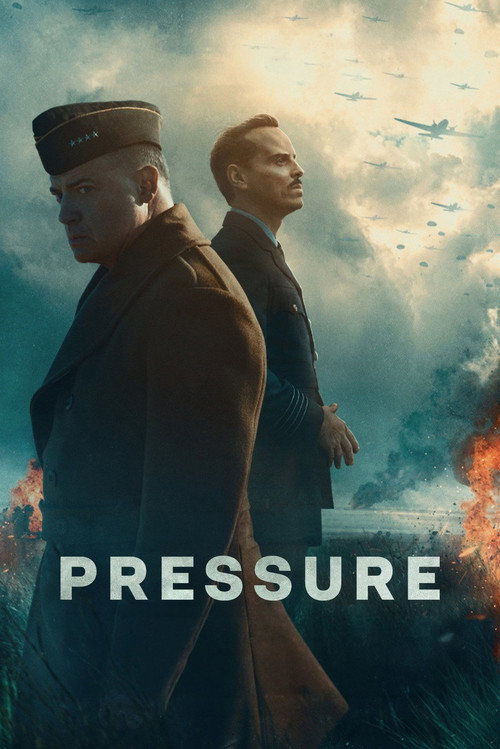
Pressure
Narrative tropes
One Hero Changes Everything
highThe entire D-Day invasion — the largest military operation in history — hinges on a single doubted meteorologist's analysis. Stagg alone identifies the narrow weather window; every rival forecaster (Krick) is wrong. Eisenhower cannot act without Stagg's individual insight, and the film explicitly frames the success of a massive collective enterprise as resting on one man's shoulders. All five signals fire: lone expert succeeds where institutions fail, others are shown incompetent, the hero's personal methodology is the decisive factor, removal equals total failure, and collective action only succeeds because of this individual.
About this trope: One exceptional individual matters more than institutions or collective action. Problems affecting millions are solved by a single remarkable person. Everyone else is passive.
Cultural messages
The Military Are Heroes
highEisenhower and the Allied command are portrayed as heroic, morally serious, and burdened by duty. The film opens by honoring the sacrifice at Exercise Tiger, framing military loss as solemn and meaningful. The D-Day mission is presented as a necessary and justified use of force to end a clearly evil enemy (Nazi Germany). Signals: military culture and scale are treated reverentially, service members are unambiguously heroic, sacrifice is valorized in the opening scene, and the enemy's evil is taken as given justification for the invasion.
About this message: The military, intelligence agencies, or law enforcement are portrayed as fundamentally noble, heroic, and necessary. Service members are brave and selfless. Military force is justified and effective.
Movies that share these tropes




Full plot (spoilers)
Pressure opens with General Dwight D. Eisenhower (Brendan Fraser) witnessing the devastating aftermath of Exercise Tiger, a D-Day rehearsal that killed hundreds of Allied soldiers, underscoring the catastrophic cost of miscalculation. With the massive Normandy invasion tentatively set for June 5, 1944, British meteorologist Group Captain James Stagg (Andrew Scott) is assigned the near-impossible task of forecasting the weather for the operation, given only 62 hours to deliver his assessment. Arriving at Eisenhower's London command center, Stagg immediately clashes with American military climatologist Irving P. Krick (Chris Messina), who insists historical weather patterns predict favorable conditions. Stagg, methodical and contrary by nature, refuses to rely on historical models and insists on gathering comprehensive real-time regional data before committing to any forecast. His rigid, uncompromising approach alienates his peers and superiors, but he is driven both by cold scientific rigor and by the personal stakes of his pregnant wife waiting at home — and by his desperate wish to help end the war. As the hours count down, Eisenhower — flanked by his personal secretary Kay Summersby (Kerry Condon) and Field Marshal Bernard Montgomery (Damian Lewis) — wrestles with mounting dread, knowing the final call is his alone: launch the invasion into conditions others call acceptable, or delay and risk losing the strategic window altogether. Stagg's analysis ultimately reveals a narrow, unexpected break in the storms — something no rival forecaster had predicted — giving Eisenhower the sliver of information he needs to make one of the most consequential decisions in modern history. The film ends with Eisenhower choosing to proceed, with the weight of that choice landing entirely on the forecasts of one doubted meteorologist. Note: The film released May 25, 2026; detailed ending coverage from reviews is limited, and the resolution above is partially inferred from critical descriptions rather than a full synopsis.
Sources: Wikipedia, IMDb search, Loud and Clear Reviews, Gold Derby, TMDb overview