Movie
Reading Lolita in Tehran
Narrative tropes
Humans Never Give Up
mediumThe women face objectively hopeless circumstances — a tightening theocratic regime with 'no sign of loosening' — yet sustain the reading group for years as a deliberate act of defiance. Continuing to engage with forbidden literature when compliance would be safer is the central heroic act. The film frames even emigration not as defeat but as 'a last act of self-preservation and resistance,' keeping the resilience framing intact through the ending. The emotional climax is the sustained decision to keep going, not any external victory.
About this trope: Facing impossible odds, humans endure, adapt, and find reasons to keep going. Resilience and refusal to surrender is humanity's defining and most admirable trait.
Cultural messages
Be Yourself
highThe women publicly comply with mandatory veiling and ideological constraints while secretly sustaining their intellectual lives — hiding core aspects of themselves under extreme external pressure to conform. The clandestine reading group is the turning point of self-acceptance; Azar explicitly refuses the veil and resigns rather than surrender her identity. The discussions are described as the one space where the women 'speak freely, assert their identities, and find solidarity,' with authenticity directly producing strength and happiness. Conformity is shown as pervasive and painful, 'bleeding into every corner of their lives.'
About this message: A character hides or suppresses their true identity to conform, then finds strength and happiness by embracing who they really are. Authenticity is the real superpower.
The System Is Rigged
mediumAzar returns to Iran 'full of hope' for the revolutionary government and continues working within the university system — institutions that should protect intellectual freedom. Both are progressively revealed as hostile: the university enforces ideological censorship, morality squads patrol public life, and a medical visit becomes a site of institutional violence against Sanaz. Working within the system leads directly to Azar's forced resignation. True intellectual freedom is only possible outside institutional channels — in her private living room, conducting the secret reading group.
About this message: Institutions meant to protect people — governments, corporations, law enforcement, the justice system — are depicted as corrupt, incompetent, or actively harmful. Heroes must work outside official channels.
Movies that share these tropes





Full plot (spoilers)
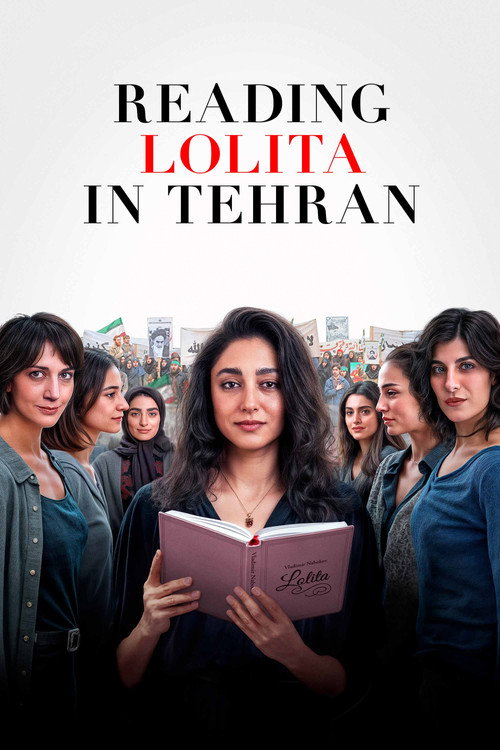
Set against the backdrop of the 1979 Islamic Revolution, the film follows Azar Nafisi (Golshifteh Farahani), an English literature professor who returns to Tehran with her husband Bijan (Arash Marandi) full of hope for the new revolutionary Iran. That optimism quickly erodes as the Islamic Republic consolidates power — morality squads patrol the streets, censorship tightens, and the university environment becomes increasingly hostile to free intellectual inquiry. Azar refuses to comply with mandatory veiling and the ideological constraints imposed on her curriculum, leading to her eventual resignation from her post. Determined to keep literature alive as an act of defiance, she secretly invites seven of her most dedicated and trusted female students into her private living room to form a clandestine reading group. Together they work through forbidden Western classics: Nabokov's Lolita, Fitzgerald's The Great Gatsby, and Austen's Pride and Prejudice, among others. For these women, the discussions become far more than literary analysis — they are a rare space where they can speak freely, assert their identities, and find solidarity. The film illustrates how the repression bleeds into every corner of their lives outside the reading circle: the students navigate patriarchal authority, institutionalised misogyny, and physical violence. One particularly harrowing sequence depicts a student named Sanaz subjected to grotesque violence during a medical visit, underscoring the bodily stakes of simply existing as a woman in this Iran. As the years pass and the regime's grip shows no sign of loosening, Azar ultimately concludes that she cannot build a life — or raise her children — under such despotism. The film ends with her departure from Iran for the United States in the early 2000s, framing emigration not as defeat but as a last act of self-preservation and resistance.
Sources: IMDb (search metadata), Wikipedia (production details only, no plot section), Web search result snippets synthesising Variety review, POFF synopsis, and general coverage