Movie
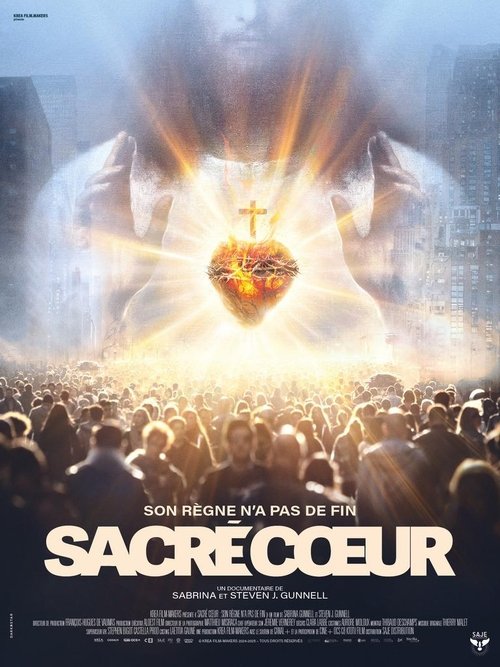
Sacred Heart: His Reign Has No End
Narrative tropes
Love Conquers All
highThe film's central thesis is that Christ's love — made manifest through the Sacred Heart — is a literal healing and transformative force that overcomes gang violence, civil-war trauma, and spiritual emptiness. Love is the explicit mechanism of resolution: it commissions Margaret Mary as its instrument, it transcends death and time through the apparitions and Eucharistic miracles, and contemporary testimonials frame it as saving people from darkness. The film concludes by inviting viewers to encounter that love, presenting it as more powerful than any earthly force.
About this trope: Love — romantic, familial, or platonic — is presented as the ultimate force that overcomes any obstacle including death, physics, evil, or cosmic forces. Love is a literal power.
Cultural messages
Power Means Duty
mediumMargaret Mary Alacoque receives extraordinary mystical gifts (divine apparitions, direct communication with Christ) and is explicitly commissioned by Jesus to use them for the benefit of humanity — spreading Sacred Heart devotion throughout the Church. Her identity in the film is defined entirely by this duty, not by the visions themselves. The commission scene functions as the story's central 'mentor event' explicitly framing the gift as creating obligation.
About this message: Those gifted with extraordinary abilities, wealth, or status have a moral obligation to use them for others — and the weight of that duty can be crushing. Privilege creates obligation.
Movies that share these tropes






Full plot (spoilers)
Sacred Heart: His Reign Has No End is a French docudrama directed by Sabrina and Steven J. Gunnell that traces the history and contemporary relevance of Catholic devotion to the Sacred Heart of Jesus. The film opens by establishing that veneration of the Sacred Heart predates its most famous chapter, showing how medieval saints contemplated the theme centuries before the pivotal events of 17th-century France. The narrative then centers on St. Margaret Mary Alacoque, a Burgundian Visitation nun living at the convent of Paray-le-Monial in Burgundy. Beginning in 1673 and continuing through the 1670s, she receives a series of mystical apparitions in which Jesus appears to her, exposing his heart to her and declaring her his chosen instrument to spread devotion to it. He communicates an intense love for humanity and a desire to be received through the Eucharist, commissioning Margaret Mary to propagate this message throughout the Church. The film dramatizes these apparitions through reenactments, including a Last Supper scene and imagery of the Crucifixion, while interspersing commentary from priests, nuns, historians, and theologians who contextualize the theological significance of the apparitions. A major thread is the deep connection the film draws between the Sacred Heart and the Eucharist, illustrated through accounts of documented Eucharistic miracles from across Church history. The second half broadens the lens to the present day, following contemporary devotees in disparate settings: the gang-affected suburbs of Paris and post-civil-war El Salvador. These segments feature testimonials from formerly lapsed Catholics and others whose lives were transformed through Sacred Heart devotion, underscoring the film's central argument that Christ's love, as revealed through the Sacred Heart, remains a living and healing force in the modern world. The film concludes on a note of invitation, urging viewers to encounter that love for themselves.
Sources: EWTN News, Catholic Review, OSV News, Web search (IMDb, Fandom, sacredheartfilm.us, Fathom Entertainment)