Movie
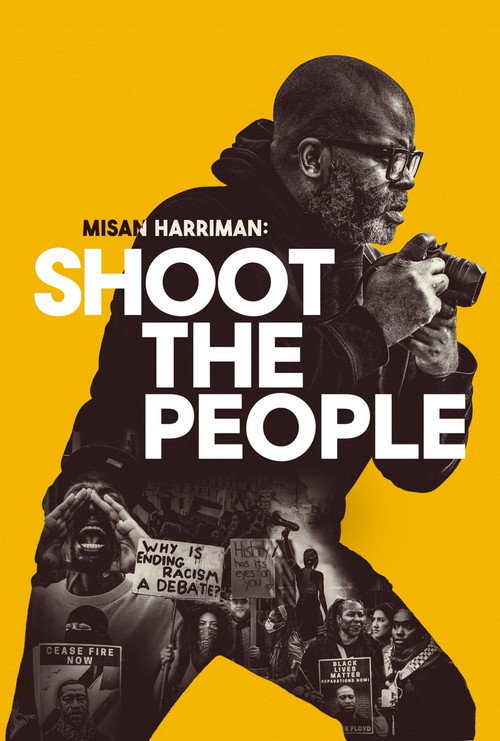
Shoot the People
Narrative tropes
Rebels vs. The Empire
highThe film documents protest movements (BLM, Free Palestine) framed as small, outmatched groups confronting massive state and institutional power — police lines, systemic racism, occupation. The protesters are portrayed as brave and morally righteous throughout Harriman's sympathetic black-and-white imagery. The regime (police, governments, oppressive structures) is implicitly shown as cruel and dehumanizing by virtue of the protests' existence. The film closes by arguing for the collective power of these movements and inviting viewers to join the resistance, framing ongoing protest as meaningful challenge to entrenched power even if decisive victory remains unresolved.
About this trope: A small outmatched group rises up against a massive oppressive regime or institutional power. The rebellion is framed as morally righteous.
Cultural messages
Power Means Duty
mediumHarriman's status as the first Black man to photograph a British Vogue cover and his global platform constitute extraordinary privilege; the entire film frames this as carrying a moral obligation to document injustice for others. His 'personal reckoning with his own position of privilege' is the documentary's central thread, and his doubts about whether his work drives meaningful change function as guilt over potentially unfulfilled duty. Peter Magubane's dictum — 'a struggle without documentation is no struggle at all' — explicitly frames photographic power as social obligation. Harriman's identity is defined entirely by this activist duty rather than by the prestige his platform affords.
About this message: Those gifted with extraordinary abilities, wealth, or status have a moral obligation to use them for others — and the weight of that duty can be crushing. Privilege creates obligation.
Movies that share these tropes


Full plot (spoilers)
Shoot the People is a documentary following Nigerian-born British photographer and activist Misan Harriman as he travels the world documenting grassroots protest movements fighting for equality, civil rights, and social justice. Harriman, who made history as the first Black man to photograph a British Vogue cover and received international recognition for his stark imagery from the 2020 Black Lives Matter demonstrations following George Floyd's death, serves as both subject and narrator of his own photographic mission. The film tracks his work across major protest flashpoints, including BLM demonstrations in the U.S. and U.K. and Free Palestine marches, presenting his black-and-white photographs of protesters confronting police lines and mass demonstrations alongside behind-the-scenes footage of Harriman working in the field. A central thread running through the documentary is Harriman's personal reckoning with his own position of privilege: despite producing images that provoke powerful reactions worldwide, he questions whether his work truly drives meaningful change. He explores these doubts in conversation with prominent figures including Representative Ilhan Omar and Martin Luther King III. The film invokes the legacy of South African apartheid-era photographer Peter Magubane, whose dictum—'a struggle without documentation is no struggle at all'—anchors Harriman's philosophy. Drawing on historical context, activist interviews, and an examination of digital activism, the documentary argues that photography functions as both witness and catalyst, revealing the intersectionality of global movements and their collective power. The film closes by inviting viewers to recognize their own capacity to shape a more just society, framing Harriman's lens as a tool for amplifying voices that might otherwise go unheard.
Sources: FirstShowing.net, UWM Post (Milwaukee Film Festival review), Hollywood Reporter, Watermelon Pictures official site, TMDb overview