Movie
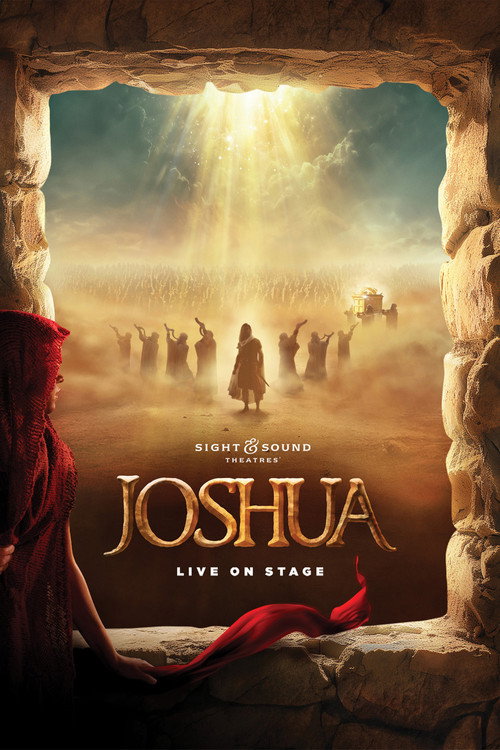
Sight & Sound Presents: JOSHUA—Live!
Narrative tropes
A Parent's Shadow
mediumJoshua's arc is explicitly defined against Moses's 'towering legacy.' He 'wrestles with doubt as he steps into a role defined by Moses,' meaning a predecessor's reputation directly creates the psychological conflict. The Israelites know Moses; Joshua must earn his own standing. His acceptance of the calling and successful execution at Jericho constitutes him defining himself on his own terms rather than simply being a pale imitation of Moses.
About this trope: A character must grapple with the legacy of their parents or predecessors — living up to high standards, running from expectations, atoning for inherited sins, or forging their own path.
Cultural messages
Science vs. Faith
highThe story's central conflict is explicitly framed as faith versus rationality: God's battle plan (march in circles, blow trumpets) is described as 'unconventional' and 'seemingly irrational,' and Joshua's trust in it is 'the story's central test of faith.' Conventional military wisdom would demand siege tactics against impenetrable walls; the divine instruction demands the opposite. Faith wins — the walls collapse miraculously. The climax is a literal leap of faith. Rational/worldly understanding is shown as insufficient; spiritual obedience triumphs.
About this message: Characters face a choice between rational/scientific thinking and spiritual/intuitive belief. The story typically validates faith or emotion over cold logic — the scientist is wrong, the believer is vindicated.
Power Means Duty
mediumJoshua is chosen leader and immediately 'struggles with the weight of this calling' — he wrestles with doubt before accepting his obligation to shepherd the people. Moses passing the mantle is a mentor-explicitly-framing-power-as-obligation moment. Personal comfort is abandoned for the burden of leadership. Joshua's identity throughout is defined by duty to the people rather than by any personal power or ambition.
About this message: Those gifted with extraordinary abilities, wealth, or status have a moral obligation to use them for others — and the weight of that duty can be crushing. Privilege creates obligation.
Movies that share these tropes






Full plot (spoilers)
Sight & Sound Presents: JOSHUA—Live! is a live-audience theatrical film adaptation of the biblical Book of Joshua, produced by Sight & Sound Theatres for its 50th anniversary and filmed on their 300-foot wraparound stage in Lancaster, Pennsylvania. The story opens with the Israelites in the aftermath of their exodus from Egypt, now navigating a harsh wilderness as a newly freed people. Moses, their longtime leader, passes the mantle of leadership to Joshua, who must shepherd a people burdened by fear, dwindling supplies, and the threat of hostile armies closing in around them. Joshua struggles with the weight of this calling, wrestling with doubt as he steps into a role defined by Moses's towering legacy. The Israelites face a series of trials in the wilderness—including the miracle of manna sustaining them—before Joshua leads them across the Jordan River toward the land God has promised them. The final and most formidable obstacle is Jericho, a heavily fortified city whose massive walls seem impenetrable. Joshua dispatches two spies into the city, where they are sheltered by Rahab, a woman living within Jericho's walls whose courage and faith set her apart from her people. Rahab strikes a covenant with the spies: she will protect them and help them escape if they promise that she and her family will be spared when Israel takes the city. She lowers them from her window with a rope and hangs a scarlet cord as the agreed-upon sign of protection. Back with the Israelites, God delivers unconventional battle instructions: march around Jericho once a day for six days, then seven times on the seventh day, and blow trumpets. Joshua's trust in this seemingly irrational plan is the story's central test of faith. The Israelites obey, and on the seventh day the walls of Jericho collapse. Rahab and her family survive, saved by the scarlet cord in her window—fulfilling the spies' oath. The production frames Rahab's arc as a redemption story: a woman from enemy territory whose faith earns her a place in Israel's story and, according to the New Testament, in the lineage of Jesus. The overarching themes are radical trust in divine guidance, the courage to follow unconventional commands, and the redemption available to anyone regardless of background. The film combines this narrative with live animals, an original gospel-infused soundtrack, and cinematic close-ups of the stage spectacle.
Sources: TMDb overview, PR Newswire (Roadside Attractions press release), PR Newswire (Sight & Sound Theatres announcement), Crosswalk.com interview