Movie
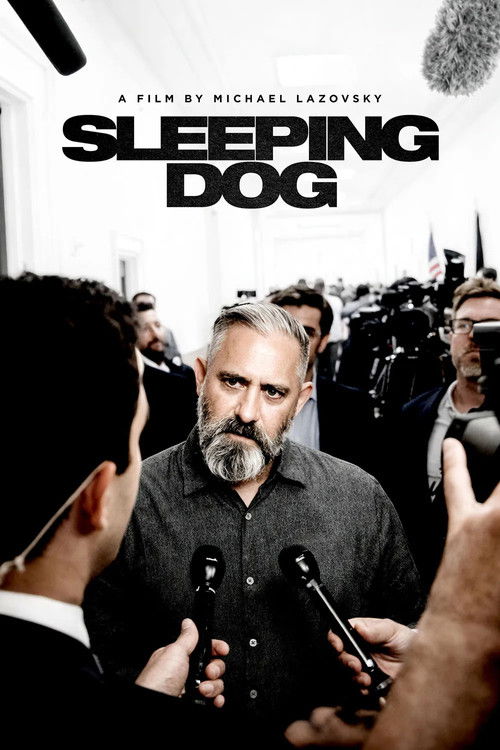
Sleeping Dog
Narrative tropes
Rebels vs. The Empire
mediumA small coalition of journalists (Corbell, Knapp) and whistleblowers (Grusch, Fravor) confronts the vastly more powerful U.S. intelligence and defense apparatus. The group is portrayed as courageous truth-seekers taking serious personal and professional risks against an entrenched institutional power determined to keep information buried. Meaningful resistance is ultimately achieved — Pentagon investigations and formal congressional hearings — despite the overwhelming power imbalance, fitting the outmatched-rebels-challenge-the-empire arc.
About this trope: A small outmatched group rises up against a massive oppressive regime or institutional power. The rebellion is framed as morally righteous.
Cultural messages
The System Is Rigged
highThe Pentagon and intelligence community — institutions whose function is accountability to the public — are depicted as actively burying UAP information in compartmentalized legacy programs. Corbell and Knapp must operate as independent journalists entirely outside official channels; whistleblower Grusch similarly breaks from his organization to testify. Intelligence officials explicitly warn Corbell to back off ('don't kick a sleeping dog'), confirming institutional resistance. Congressional hearings only materialize because external pressure forced the issue, illustrating that working within the system produced no transparency. The film frames all meaningful progress as coming from outside institutional rules.
About this message: Institutions meant to protect people — governments, corporations, law enforcement, the justice system — are depicted as corrupt, incompetent, or actively harmful. Heroes must work outside official channels.
Movies that share these tropes





Full plot (spoilers)
Sleeping Dog is a 2026 documentary directed by Michael Lazovsky that chronicles Jeremy Corbell's transformation from mixed martial artist into one of the most prominent investigative journalists in the UAP (unidentified anomalous phenomena) disclosure movement. The film's title derives from a warning Corbell received from intelligence officials: 'Don't kick a sleeping dog' — a metaphor for deeply compartmentalized government legacy programs tied to UAP technology and alleged non-human biologics that powerful interests would prefer remain buried. The documentary traces Corbell's unlikely career arc: beginning in the world of combat sports, he pivoted to investigative filmmaking and journalism, eventually becoming a central figure in efforts to force government transparency about UAPs. The narrative documents key milestones in his reporting, including the release of military-filmed UAP footage and whistleblower testimony that fed into Pentagon investigations and formal congressional hearings. Corbell's ongoing collaboration with veteran investigative journalist George Knapp — his co-host on the Weaponized podcast — is a throughline, framing their partnership as a journalistic force pushing against institutional secrecy. The documentary features interviews with a wide range of figures: whistleblower David Grusch, Navy pilot Cmdr. David Fravor (witness to the 2004 Nimitz encounter), physicist and longtime UAP figure Bob Lazar, retired astronaut Dr. Edgar Mitchell, military insider Col. John B. Alexander, researcher John Lear, and various government insiders and scientists. Rather than asserting definitive claims about extraterrestrial origins, the film takes an evidence-forward stance: 'We're not saying what it is, but there's something going on, and it needs to be looked at.' Corbell himself describes the documentary as the most personally revealing project he has allowed audiences to see, emphasizing the personal and professional risks taken in exposing what he characterizes as information never meant to become public.
Sources: sleepingdogmovie.com, Hollywood Reporter, Gold Derby, SYFY Wire, LA Mag