Movie
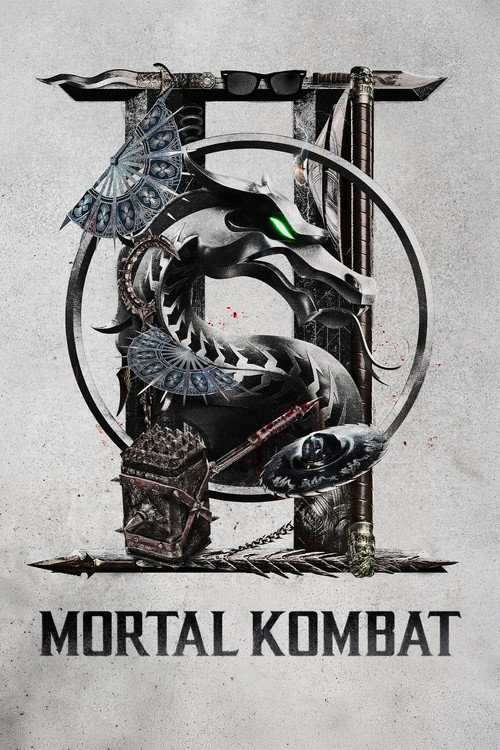
Mortal Kombat II
Narrative tropes
Rebels vs. The Empire
highEarthrealm's small band of champions faces Shao Kahn's vast, merciless Outworld empire in a tournament framed as existential resistance. The champions are portrayed as righteous underdogs; Shao Kahn is explicitly cruel (severs Cole's fingers, murders Kitana's father). Victory — repelling the invasion — is achieved despite a 9-loss streak against overwhelming power.
About this trope: A small outmatched group rises up against a massive oppressive regime or institutional power. The rebellion is framed as morally righteous.
Violence Gets Results
highThe entire film's conflict resolution mechanism is physical combat — the Mortal Kombat tournament format forecloses non-violent resolution by design. The climax is Kitana's direct fight with Shao Kahn. Every protagonist's primary problem-solving tool is combat skill. The story never questions whether violence is the right approach.
About this trope: The central conflict is ultimately resolved through physical force rather than negotiation, diplomacy, or systemic change. Talking fails; fighting works.
Revenge Is Sweet
mediumKitana's arc is explicitly driven by avenging her father's death at Shao Kahn's hands. Her climactic confrontation with Shao Kahn is the film's emotional and action centerpiece, framed as heroic and cathartic. No institutional justice can reach Shao Kahn, making personal vengeance the only recourse, and the story treats her victory as the earned payoff.
About this trope: Vengeance is portrayed as justified, satisfying, and morally righteous. The audience is invited to cheer as the protagonist destroys those who wronged them.
Cultural messages
The Outsider Knows Best
highJohnny Cage — an outsider Hollywood action star — displaces the first film's established protagonist and becomes Earthrealm's central champion. His emotional arc takes narrative priority. The Earthrealm community had been failing for nine consecutive tournaments before his arrival. He fights the community's enemies on its behalf using his own outsider flair (trash-talk, unorthodox martial arts, low blow), and the story centers his growth rather than the existing champions' stories.
About this message: A privileged outsider enters a community, masters its ways, and becomes its greatest champion or leader. The community apparently couldn't save itself without the outsider's help.
Humanity Must Unite
highEarthrealm's assembled champions — described as needing to suppress internal rivalries — must fight cohesively to stop Shao Kahn's conquest. The plot explicitly names this as a precondition for victory. The shared threat (interdimensional invasion, extinction of Earth) dwarfs any individual conflict among fighters. Kitana crossing from Outworld to fight alongside Earthrealm further reinforces cooperation across factional lines.
About this message: A shared external threat forces divided groups to set aside differences and cooperate. Unity across lines of division is both necessary for survival and morally uplifting.
Movies that share these tropes

Full plot (spoilers)
Set after the events of the 2021 Mortal Kombat reboot, Mortal Kombat II raises the stakes of the interdimensional tournament: if Earthrealm's champions lose for a tenth consecutive time, Shao Kahn (Martyn Ford) earns the right to invade and conquer Earth. The film opens with Cole Young suffering a brutal early defeat at Shao Kahn's hands — the warlord severs Cole's fingers and stabs him, effectively removing the first film's protagonist and establishing Shao Kahn as a credible, merciless threat. This transition shifts the central lead role to newly arrived Hollywood action star Johnny Cage (Karl Urban), an overconfident fighter who must grow into a genuine champion. Cage's arc is shaped by his partnership — and eventual romance — with Outworld princess Kitana (Adeline Rudolph). Kitana's storyline runs parallel and deeply intertwined with Cage's throughout the film. A key showcase battle sends Cage against the monstrous Baraka in an Outworld desert village: Cage trash-talks his way into a difficult fight but ultimately wins with a combination of unorthodox martial arts and a signature low blow. Kitana's arc drives toward the film's climax: the soundtrack cue 'Kitana vs Shao Kahn' signals that she confronts Shao Kahn directly in the final act, believed to be motivated by avenging her father's death and breaking free of the tyrant's control. Meanwhile, the villainous Bi-Han has been reborn as the shadow wraith Noob Saibot, wielding new dark powers including teleportation and life-force draining, and the film teases a rematch between him and Scorpion. Earthrealm's assembled champions — including returning fighters from the first film — must suppress internal rivalries and fight cohesively to repel Shao Kahn's conquest. Franchise creator Ed Boon appears in a cameo as a bartender who serves Johnny Cage. The film ends with Kitana's climactic confrontation with Shao Kahn positioned as the emotional and action centerpiece of the finale. Note: this plot is reconstructed from pre-release promotional materials, CinemaCon footage, trailer analysis, and advance spoiler coverage, as the film had not yet released at time of research.
Sources: Wikipedia (premise only, no plot section yet), IMDb, The Direct (spoiler/trailer analysis), FilmJabber, TMDb overview, Web search aggregation