Movie
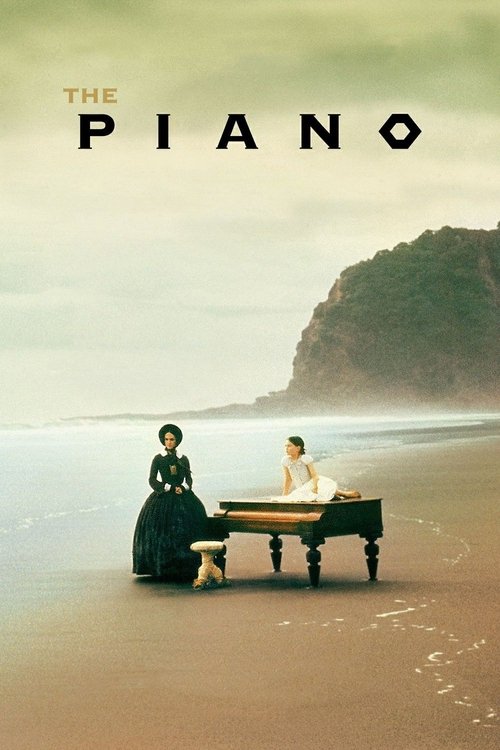
The Piano
Narrative tropes
Love Conquers All
mediumThe Ada–George love affair is the engine behind every major resolution: George returns the piano out of love rather than continuing the coercive bargain; Ada overcomes her controlled self and seeks him out; at the drowning climax her will to live — tied to her bond with George and Flora — pulls her free of the sinking piano. In the epilogue she begins halting speech, her voice returning through connection. Signals: love motivates the decisive acts (George's gift, Ada's fight to surface); a character is saved from death by love (Ada wills herself free); love dissolves a seemingly unbreakable condition (her long silence begins to lift).
About this trope: Love — romantic, familial, or platonic — is presented as the ultimate force that overcomes any obstacle including death, physics, evil, or cosmic forces. Love is a literal power.
Humans Never Give Up
mediumThe drowning scene is the film's emotional climax: Ada, rope coiled around her foot and sinking, initially surrenders to the pull of the piano — then wills herself to fight free. The epilogue makes resilience the explicit frame: she describes the sunken piano as a ghost she is 'learning to leave behind,' positioning the ongoing decision to keep living, not the survival itself, as the narrative payoff. Signals: she refuses to quit at the moment surrender would be most rational; the climax is the interior decision to live, not the physical escape; hope persists against all logic at the bottom of the sea.
About this trope: Facing impossible odds, humans endure, adapt, and find reasons to keep going. Resilience and refusal to surrender is humanity's defining and most admirable trait.
Cultural messages
Be Yourself
highAda suppresses her authentic self through elective mutism and a controlled demeanor enforced by Alisdair's arranged marriage and colonial expectations. She initially restricts herself further (playing only black keys as resistance). Her turning point is seeking George out of her own volition — desire becoming agency. Resolution flows directly from embracing her true self: she chooses life over the piano, and in the epilogue she learns to speak and continues music with a prosthetic finger. Signals: conformity is visibly painful; the moment she pursues George marks her transformation; strength and happiness track her authenticity; hiding/suppression (mutism, restricted playing) is the baseline she must escape.
About this message: A character hides or suppresses their true identity to conform, then finds strength and happiness by embracing who they really are. Authenticity is the real superpower.
Movies that share these tropes






Full plot (spoilers)
In mid-19th century colonial New Zealand, Ada McGrath, a Scottish woman who has not spoken since childhood (a condition of elective mutism), arrives with her young daughter Flora for an arranged marriage to a settler named Alisdair Stewart. Ada communicates through sign language and through playing her beloved upright piano, with Flora acting as her interpreter. When they land on a remote beach, Alisdair refuses to carry the heavy piano inland, leaving it stranded on the shore — a loss that devastates Ada. George Baines, a rough-mannered former sailor who has adopted many Māori customs and lives near the Stewart property, eventually takes Ada to the beach to play. Entranced by her music and her joyful transformation at the keys, George strikes a deal with Alisdair: he will trade a parcel of land in exchange for the piano and a series of private lessons from Ada. Alisdair accepts. Ada reluctantly complies, initially restricting her playing to the black keys as a form of resistance. During the lessons, George begins making physical overtures, proposing that Ada earn back the piano key by key in exchange for allowing small intimacies. Ada, stern and controlled in daily life, finds herself gradually drawn in, and what begins as coerced bargaining evolves into genuine desire and emotional attachment. After George returns the piano to Ada outright — unable to continue the arrangement on such terms — she is the one who seeks him out, and the two begin a full love affair. Alisdair eventually discovers the relationship. Furious and feeling betrayed, he forces Ada to swear she will never see George again, then exacts a brutal punishment: he chops off Ada's index finger with an axe and sends the severed finger to George as a warning. Despite his violence, Alisdair undergoes a sudden spiritual crisis and recognises that Ada's heart will never belong to him. He releases her, allowing Ada, George, and Flora to leave together by canoe. On the water, Ada insists the piano be loaded onto the canoe and then thrown overboard. As it sinks, she lets the rope coil around her foot and allows herself to be pulled beneath the surface in what appears to be a deliberate act of self-destruction — a farewell to the instrument that has been both her voice and her prison. At the last moment she wills herself to fight free, kicking off into the dark water and surfacing. In the epilogue, Ada, George, and Flora have settled in Nelson, where Ada gives piano lessons using a metal prosthetic finger crafted by George, and she is slowly, haltingly learning to speak aloud. She describes herself as haunted by a dream of the piano resting silent on the ocean floor, with her own pale form floating above it — a ghost she is learning to leave behind.
Sources: Wikipedia