Movie
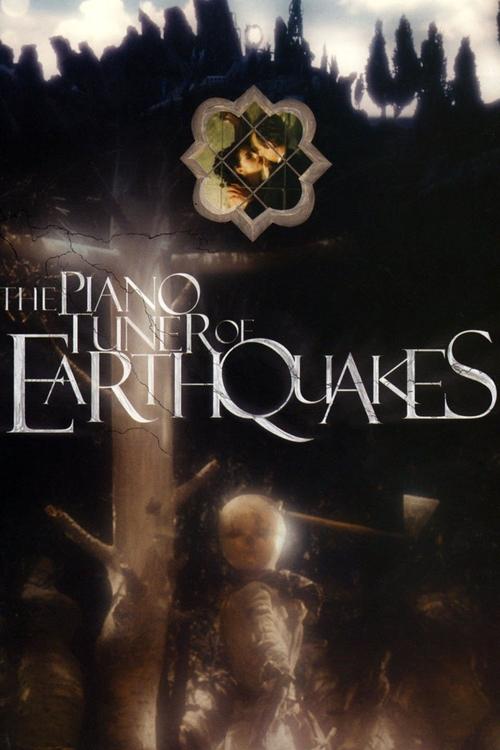
The Piano Tuner of Earthquakes
Cultural messages
What Makes Us Human?
mediumThe plot explicitly poses the philosophical question of whether humans and automata are distinguishable by asking whether any character 'truly acts of their own will, or whether they are all merely wound-up instruments playing out a predetermined score.' The film continuously blurs the boundary between the mechanical and the living (Malvina reanimated, seven performing automata, Felisberto activating them). Three signals fire clearly: (1) the story explicitly blurs the line between programmed behavior and genuine feeling; (2) the question of autonomy and personhood applies equally to human and non-human characters; (3) humans are implicitly shown to be no more self-determining than the automata — the 'wound-up instruments' metaphor applies to all.
About this message: As the line between humans and non-humans blurs — AI, clones, aliens, robots — the story forces a reckoning with what truly defines humanity: biology, consciousness, memory, emotion, or moral choice.
Movies that share these tropes



Full plot (spoilers)
Set in a dreamlike 19th-century world, the film opens with opera singer Malvina van Stille murdered on stage by the sinister Dr. Emmanuel Droz just before her planned wedding. Droz spirits her body away to his remote, labyrinthine villa, where he reanimates her — though she wakes amnesiac — intending to use her as the unwilling star of a "diabolical opera": a grotesque private performance that recreates the very moment of her abduction and death, timed to coincide with an eclipse. To prepare the spectacle, Droz summons Felisberto Fernandez, a piano tuner of exceptional skill, to his isolated estate under the pretense of cleaning and refurbishing seven elaborate mechanical automata that are scattered across the estate's strange landscape. Felisberto's true role is to activate these automata, which are essential components of Droz's planned performance. As Felisberto works through the uncanny mechanisms, he encounters Assumpta, a woman who oversees the day-to-day affairs of the villa, and the ethereal Malvina herself. Because Felisberto bears a striking resemblance to Malvina's lost fiancé Adolfo, she is gradually drawn to him despite her amnesia. The film dwells in an atmosphere of gothic surrealism — the boundary between the human and the mechanical, the living and the dead, is constantly blurred. Whether Felisberto can resist Droz's control or rescue Malvina before the performance reaches its fatal climax forms the dark heart of the narrative. The story poses an underlying philosophical question about autonomy and fate: whether any of the characters — human or automaton — truly act of their own will, or whether they are all merely wound-up instruments playing out a predetermined score.
Sources: Wikipedia, OMDb, Web search (aggregated reviews/descriptions)