Movie
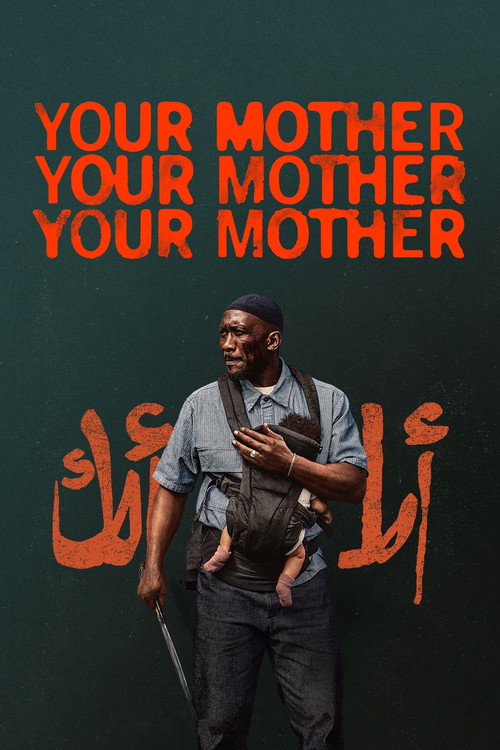
Your Mother Your Mother Your Mother
Narrative tropes
Good Intentions, Terrible Results
mediumBoth Latif and Hwan Yoon operate with internally coherent moral frameworks that produce harm: Latif's selective-killing code (only the deserving, only blades) is a self-justifying ethical system whose contradictions corrode his faith; Hwan Yoon leads a cult-like extremist movement rooted in genuine religious conviction. The film's explicit thesis — that religion functions as both solace and instrument of harm — maps directly onto G1's core signal that certainty of righteousness is itself the danger. Latif must fight someone (Hwan Yoon) who believes he is saving souls, and the story frames neither man's logic as simply evil.
About this trope: A villain — or sometimes a hero — genuinely believes they are doing the right thing, but their well-meaning plan leads to monstrous outcomes. The scariest antagonists think they're saving the world.
Cultural messages
Family Is Everything
highFamily is the plot's gravitational center: Latif is thrust into sole parenthood after his wife's death, his frantic quest for breast milk anchors the narrative's action, his children's safety drives the climactic siege, and the film's title is drawn from a hadith about maternal reverence — explicitly foregrounding parenthood as the thematic core. Latif repeatedly subordinates his professional obligations to family protection, and the threat-to-family structure (wife's death → employers closing in → children endangered) satisfies all three detect_when conditions.
About this message: Family bonds — biological or found — are ultimately what saves the day, provides meaning, and matters most. Characters who stray from family suffer; those who return are rewarded.
Movies that share these tropes






Full plot (spoilers)
Latif (Mahershala Ali) is a devoutly religious Muslim hitman operating in Houston who adheres to a strict personal moral code — he kills only those he judges deserving, such as neo-Nazis, and uses blades rather than firearms. He balances this violent profession with devoted fatherhood and Islamic faith. When his wife dies unexpectedly, Latif is thrust into single parenthood with three children: a newborn infant, and two adolescents, Fatiha and Quadir, who are beginning to question their father's religiosity. Much of the film's action is driven by Latif's frantic quest across Houston to secure breast milk for his infant while managing his grieving family. He is simultaneously pulled into one final job that brings him into direct conflict with Hwan Yoon (John Cho), a charismatic, cowboy-dressed born-again Christian who leads a cult-like extremist religious movement; the assignment connects to a nephew involved in pornography production. As former employers and other forces begin closing in on him and his children, Latif fights to protect his family. The external siege accelerates an internal collapse: his Islamic faith, already shaken by his wife's death and the moral contradictions of his work, begins to unravel entirely. The film draws its title from a hadith about maternal reverence, underscoring its thematic examination of masculinity, grief, and the ways religion functions as both solace and instrument of harm across communities.
Sources: Wikipedia (premise only), Flickering Myth review, FictionHorizon article, Web search aggregated results (Deadline trailer coverage)