Movie
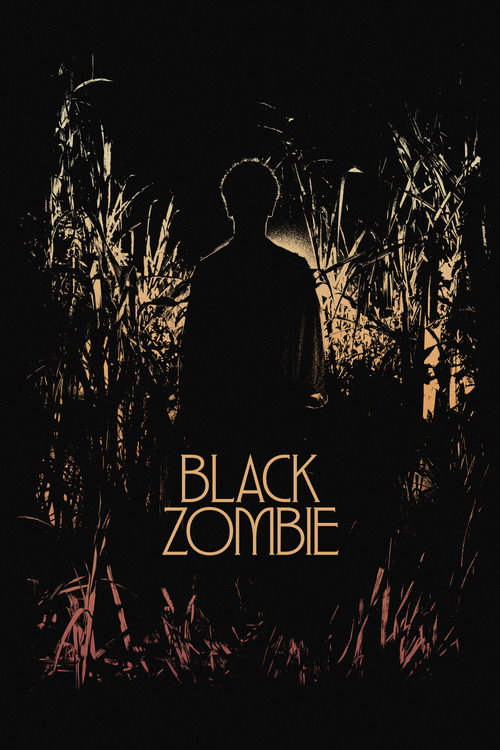
Black Zombie
Cultural messages
The Old Ways Were Better
highThe documentary consistently frames original Haitian Vodou as authentic, spiritually rich, and meaningful, contrasting it unfavorably with Western Hollywood's exploitative commercialization. Haitian spiritualists and historians are centered as authoritative voices over Western industry figures (signal: traditional knowledge and elders prove correct). Western appropriation — from Seabrook's 1929 account through Disney — is depicted as distortion and cultural loss, not progress (signal: modernization as loss). The film's closing argument that reclaiming the zombie's authentic meaning is inseparable from recovering Haitian dignity explicitly validates preserving the older way (signal: story validates returning to traditional ways). The embedded dramatic sequences of a zombie seeking ancestral reconnection and return home reinforce the idealization of the ancestral and traditional over the modern Western archetype (signal: traditional setting depicted as authentic vs. cold commercial alternative).
About this message: Traditional, ancestral, rural, or pre-modern life is portrayed as inherently better than modern alternatives. Progress is corruption, not improvement. The past is idealized as a golden age.
Movies that share these tropes
Full plot (spoilers)
Black Zombie (2026) is a 90-minute documentary directed and written by Maya Annik Bedward that excavates the buried Haitian origins of the zombie figure and traces how it was appropriated, distorted, and monetized by Western culture. The film operates in three broad movements, interweaving expert interviews with black-and-white dramatic scenes following a Haitian zombie protagonist who seeks freedom and a return home.
The first movement establishes the zombie's authentic roots in Haitian Vodou and the legacy of slavery. Scholars Kaiama Glover and Dominique Taffin contextualize how, under colonial enslavement, Haitian people developed the belief that the dead could only spiritually return to Africa after dying free. A Vodou practitioner explains on camera: 'Les zombies, chez nous, sont de réelles' (zombies, for us, are real). In this framework, zombification — a corpse forcibly reanimated by a Vodou practitioner — represented the ultimate continuation of enslavement: the blank-eyed, listless body compelled to labor once more. The zombie was thus a metaphor born from survival and spiritual resistance, not supernatural horror.
The second movement traces how this symbolism was extracted from Haiti and refashioned for white American audiences. William Seabrook's 1929 sensationalist travel account The Magic Island introduced the term 'zombie' to the American mainstream, reframing Haitian spiritual practice as sinister exoticism. This set the stage for Bela Lugosi's White Zombie (1932), which Bedward subjects to a fresh reading centered on Haitian voices, revealing how the film weaponized Vodou imagery while erasing its cultural meaning. Film scholar Tananarive Due identifies the underlying anxiety driving early zombie cinema: white audiences' fear of racial role-reversal, reflecting colonial dread rather than any authentic engagement with Haitian culture. The documentary notes that this period allowed white actors in makeup to occupy narratives that were fundamentally about Black subjugation.
The third movement examines how this distortion persisted and metastasized into contemporary pop culture — from Wes Craven's 1988 adaptation of The Serpent and the Rainbow, which continued to stereotype Haiti in the shadow of the country's post-revolution punishment by Western powers, to mass-produced voodoo dolls and Disney's The Princess and the Frog. Singer and cultural figure Erol Josué poses a pointed question about whether non-Haitians can ever authentically present Vodou as 'peaceful, soulful, and beautiful,' given the centuries of misrepresentation layered atop it.
Throughout, Bedward centers Haitian spiritualists, historians, and cultural figures rather than industry voices, deliberately inverting the authority structure of the films being critiqued. The documentary's embedded dramatic sequences — a zombie seeking agency and ancestral reconnection — serve as a visual counterargument to Hollywood's monster archetype. The film concludes as an act of reclamation: arguing that the zombie, properly understood, remains a symbol of survival and spiritual resistance, and that recovering that meaning is inseparable from recovering the dignity of Haitian history itself.
Sources: Michigan Daily (SXSW review), Moviejawn (BlackStar Film Festival review), Daily Dead (Fantasia review), Wikipedia, Web search aggregation (Variety, Letterboxd, FirstShowing, Bloody Disgusting, GeekTyrant, Unseen Films)