Movie
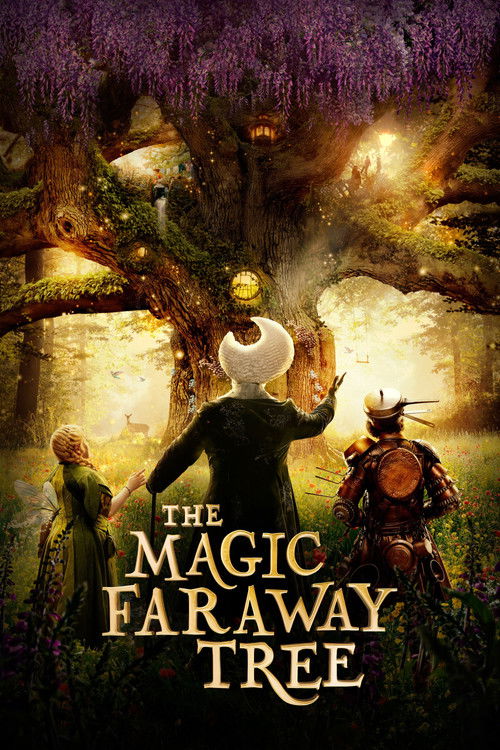
The Magic Faraway Tree
Narrative tropes
Kids See the Truth
mediumFran, the youngest child, is first to perceive and connect with Silky when adults are absent and skeptical. Her innocence is the literal key — the fairy encounter breaks her selective mutism. The parents only engage the magical world after Fran demonstrates it. Beth and Joe, children, are the ones who navigate the magical lands and retrieve the reversal spell; the adults could not have done so. Tim's childhood self accessed the same truth decades before his adult self forgot it, confirming that child perception is the privileged mode of contact with the magical world.
About this trope: Children possess intuitive wisdom, moral clarity, or a connection to truth that cynical adults have lost. Kids see through lies, sense danger, and understand what really matters.
Cultural messages
Nature Knows Best
highThe magical Faraway Tree and English countryside are idealized as spiritually transformative — Fran speaks for the first time through her nature encounter. The family flees a tech-tainted urban life (Polly's surveillance-compromised invention) for a rural farm. The natural/magical world consistently outperforms technology: Silky heals where medicine apparently couldn't, the tree's magic restores the ruined tomatoes. The final tableau frames the natural world as the source of wonder, generational wisdom (Tim's childhood visit), and family renewal.
About this message: The natural world, indigenous peoples, or pre-industrial life is portrayed as inherently wise, pure, morally superior, or spiritually richer than modern civilization. Nature is a source of truth that technology has replaced.
The Old Ways Were Better
highThe film explicitly validates abandoning modern/tech life: Polly quit her tech career after corporate surveillance violated her invention; the family trades city comforts for a countryside farm. The old ways are rewarded — the farm eventually succeeds. Tim's childhood visit to the Faraway Tree functions as ancestral wisdom proven correct when the children rediscover it, reinforcing generational continuity over modern disruption. The rural setting is warm and authentic against the cold, compromised world of technology and urban life.
About this message: Traditional, ancestral, rural, or pre-modern life is portrayed as inherently better than modern alternatives. Progress is corruption, not improvement. The past is idealized as a golden age.
Family Is Everything
highFamily bonds are the engine of every major plot beat. Beth's selfish wish harms the family; guilt over family drives her to lead the quest to undo it. The tomato restoration saves the family's livelihood. The emotional climax is explicitly familial — Tim's reunion with Moonface reveals a generational bond through the tree. The film closes with the family 'reconnected and newly appreciative of each other,' and a subplot about Polly's interfering mother is resolved, tying up every family thread. Found family (Silky, Moonface, tree residents) echoes the biological family's journey.
About this message: Family bonds — biological or found — are ultimately what saves the day, provides meaning, and matters most. Characters who stray from family suffer; those who return are rewarded.
Movies that share these tropes


Full plot (spoilers)
The Thompson family — mother Polly (Claire Foy), a tech inventor who quit her job after discovering hidden surveillance cameras had been added to her smart fridge design without her knowledge, and stay-at-home father Tim (Andrew Garfield) — relocate their three children from the city to a dilapidated barn in the English countryside, hoping to start a home-grown tomato sauce business. The children, teenager Beth, younger Joe, and the youngest Fran (who has been selectively mute), rebel at the loss of Wi-Fi and modern comforts. Fran is the first to encounter Silky (Nicola Coughlan), a kind fairy who lives in an enormous magical tree at the edge of their property. The encounter is transformative: Fran speaks aloud for the first time. Through Silky's invitation, Fran discovers that the Faraway Tree is a portal to fantastical lands that cycle through the clouds at its top, each one different. The tree is also home to eccentric residents including Moonface (Nonso Anozie), the round-faced jolly caretaker; Dame Washalot (Jessica Gunning), who perpetually does laundry; and the mishearing Saucepan Man (Dustin Demri-Burns). Tim and Polly eventually insist that Beth and Joe accompany Fran on her explorations. During a visit to the Land of Birthdays, resentful Beth makes a selfish wish that her father's tomato business will fail so the family will be forced to return to the city. The wish takes effect and the tomatoes rot just before an important local festival, threatening the family's livelihood. Consumed by guilt, Beth leads her siblings back to the tree in search of a reversal spell. Their quest takes them through the Land of Know-It-Alls, sees them piloting a plane through magical sky-lands, and forces them to escape from Dame Snap's harsh and oppressive school. They retrieve the spell and return home in time; the tomatoes are miraculously restored, healthier than before. The farm succeeds, a subplot involving Polly's interfering mother is resolved, and in a final reveal Tim is reunited with Moonface — it emerges he visited the Faraway Tree himself as a child, giving the adventure a generational resonance. The film closes with the family reconnected and newly appreciative of each other and of the wonder of the natural world.
Sources: Wikipedia, Web search aggregated synopsis, Seen at the Cinema review (themagnificent60s.com)