Movie
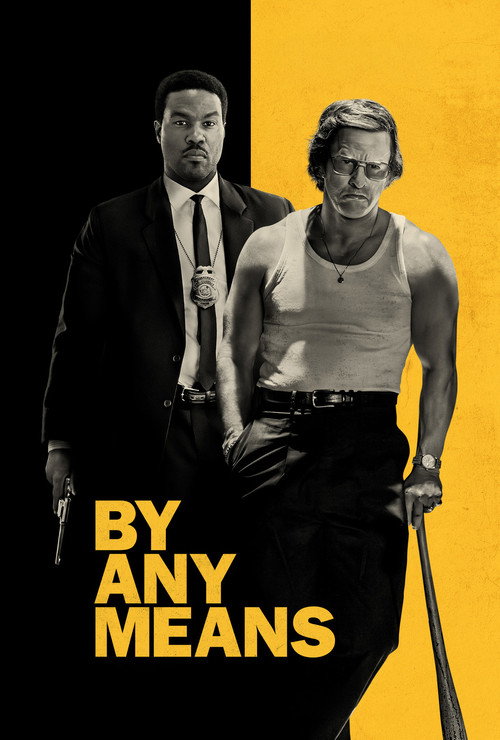
By Any Means
Narrative tropes
Violence Gets Results
highAll three core requirements are met: the central conflict (Klan killings of civil rights figures) is the threat; the FBI is explicitly 'frustrated by its inability to penetrate Klan networks through conventional law-enforcement channels' (non-violent approaches fail); and both plot resolutions—locating the three buried CORE workers and extracting a confession in the Dahmer case—are achieved exclusively through Scarpa's violent coercion. Signals: (1) earlier conventional methods explicitly fail, (2) Scarpa is recruited precisely for his capacity for violence, (3) violent confrontations with Klansmen are the mechanism of each resolution, (4) the story's two climactic beats are both violent extractions of information. The fifth signal (no moral questioning) is absent—the film problematizes the violence—but four of five signals plus all core requirements are satisfied.
About this trope: The central conflict is ultimately resolved through physical force rather than negotiation, diplomacy, or systemic change. Talking fails; fighting works.
Cultural messages
The System Is Rigged
mediumAll three core requirements are met: the FBI is the institution that should be trustworthy; it is revealed as institutionally incapable of achieving justice through legitimate channels (cannot penetrate Klan networks, must outsource to a mob enforcer); and real results come only by operating outside lawful procedures—Scarpa's extrajudicial violent intimidation. Signals: (1) working within the system fails (explicitly stated as the premise for the unconventional pairing), (2) true justice comes only from outside institutional rules (Scarpa's coercive tactics recover bodies and extract confessions that lawful investigation could not), (3) authority figures willfully sanction extralegal criminal violence, implicating the FBI itself in conduct it ostensibly exists to prevent.
About this message: Institutions meant to protect people — governments, corporations, law enforcement, the justice system — are depicted as corrupt, incompetent, or actively harmful. Heroes must work outside official channels.
Movies that share these tropes



Full plot (spoilers)
Set in 1960s Mississippi, the film follows a young Black FBI agent (a fictional composite character played by Yahya Abdul-Mateen II, identified in some sources as Special Agent Wayne Strider) who is dispatched to investigate a wave of brutal killings targeting civil rights leaders. Frustrated by its inability to penetrate Klan networks through conventional law-enforcement channels, the FBI takes an unconventional approach and pairs the agent with Gregory Scarpa Sr. (Mark Wahlberg), a caporegime in the Colombo crime family who simultaneously serves as an FBI informant and contract operative. The narrative centers on two historical incidents. First, in the summer of 1964, three Congress of Racial Equality workers—James Chaney, Andrew Goodman, and Michael Schwerner—disappear near Philadelphia, Mississippi. Scarpa uses violent intimidation tactics against a Klansman to extract information about the burial site; the three bodies are recovered from an earthen dam on August 4, 1964. Second, in 1966, following the firebombing murder of Vernon Dahmer, a Black farmer and voter-registration advocate, Scarpa again assists the FBI by forcing a confession from a KKK-affiliated radio station owner implicated in the attack. Throughout both investigations the film's central moral tension sharpens: the FBI agent is principled and believes in the law, while Scarpa is an amoral professional killer who sees law as irrelevant. As their partnership deepens, the boundaries between justice and vengeance blur for the agent, who is drawn further into Scarpa's brutal methods. The film ends within the 1960s timeframe and does not cover later chapters of Scarpa's organized-crime career. Note: this film had not yet been released as of the data-gathering date (release scheduled September 4, 2026); plot details derive from promotional materials, historical background reporting, and pre-release coverage rather than post-release synopses.
Sources: Wikipedia, The Mob Museum blog, martincid.com, gregscarpa.com, BroadwayWorld featurette