Movie
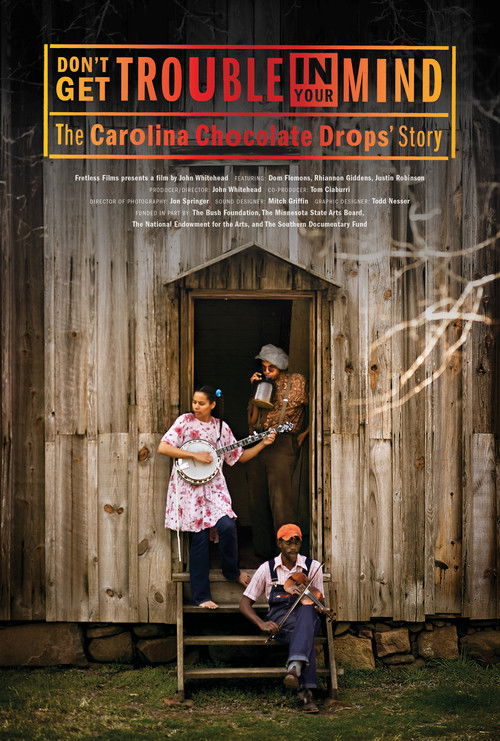
Don't Get Trouble in Your Mind: The Carolina Chocolate Drops' Story
Cultural messages
The Old Ways Were Better
highThe documentary's entire premise valorizes 19th-century African-American string band traditions as authentic and nearly lost — satisfying the favorable depiction of ancestral ways. The contrast with modern life is explicit: the hip-hop generation's disconnection from roots, commercial touring pressures, and the historical erasure of Black musical contributions all function as the unfavorable modern foil. The story validates preserving/returning to older ways throughout: (1) Joe Thompson, the 87-year-old elder fiddler, is the font of wisdom whose guidance shapes the band's sound and mission; (2) Robinson's departure is explicitly framed as an homage and return to origins rather than failure; (3) the historical undocumented African roots of the banjo are treated as a suppressed truth that must be recovered; (4) dissolution and commercial touring are the corrupting modern forces set against authentic traditional practice.
About this message: Traditional, ancestral, rural, or pre-modern life is portrayed as inherently better than modern alternatives. Progress is corruption, not improvement. The past is idealized as a golden age.
Movies that share these tropes


Full plot (spoilers)
Don't Get Trouble in Your Mind: The Carolina Chocolate Drops' Story is a 2019 documentary directed by John Whitehead that chronicles the rise, Grammy-winning success, and eventual dissolution of the Carolina Chocolate Drops, an African-American old-time string band from North Carolina. The film opens by establishing the historical context of its subjects: the largely undocumented African origins of the banjo and the intertwined Black and white roots of Appalachian fiddle and string-band traditions. Against this backdrop, the documentary introduces Rhiannon Giddens, Dom Flemons, and Justin Robinson, three young African-Americans from the hip-hop generation who first connected at the Black Banjo Gathering in Boone, North Carolina in 2005. Settling in Durham, the trio came under the mentorship of Joe Thompson, a then-87-year-old Black fiddler who represented one of the last living links to the 19th-century African-American string band tradition; Thompson's guidance fundamentally shaped their sound and mission. The film follows the band from their beginnings busking on the street and selling homemade CDs, through their visits to schools where they taught young audiences about the African origins of the instruments they played, to their breakthrough onto major festival stages and the Grand Ole Opry. Their 2010 debut album Genuine Negro Jig, released on Nonesuch Records, earned them a Grammy Award for Traditional Folk Album, marking a remarkable arrival on the mainstream stage. As the documentary moves into its later chapters, it tracks the mounting strains of relentless touring—bad food, exhaustion, and prolonged time away from home—alongside deepening interpersonal tensions within the group. A romantic relationship between Giddens and Flemons dissolved when Giddens fell in love with another man, who subsequently joined the band's touring entourage as her husband. Justin Robinson, a place-rooted traditional musician uncomfortable with the demands of the road, departed in 2011. Dom Flemons, a free-spirited scholar of pre-war Black music, followed in 2013. The band continued with new members for several more years before disbanding around 2016. The documentary frames Robinson's departure as a return to origins—an homage to the roots that gave the trio their purpose—and closes with a final concert performance and present-day reflections from the members on how their paths have since diverged. Throughout, archival performance footage and candid behind-the-scenes material illuminate both the cultural significance of the band's work and the personal costs of their brief, luminous run.
Sources: Americana Highways, Southern Documentary Fund, WMOT Roots Radio News