Movie
Double Trouble
Narrative tropes
Violence Gets Results
highThe central conflict (Chamberlain's syndicate holding the second circuit board and hunting the brothers) is resolved entirely through physical confrontation. The plot never depicts negotiation or systemic recourse; instead, it explicitly credits the brothers' 'shared muscle' as what allows them to dismantle the operation. The climax is a violent takedown of Chamberlain's organization. Peter's street cunning and David's law enforcement skills are both framed as combat/tactical assets, not diplomatic ones. The action-comedy genre framing means violence is never questioned as the appropriate solution.
About this trope: The central conflict is ultimately resolved through physical force rather than negotiation, diplomacy, or systemic change. Talking fails; fighting works.
Cultural messages
Family Is Everything
mediumEstranged twin brothers — a criminal and a cop, polar opposites — are the central relationship. The plot explicitly stages their reunion as the mechanism of resolution: their 'growing cooperation ultimately allow[s] them to dismantle the operation.' David abandons his professional ethics (his core identity) to team up with family, prioritizing the bond over personal values. The brothers' complementary skills only work as a pair, making the family unit itself the decisive force against Chamberlain.
About this message: Family bonds — biological or found — are ultimately what saves the day, provides meaning, and matters most. Characters who stray from family suffer; those who return are rewarded.
Humanity Must Unite
mediumThe two brothers are explicitly framed as divided opposites (criminal vs. by-the-book cop) forced together by a shared external threat — Chamberlain's global syndicate — that neither could face alone. Their individual skill sets (street cunning vs. law enforcement expertise) are only sufficient in combination. The brothers set aside their fundamental conflict in values and temperament, and cooperative action is the mechanism of victory. The shared threat is presented as larger than any of their internal differences.
About this message: A shared external threat forces divided groups to set aside differences and cooperate. Unity across lines of division is both necessary for survival and morally uplifting.
Movies that share these tropes






Full plot (spoilers)
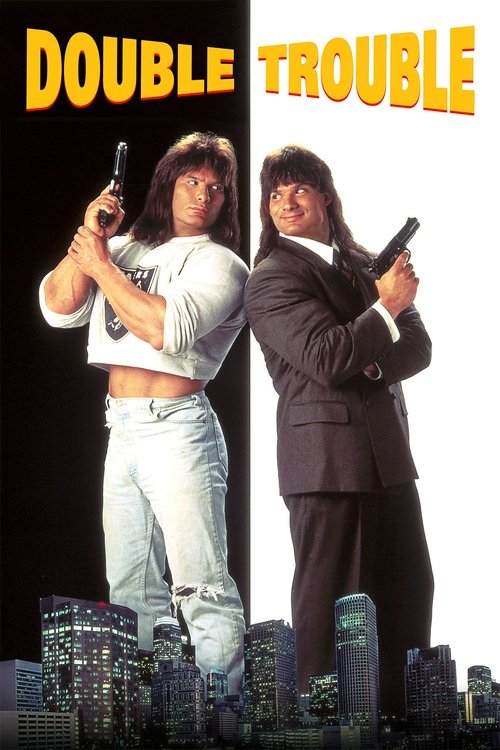
Peter Jade is a career criminal and skilled burglar who, during one of his heists, comes into possession of a mysterious circuit board. He soon discovers that a matching circuit board exists, and the two together function as keys to unlock a safe containing an enormous underground cache of diamonds at an international exchange. Philip Chamberlain, the ruthless leader of a global criminal syndicate, holds the second circuit board and quickly identifies the connection, dispatching his organization to hunt Peter down and recover it. When Chamberlain's men kill the police partner of Peter's twin brother David — a by-the-book cop — David is forced to set aside his professional ethics and team up with his criminal sibling. Despite being polar opposites in temperament and lifestyle, the Jade brothers combine Peter's street cunning with David's law enforcement skills to evade Chamberlain's syndicate and work toward bringing him down. Their bickering and mismatched personalities provide comic friction throughout, but the brothers' shared muscle and growing cooperation ultimately allow them to dismantle the operation and prevent Chamberlain — described as willing to resort to murder without hesitation — from seizing the diamond cache. The film is an action-comedy that leans heavily on the physical presence and comedic interplay of the twin leads, with Roddy McDowall as the villain and supporting appearances from David Carradine and James Doohan.
Sources: Wikipedia, TMDb overview, warren-watched-a-movie.com, mpcafilm.com, Web search (IMDb/Letterboxd metadata)