Movie
Event Horizon
Narrative tropes
New Tech Leads to Disaster
highThe gravity drive is introduced as a revolutionary FTL breakthrough; its maiden voyage represents optimistic adoption. When activated, it works exactly as designed but opens a gateway to a hellish dimension — the disaster is a direct consequence of the technology functioning, not malfunctioning. Warning signs (the ship's unexplained disappearance) went uninvestigated. Weir's corrupted championing of the drive underscores the blindness to its true danger.
About this trope: A new technology or discovery is introduced and initially celebrated, then reveals hidden dangers that escalate to catastrophe. The arc is: marvel > adoption > warning signs ignored > disaster.
Man-Made Monsters
highDr. Weir is the identifiable creator of the gravity drive. The technology crosses a fundamental natural boundary by generating an artificial black hole to fold spacetime — a clear 'playing God' act. The malevolent intelligence that possesses the ship has autonomy far beyond Weir's control. Weir's hubris is literalized: he is ultimately consumed and weaponized by his own creation against the people he was meant to help.
About this trope: A creator uses science to overstep natural boundaries — creating life, resurrecting the dead, engineering organisms, or fundamentally altering nature — and the creation turns destructive.
You Can't Trust Anyone
highDr. Weir, the trusted expert embedded in the rescue crew, is secretly corrupted by the ship's malevolent entity and becomes the primary antagonist — sabotaging the Lewis and Clark and killing crew from within. The ship itself conceals a supernatural threat behind the façade of human technology. Paranoia is fully validated (the danger is pervasive and real), and the true enemy was hiding in plain sight among allies throughout.
About this trope: Trusted allies, institutions, or authority figures are secretly working against the protagonist. Paranoia is justified because betrayal is real and pervasive.
Violence Gets Results
mediumThe plot resolves when Miller detonates explosives to destroy the bow section housing the gravity drive. The narration explicitly notes he had 'no other way' to stop the countdown, confirming non-violent alternatives were exhausted. Physical destruction seals the rift and neutralizes the threat. Miller's sacrifice is framed as unambiguously heroic, with no narrative questioning of whether lethal force was the right choice.
About this trope: The central conflict is ultimately resolved through physical force rather than negotiation, diplomacy, or systemic change. Talking fails; fighting works.
Movies that share these tropes



Full plot (spoilers)
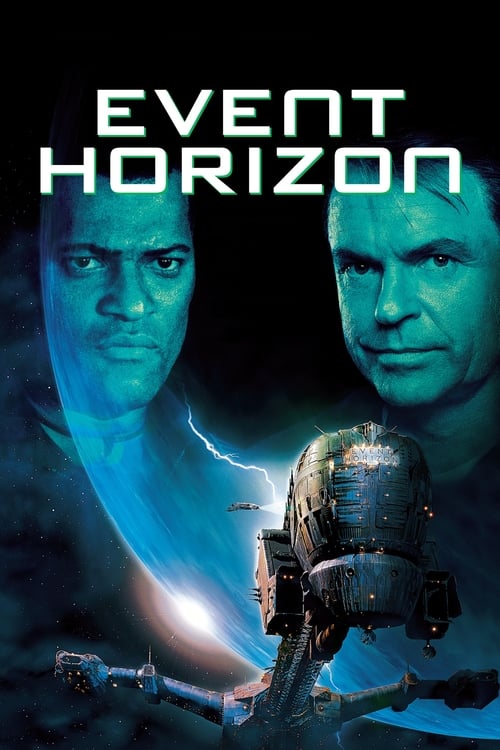
In 2047, the rescue vessel Lewis and Clark is dispatched to investigate the sudden reappearance of the starship Event Horizon, which vanished without explanation seven years earlier during its maiden voyage to Proxima Centauri. The ship is found in orbit around Neptune. On board is Dr. William Weir, the designer of Event Horizon's experimental gravity drive — a device intended to fold space and allow faster-than-light travel by creating an artificial black hole. As the Lewis and Clark crew boards the derelict ship, they begin experiencing terrifying hallucinations rooted in their deepest personal fears and regrets. A crewman named Justin is nearly killed when he is drawn into the gravity drive chamber and emerges from a coma in a state of extreme psychological distress. Investigating the ship's distress signal, the crew decodes a garbled Latin phrase: 'libera te tutemet ex inferis' — 'save yourself from Hell.' Recovered video logs from Event Horizon's original crew reveal the truth: when the gravity drive was activated, it did not simply travel through space — it tore open a gateway to a hellish extradimensional realm. The original crew descended into homicidal madness, brutally killing and mutilating one another. In the final frames of the log, the ship's captain can be seen chanting ecstatically while holding his own gouged-out eyes. Dr. Weir, increasingly corrupted by the malevolent intelligence that now inhabits the ship, sabotages and destroys the Lewis and Clark, killing several crew members. He then initiates a countdown to reactivate the gravity drive and drag the survivors back through the dimensional rift into the hellish dimension. Captain Miller confronts Weir at the gravity drive core. Unable to stop the countdown any other way, Miller detonates planted explosives, sacrificing himself to blow apart the ship's bow section — where the drive is located — and seal the rift. The stern section, containing the surviving crew members Starck, Cooper, and the comatose Justin, is separated from the drive and remains in normal space. The three enter emergency stasis pods. Seventy-two days later, a rescue team locates the stern section and begins reviving the survivors. As Starck awakens, she experiences one final hallucinatory vision of the now-dead Dr. Weir, suggesting the ship's evil presence has not entirely released its hold.
Sources: Wikipedia, OMDb