Movie
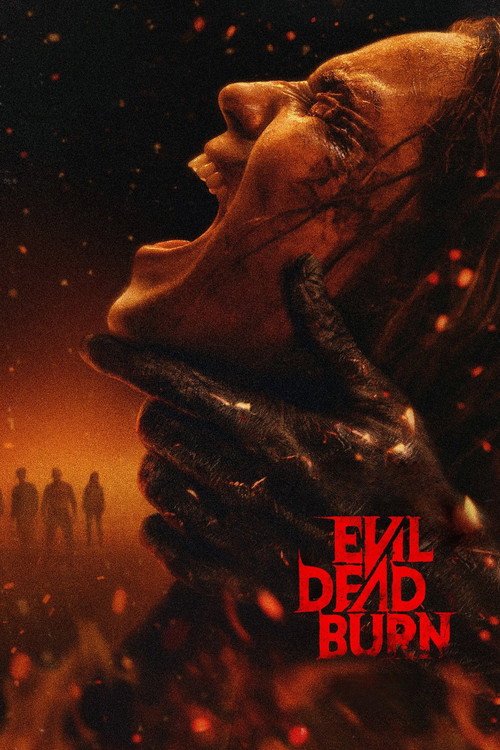
Evil Dead Burn
Narrative tropes
Love Conquers All
highThe film's central thematic hook is explicitly love-transcending-death: 'the vows she took in life live on even in death.' Marriage vows function as a literal supernatural binding force that persists beyond death (signal: love transcends physical laws). The vows cause Alice's deceased husband to return as a Deadite, making love the direct mechanism of the conflict and its resolution (signal: love motivates the decisive heroic act). The film's marketing explicitly frames love and the marital bond as the strongest force in the story (signal: story explicitly frames love as most powerful). Alice's confrontation with her husband Deadite is framed as love persisting even in monstrous form, echoing the classic 'love breaks an unbreakable condition' beat (signal: love persists across death/transformation).
About this trope: Love — romantic, familial, or platonic — is presented as the ultimate force that overcomes any obstacle including death, physics, evil, or cosmic forces. Love is a literal power.
Violence Gets Results
mediumAlice's initial non-violent response — regaining consciousness and attempting to escape — is thwarted by Deadites assaulting her (signal: earlier non-violent approaches fail). The climax is framed as a physical confrontation with her Deadite husband (signal: climax is a violent confrontation). Alice is shown bloodied and actively fighting rather than reasoning with the possessed in-laws, and the franchise's established pattern centers physical destruction of Deadites as the only resolution (signal: hero's primary mode for solving the threat is physical combat).
About this trope: The central conflict is ultimately resolved through physical force rather than negotiation, diplomacy, or systemic change. Talking fails; fighting works.
Humans Never Give Up
mediumAlice regains consciousness disoriented and bloodied, surrounded by possessed family members, with no outside help available — objectively hopeless odds (signal: survival against impossible odds is the central plot). Rather than surrendering, she attempts escape and ultimately confronts the Deadites including her returned husband (signal: character refuses to quit when surrender would be rational). Her widow's grief plus the horror of her in-laws' possession makes continued resistance emotionally and logistically irrational, yet she persists — framed as the heroic core of the story (signal: hope persists when logic says it shouldn't).
About this trope: Facing impossible odds, humans endure, adapt, and find reasons to keep going. Resilience and refusal to surrender is humanity's defining and most admirable trait.
Movies that share these tropes





Full plot (spoilers)
Alice, a woman recently widowed, travels to her in-laws' secluded rural estate seeking comfort and solace in her grief. The family gathering quickly turns nightmarish as the in-laws are progressively possessed and transformed into Deadites — the franchise's signature demonic undead — one by one. In the teaser, Alice is seen regaining consciousness inside a decrepit house, bloodied and disoriented, as two possessed bodies violently attack each other nearby. She attempts to escape while Deadites assault her remaining in-laws. The film's central thematic hook is the marriage vow: 'the vows she took in life live on even in death,' strongly implying that Alice's deceased husband ultimately returns in monstrous Deadite form, forcing her into a confrontation where love and horror are inextricably bound. The in-laws include characters named Susan, Joseph, Thya, Edgar, and Polly. The Deadites in this installment are depicted as 'faceless monsters' shrouded in shadow, a tonal shift from prior franchise entries. NOTE: The film releases July 10, 2026; no post-release plot coverage was available at time of research — this summary is based on official synopsis and pre-release marketing materials only.
Sources: Wikipedia, JustWatch (teaser breakdown), Dread Central, WebSearch aggregated results (IMDb, Letterboxd, film-book.com)