Movie
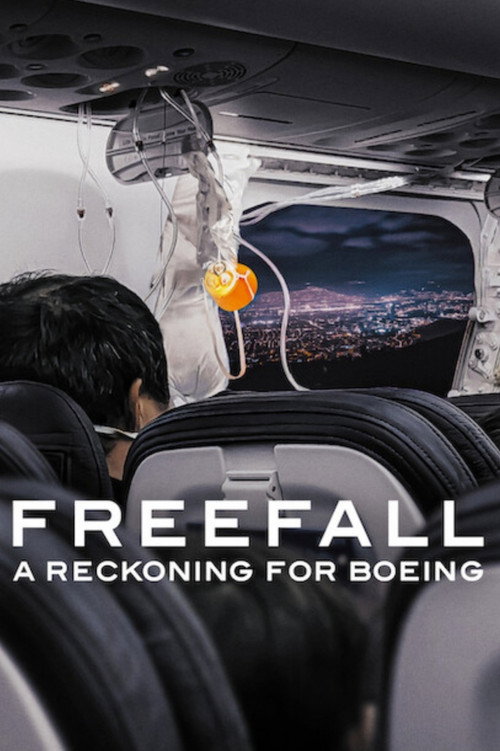
Freefall: A Reckoning for Boeing
Narrative tropes
You Can't Trust Anyone
highBoeing management concealed known defects behind a trustworthy corporate face while workers and regulators believed the company was operating in good faith. Whistleblowers discovered the company they worked for was actively suppressing their concerns. The 'culture of fear' and John Barnett's suspicious death validate paranoia as justified. The institution trusted by the public was secretly compromised.
About this trope: Trusted allies, institutions, or authority figures are secretly working against the protagonist. Paranoia is justified because betrayal is real and pervasive.
Cultural messages
The System Is Rigged
highBoeing and the FAA/OSHA are institutions that should protect workers and passengers but are shown as corrupt or complicit. Whistleblowers filed internal complaints and reports to regulators with 'little effect.' Workers who raised alarms faced termination and retaliation — opposed by their own organization. Working within the system repeatedly failed. Justice only arrived through external exposure (documentary, depositions, media), not official channels.
About this message: Institutions meant to protect people — governments, corporations, law enforcement, the justice system — are depicted as corrupt, incompetent, or actively harmful. Heroes must work outside official channels.
Power Always Corrupts
mediumBoeing is depicted as having once had a principled, engineering-driven identity that was gradually corrupted by financial power and shareholder pressure. Whistleblowers — the 'other characters' — noticed the change and warned about it for years. Management rationalized safety compromises as production necessities. The corporation's original mission was visibly warped by the corrupting pull of profit.
About this message: Gaining power — political, magical, technological, or financial — inevitably warps even the noblest people. Power is an inherently corrupting force.
The Rich Are the Problem
mediumThe film explicitly names shareholder priorities and financial pressures as the force that overrode engineering safety culture. Workers and whistleblowers are portrayed as morally righteous victims while executives and shareholders are indifferent to harm. The system is shown to be structured to protect financial returns at the cost of worker and passenger lives.
About this message: Wealthy elites are portrayed as exploitative, callous, or predatory, and extreme inequality is the central injustice driving the story.
Movies that share these tropes
Full plot (spoilers)
Freefall: A Reckoning for Boeing is a 93-minute documentary directed and produced by Rory Kennedy, serving as a sequel to her 2022 film Downfall: The Case Against Boeing (which examined the fatal 737 MAX crashes of Lion Air Flight 610 and Ethiopian Airlines Flight 302). The film opens in the aftermath of the highly publicized death of Boeing whistleblower John Barnett, who was found dead in his vehicle in March 2024 while in the middle of giving deposition testimony for a whistleblower lawsuit against the company. His death — ruled a self-inflicted gunshot wound but widely scrutinized — becomes the entry point for a broader renewed investigation into Boeing's corporate culture and safety practices. Building on the foundation of the first film, Freefall brings forward a new wave of insider voices: dozens of current and former Boeing employees who allege that safety concerns were systematically suppressed in favor of maintaining production speed. Whistleblowers describe a pervasive 'culture of fear' inside the company, in which workers who flagged defects or raised alarms were subjected to retaliation including job termination, community ostracism, and physical threats. They filed complaints with the FAA and OSHA, often to little effect. A central thread involves the Boeing 787 Dreamliner manufacturing program, where multiple whistleblowers allege that scrap and deteriorated parts were knowingly reincorporated into aircraft assembly for years — components that should have been discarded but were recycled into planes to meet production quotas. The film then connects these long-standing internal warnings to real-world consequences, most notably the Alaska Airlines Flight 1282 incident of January 5, 2024, in which a door plug blew out of a 737 MAX 9 at altitude shortly after takeoff from Portland, Oregon, leaving a gaping hole in the fuselage. Whistleblowers featured in the film state they were not surprised by the incident, having raised structurally similar concerns for years. Through new interviews and investigative reporting, the documentary argues that Boeing's decades-long shift away from an engineering-driven ethos toward one dominated by financial pressures and shareholder priorities created the conditions for repeated safety failures. The film portrays a corporation that, even after the catastrophic 737 MAX crashes and the resulting regulatory scrutiny, continued to resist full accountability. Coverage is sparse given the film releases the day after this summary was compiled; the above synthesis reflects all available pre-release sourcing.
Sources: Wikipedia, tvshowexplain.com, DC/DOX Film Festival synopsis, web search aggregation (IMDb, Netflix, Deadline)