Movie
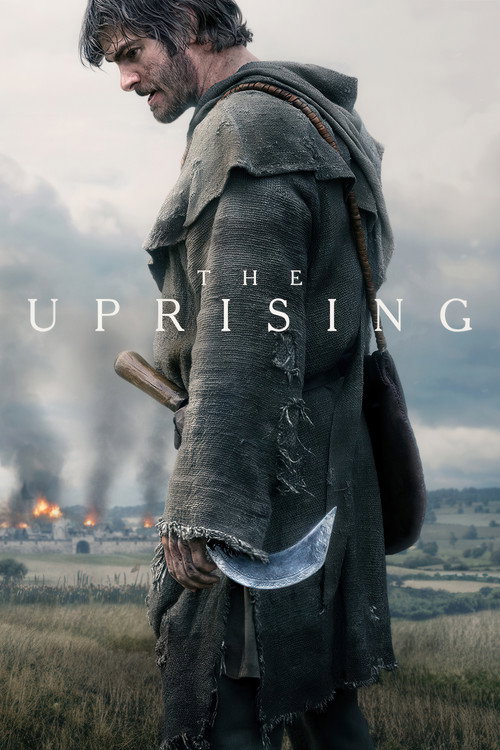
The Uprising
Narrative tropes
Rebels vs. The Empire
highThe entire film dramatizes outmatched peasants rising against the crown and its oligarchic council. The rebels are framed as morally righteous (John Ball's egalitarian preaching, the ploughman's protective act). The regime is depicted as cruel and dehumanizing (invasive tax examinations, death taxes on plague victims, the calculated massacre). All five signals fire: oppressive institution, small band vs. overwhelming power, heroic rebels, dehumanizing regime, and meaningful resistance (ploughman survives to become Robin Hood).
About this trope: A small outmatched group rises up against a massive oppressive regime or institutional power. The rebellion is framed as morally righteous.
You Can't Trust Anyone
highThe rebels' central belief — that the king is a hostage to corrupt advisors rather than their enemy — is the key deception the plot shatters. The king performs sympathy and grants demands, then secretly orders murder and a deadly ambush. The trusted authority figure was the enemy hiding in plain sight. The rebels' paranoia about the council was correct in spirit but misdirected; trusting the king himself was their fatal mistake, validating the trope's core: betrayal is real and pervasive.
About this trope: Trusted allies, institutions, or authority figures are secretly working against the protagonist. Paranoia is justified because betrayal is real and pervasive.
Cultural messages
The Rich Are the Problem
highClass inequality is the engine of the plot. The oligarchic council devises a poll tax explicitly targeting the kingdom's poorest subjects; collectors even demand death taxes on plague victims. The ploughman toils in grinding poverty while elites scheme. Poor characters (ploughman, Wat Tyler, John Ball) are the moral center. The system is shown as structurally designed to extract from the poor for elite benefit, and revolution is the story's central action.
About this message: Wealthy elites are portrayed as exploitative, callous, or predatory, and extreme inequality is the central injustice driving the story.
The System Is Rigged
highThe crown — the institution ostensibly providing justice — is revealed as the true oppressor. The king's concession at the meeting is a calculated betrayal: he grants demands to draw the rebels in, then orders Wat Tyler's murder and an ambush. Working within the system (petitioning the king) fails catastrophically and triggers a massacre. True resistance only continues outside institutional channels — the ploughman escaping to operate as a masked outlaw in Sherwood Forest.
About this message: Institutions meant to protect people — governments, corporations, law enforcement, the justice system — are depicted as corrupt, incompetent, or actively harmful. Heroes must work outside official channels.
Movies that share these tropes


Full plot (spoilers)
Set in plague-ravaged 14th-century England, The Uprising dramatizes the 1381 Peasants' Revolt. The story opens on the fenlands of east England, where a solitary ploughman — haunted by the loss of his family to plague — toils in grinding poverty. The young King Richard II, troubled and malleable, is dominated by an oligarchic council that devises a brutal new poll tax to be levied on the kingdom's poorest subjects. Tax collectors are dispatched across the countryside with soldiers in tow, conducting invasive examinations of young women and demanding death taxes even on family members who died years earlier from the Black Death. When the ploughman intervenes in a violent assault by the tax collectors, he kills one of the soldiers, lighting a fuse of long-simmering discontent. The act sets off uprisings across England; within days, tens of thousands of commoners are marching on London. The rebellion coalesces around three leaders: the ploughman himself, Wat Tyler (a battle-hardened former soldier), and John Ball (a priest preaching radical egalitarian ideals). The rebels believe the king is being held hostage by corrupt advisors rather than being himself the source of their oppression, and they march demanding justice and the removal of the crown's evil councillors. The king agrees to meet them and appears to grant their demands — offering self-determination and clemency — even encouraging the rebels to seek justice against his council members, several of whom are subsequently beheaded by the crowd. This apparent concession is a calculated betrayal. The king secretly orders Wat Tyler murdered, then leads the remaining rebel army into a deadly ambush, resulting in a mass slaughter of the insurgents. The ploughman escapes the trap. One year later he resurfaces as a masked archer operating in Sherwood Forest, issuing threats against the king and vowing to continue fighting for justice — a final scene that frames the entire story as the origin legend behind Robin Hood.
Sources: Wikipedia, Rotten Tomatoes, Web search (World of Reel, SSBCrack News)