Movie
Give it a Shot
Narrative tropes
Humans Never Give Up
mediumDr. Guha at 83 continuing after decades of stalled progress is the clearest signal of refusing to quit when surrender would be rational. The film chronicles ongoing struggle with no completed product—making the emotional arc about the decision to keep going rather than any victory. Hope persisting despite decades of institutional resistance and failed translation from research to approved method fits the pattern of resilience as the story's core theme.
About this trope: Facing impossible odds, humans endure, adapt, and find reasons to keep going. Resilience and refusal to surrender is humanity's defining and most admirable trait.
Cultural messages
The System Is Rigged
mediumPharmaceutical and medical institutions are explicitly examined for historically underinvesting in male contraception—framing them as willfully negligent rather than merely slow. Regulatory and institutional obstacles have 'long stalled' innovation, demonstrating that working within mainstream channels fails. The researchers (Guha, Lissner, Fox, Eisenfrats) operate as independent actors outside big-pharma pipelines, pursuing their own development pathways because the system has not delivered.
About this message: Institutions meant to protect people — governments, corporations, law enforcement, the justice system — are depicted as corrupt, incompetent, or actively harmful. Heroes must work outside official channels.
Movies that share these tropes






Full plot (spoilers)
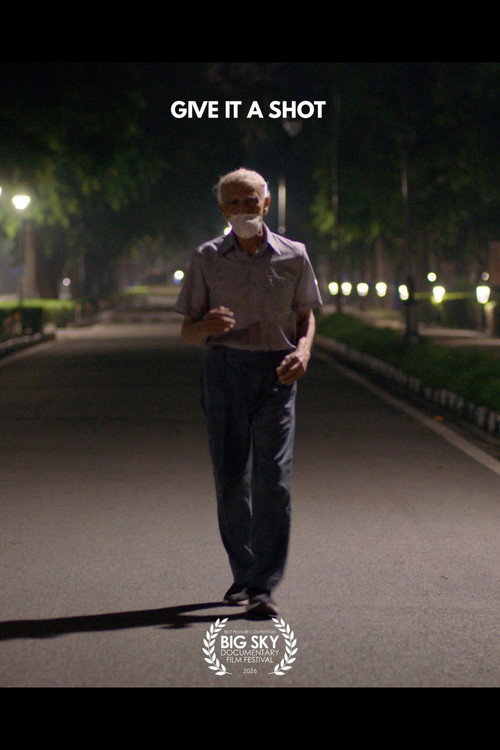
Give It a Shot (2026) is a 90-minute feature documentary directed by Vaishali Sinha that follows a parallel, transnational effort to develop the first reversible male contraceptive since the modern condom was invented some 200 years ago. The film weaves together two primary storylines: one centered on 83-year-old Indian researcher Dr. Sujoy Guha, who has spent decades working on an injectable contraceptive approach in India, and another tracking a California-based team led by Elaine Lissner and L.R. Fox, along with Virginia-based researcher Kevin Eisenfrats, who are pursuing their own development pathways in the United States. Shot across Asia and the northeastern and southern United States, the documentary is framed as an intimate, character-driven story about researchers navigating the scientific, regulatory, and social obstacles that have long stalled male contraceptive innovation. A recurring thread is the stark gender disparity in contraceptive options—men have roughly three choices (condom, vasectomy, withdrawal) while women have access to approximately fifteen—and the film examines why pharmaceutical and medical institutions have historically underinvested in male methods. Beyond the lab and clinical-trial footage, the documentary explores the broader social stakes: how a safe, effective, reversible male contraceptive could redistribute the burden of family planning and meaningfully advance gender equity worldwide. The tone is described as funny, moving, and ultimately urgent. The film does not appear to document a completed product launch; rather, it chronicles the ongoing struggle to translate decades of promising research into an approved, commercially available method.
Sources: giveitashotfilm.com (official site), itvs.org, Variety (search result excerpt), themovieblog.com (search result excerpt), scijust.ucsc.edu