Movie
Winter of the Crow
Narrative tropes
Big Brother Is Watching
highThe entire plot is built around the Polish martial law apparatus (the 'Crows' secret police) as a pervasive surveillance and control system. All three core elements are present: (1) the Crows constitute a state monitoring/enforcement apparatus, (2) it is used explicitly for political control — rounding up dissidents, not protecting citizens, (3) Joan must evade them throughout to act freely. All five signals fire: the state monitors pervasively under martial law; Joan becomes a tracked target after photographing violence; security-vs-freedom tension is the film's implicit spine; the surveillance apparatus is itself the primary threat (not any external danger); and Joan's goal is to expose the system by smuggling photographic evidence out of the country.
About this trope: Surveillance technology is used by those in power to control, manipulate, or oppress people. The story presents a tension between security and freedom, concluding that surveillance is more dangerous than the threats it claims to prevent.
Rebels vs. The Empire
highClassic rebels-vs-empire structure mapped onto 1981 Poland. Power imbalance is extreme: Solidarity activists (Alina, murdered student) vs. the Polish military government with tanks and secret police. The resistance is unambiguously sympathetic — Alina is a heroic idealist 'risking everything against systemic oppression.' The regime is shown as cruel and dehumanizing (murder of a student activist, tanks replacing taxis, citizens treated as criminals). Joan's successful smuggling of photographic evidence constitutes a meaningful challenge to the regime. All five signals fire.
About this trope: A small outmatched group rises up against a massive oppressive regime or institutional power. The rebellion is framed as morally righteous.
Humans Never Give Up
mediumJoan's personal arc is one of survival and perseverance against objectively hopeless odds: stranded without papers, without allies, hunted by secret police, under sealed borders and martial law. All three core elements are present. Signals: she refuses to surrender her evidence when doing so would be the rational self-protective choice; survival against impossible odds is the central dramatic engine; and her arc culminates in being 'forced to take a stand' — the emotional payoff framed as heroic resilience rather than tactical victory.
About this trope: Facing impossible odds, humans endure, adapt, and find reasons to keep going. Resilience and refusal to surrender is humanity's defining and most admirable trait.
Cultural messages
The System Is Rigged
mediumThe British Embassy, which should be Joan's institutional protector as a British citizen abroad, is compromised by 'an ambassador of uncertain loyalties.' She cannot rely on official channels and must instead negotiate carefully while smuggling evidence herself — working outside the sanctioned institutional path. Signals: the ambassador is an authority figure of suspect allegiance (willfully negligent or worse), and true resolution requires Joan to act outside institutional rules by personally smuggling the evidence rather than receiving official embassy assistance.
About this message: Institutions meant to protect people — governments, corporations, law enforcement, the justice system — are depicted as corrupt, incompetent, or actively harmful. Heroes must work outside official channels.
Movies that share these tropes






Full plot (spoilers)
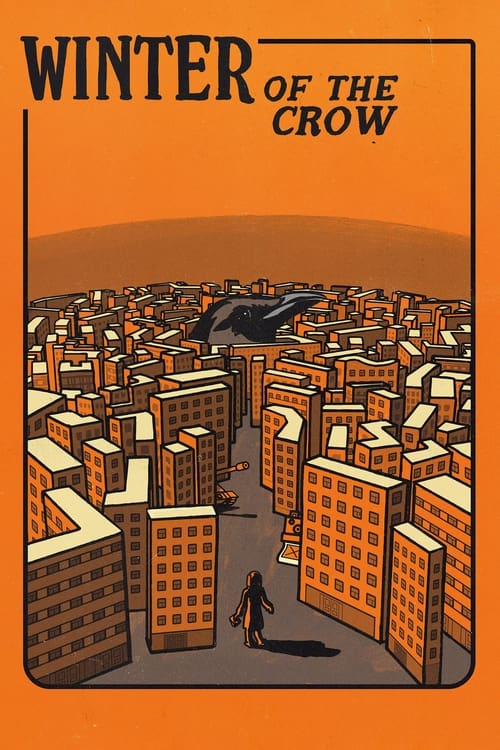
Warsaw, December 13, 1981. British psychiatry professor Joan Andrews has traveled to Poland to present a paper at an academic conference, despite warnings about the country's oppressive communist grip. As a Western woman in her field, she encounters skepticism from her Polish colleagues. Her local handler, Alina, a young woman who is secretly a Solidarity activist, escorts her through the city. When the conference is disrupted by street protests, Joan is moved to a safe location for the night. Overnight, the Polish military declares martial law, shutting down the country: tanks replace taxis in the streets, borders are sealed, and citizens are treated as criminals. The secret police—known as the 'Crows'—begin rounding up dissidents. Joan witnesses the murder of a young student activist by the Crows and captures evidence of the violence and the military crackdown on her Polaroid camera. Her photographs of tanks and dead activists make her an immediate target. Alina, exposed as a Solidarity member, is forced to go into hiding, leaving Joan stranded without papers and without allies. Joan is thrust into a Kafkaesque, nearly dreamlike journey through Warsaw's revolutionary underground, navigating the maze-like streets of Soviet-era Poland as she attempts to evade the secret police. The film traces a generational parallel between the two women: Joan is a pragmatic career-builder accustomed to being in control, while Alina is a young idealist risking everything against systemic oppression. Their contrasting outlooks form the film's emotional core. Joan ultimately makes her way to the British Embassy, where she must negotiate with an ambassador of uncertain loyalties, and attempts to smuggle her photographic evidence of government repression out of the country. Stripped of her professional authority and comfort, Joan is forced to confront life on the other side of the Iron Curtain and, ultimately, to take a stand.
Sources: Wikipedia, IMDb (search metadata), The Film Verdict, web search snippets (IMDb plot summary page)