Movie
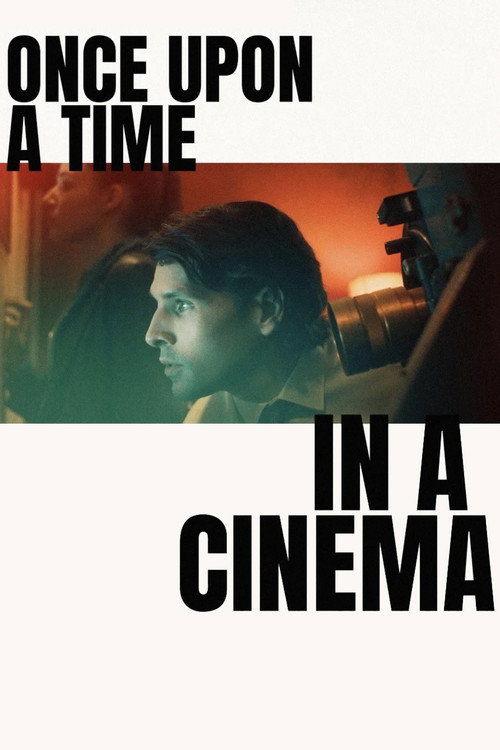
Once Upon a Time in a Cinema
Cultural messages
The Old Ways Were Better
mediumThe small rural Irish picture house represents traditional communal life, depicted warmly as an irreplaceable gathering place. VHS is the explicit antagonist force — modernization framed as existential loss rather than progress. The chaos-filled night paradoxically reaffirms the cinema's social power over individualized home viewing, and the film is explicitly constructed as a love letter to the Irish local-cinema tradition. Signals: rural/traditional setting idealized vs. cold modern alternative; modernization portrayed as loss; the communal experience validates itself against the technological replacement.
About this message: Traditional, ancestral, rural, or pre-modern life is portrayed as inherently better than modern alternatives. Progress is corruption, not improvement. The past is idealized as a golden age.
Movies that share these tropes
Full plot (spoilers)
Set in rural Ireland in 1984, Once Upon a Time in a Cinema unfolds in real time over the course of a single Friday night at a small provincial movie theatre owned by the beleaguered Earl Clancy (Colin Morgan). The film runs concurrently with the screening of the 1983 film Breathless, starring Richard Gere, which is playing to a packed house inside the cinema. As the audience watches the film-within-the-film, Earl and his staff must contend with a mounting cascade of disasters: burst pipes, a rodent infestation, unruly and disruptive customers, malfunctioning aging equipment, an inebriated projectionist, and crushing financial pressure. Looming over everything is the existential threat posed by the Video Home System — the VHS tape machine — whose rise threatens to make Earl's beloved picture house obsolete. The ensemble cast includes Gerald Clancy, Lyla, Mrs. Healy, and Harry Conway alongside Earl, suggesting a mix of family, staff, and community members caught up in the chaos. Despite — or perhaps because of — the relentless string of catastrophes, the night paradoxically becomes Earl's crowning moment of glory: the shared ordeal unites the community and reaffirms the irreplaceable social power of the communal cinema experience. The film was directed by David Gleeson, whose father held the longest recorded career in Irish cinema history; the story functions as a love letter to the uniquely Irish tradition of the local picture house as a gathering place. Note: sources do not detail the specific resolution of individual plot threads or the precise mechanism by which the community unification occurs.
Sources: Wikipedia, IMDb (search result snippet), The Film Catalogue, Cinema Sight, Rotten Tomatoes