Movie
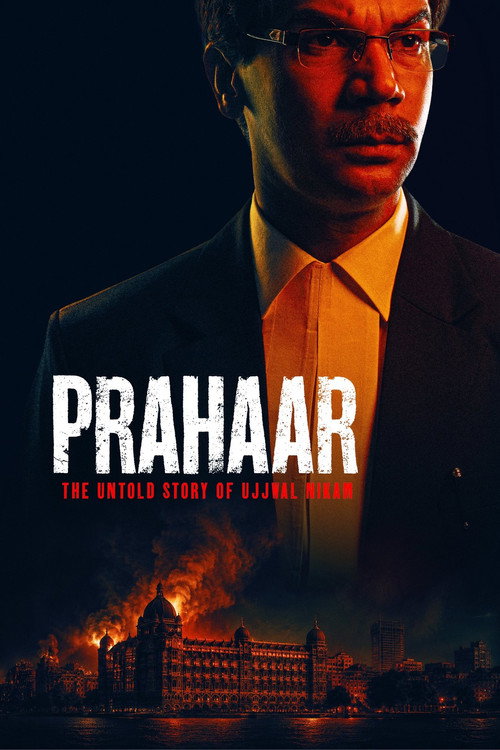
Prahaar: The Untold Story of Ujjwal Nikam
Narrative tropes
One Hero Changes Everything
mediumThe prosecution of India's most scrutinized terrorism trial is framed as Nikam's personal achievement: the film is titled around him, his 'strong track record' is the decisive factor, and the resolution is his 'legacy as the prosecutor who successfully brought Kasab to justice.' The prosecution succeeds through his individual skill and obsessive effort; the collective legal apparatus is functional only because he leads it.
About this trope: One exceptional individual matters more than institutions or collective action. Problems affecting millions are solved by a single remarkable person. Everyone else is passive.
Cultural messages
Power Means Duty
mediumNikam is an exceptionally skilled prosecutor whose abilities carry an implicit national obligation. He explicitly neglects his wife Jyoti and son Aniket for years ('no time for family matters while a case of national importance hangs in the balance'), directly sacrificing personal happiness for the greater good. The film closes by acknowledging the personal sacrifices his achievement required, and his entire career — 1993 bombings through the Kasab trial — is defined by duty rather than personal fulfillment.
About this message: Those gifted with extraordinary abilities, wealth, or status have a moral obligation to use them for others — and the weight of that duty can be crushing. Privilege creates obligation.
Movies that share these tropes






Full plot (spoilers)
Prahaar: The Untold Story of Ujjwal Nikam is a legal drama based on the real prosecution of Ajmal Kasab, the only terrorist captured alive during the November 2008 26/11 Mumbai attacks. The film follows senior public prosecutor Ujjwal Nikam, known for his short temper and strong track record, as he leads the state's case in what becomes one of the most scrutinized criminal trials in Indian history. Kasab was photographed conducting attacks at Chhatrapati Shivaji Maharaj Terminus, where dozens of commuters were killed, but his defence lawyer Kazmi employs every available legal stratagem to argue that his client was framed by the Mumbai police. Kasab himself plays the role of an innocent victim, claiming among other things a fondness for Bollywood, seeking to generate sympathy and reasonable doubt. A Pakistani government prosecutor, Chaudhary Zulfiqar Ali, also enters the proceedings with the stated aim of disproving Pakistan's direct involvement. While Nikam works obsessively to construct an airtight prosecution, he neglects his wife Jyoti and their son Aniket, insisting he has no time for family matters while a case of national importance hangs in the balance. The narrative is grounded by a survivor named Komal, whose testimony about the human cost of the attacks provides an emotional counterweight to the courtroom maneuvering. The film frames a central tension between public fury demanding swift retribution and the procedural demands of a justice system that must give even a confessed terrorist due process. The trial stretches over four years; after exhausting all appeals, Kasab is executed in 2012 at the age of 25. The story also touches briefly on Nikam's earlier work on the 1993 Bombay bombings case, situating his Kasab prosecution within a career defined by high-stakes terrorism cases. The film ends with Nikam's conviction secured and his legacy as the prosecutor who successfully brought Kasab to justice, while acknowledging the personal sacrifices that achievement required.
Sources: Wikipedia, Scroll.in review, AI Wrapper, Web search aggregation