Movie
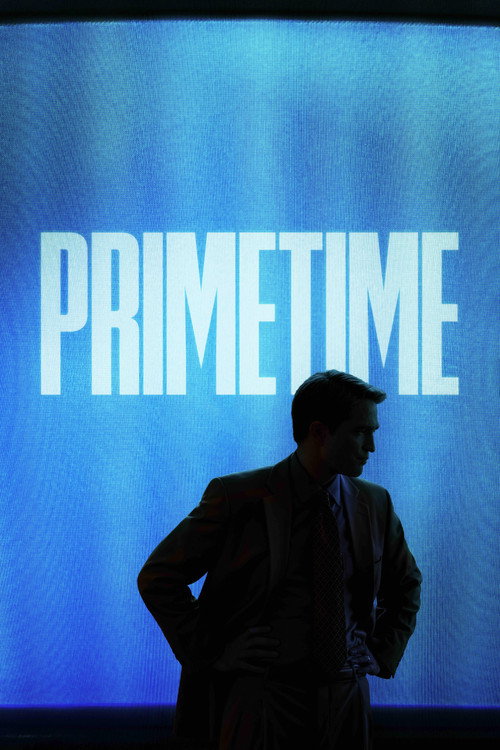
Primetime
Narrative tropes
Good Intentions, Terrible Results
highThe show's stated purpose — catching child predators — is unimpeachably sympathetic, satisfying the 'genuinely good intentions' requirement. Yet the plan produces monstrous outcomes: a man's suicide, all 24 cases dropped because the media-law enforcement fusion tainted the evidence, and the show's cancellation. The film frames this explicitly as a cautionary arc. Signals hit: (1) goals are reasonable and even admirable; (2) 'Decoy Dan' and the entrapment framing put the ends-justify-means debate at the center of the narrative; (3) the home confrontation of Conradt — a tactical team plus cameras — is an atrocity rationalized as necessary spectacle; (4) Hansen's internal logic (ratings + predator-catching) is consistent but leads to a result that destroys the very justice it claimed to serve.
About this trope: A villain — or sometimes a hero — genuinely believes they are doing the right thing, but their well-meaning plan leads to monstrous outcomes. The scariest antagonists think they're saving the world.
Cultural messages
Power Always Corrupts
mediumHansen is explicitly described as 'a serious journalist who has gradually become a celebrity personality' — a clear idealist-to-compromised arc. All three core elements are present: he acquires significant public/institutional power through the show's fame; that power changes him for the worse as 'the lure of ratings' reshapes a criminal investigation into entertainment; and the progression is visible and causal. Signals hit: (1) good intentions corrupted gradually; (2) rationalizes increasingly extreme actions — chasing ever-higher-profile targets and mounting the largest sting yet; (3) the celebrity platform itself is the corrupting object, tempting and transforming its holder.
About this message: Gaining power — political, magical, technological, or financial — inevitably warps even the noblest people. Power is an inherently corrupting force.
Movies that share these tropes





Full plot (spoilers)
Set in 2006 at the height of To Catch a Predator's popularity, Primetime follows NBC Dateline host Chris Hansen as he pushes to transform his predator-catching format into an even bigger television spectacle. Driven by ambition and a hunger for greater national recognition, Hansen—portrayed as a serious journalist who has gradually become a celebrity personality—chases increasingly high-profile targets, allowing commercial pressures and the lure of ratings to reshape what began as a criminal investigation into mass entertainment. A key supporting figure is 'Decoy Dan' (Skyler Gisondo), a composite character representing the adult actors hired to pose as minors in the sting houses; through him the film explores the uneasy line between investigation and performance, journalism and entrapment. The narrative builds toward the November 2006 Murphy, Texas sting operation—the largest the show has mounted—in which one target, Bill Conradt Jr., an assistant district attorney, had engaged in sexually charged online conversations with a decoy posing as a 13-year-old boy. Rather than appearing at the sting house, Conradt is confronted at his home in Terrell, Texas, by both a police tactical team and the production crew; he fatally shoots himself as the team enters. The incident triggers immediate fallout: prosecutors eventually drop charges against all 24 men arrested in the Murphy sting, ruling that the intermingling of media production and law enforcement had tainted the evidence and made the cases unprosecutable. The film ends in the shadow of the show's cancellation, using these events as a dark meditation on how the pursuit of television history corrupted both the investigation and the investigator. The screenplay is deliberately stylized and subjective rather than a conventional biopic, drawing heavily on Luke Dittrich's 2007 Esquire article 'Tonight on Dateline, This Man Will Die.'
Sources: Wikipedia, Sunday Guardian Live, Complex, Click2Houston / AP