Movie
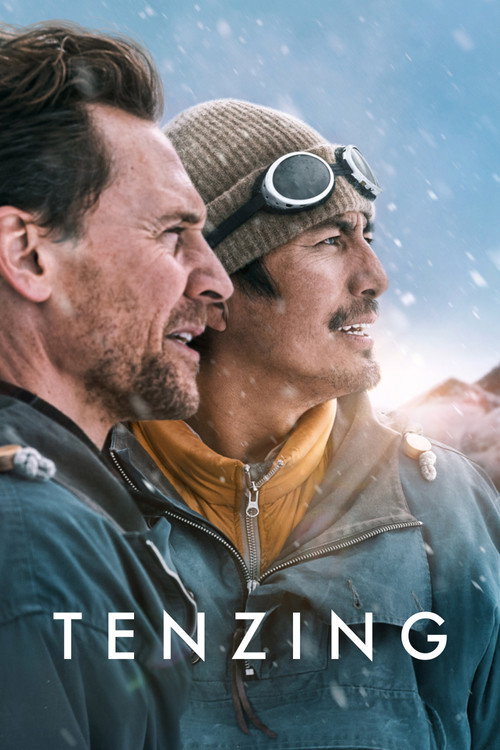
Tenzing
Narrative tropes
Humans Never Give Up
mediumTenzing rises from a yak herder's son, through colonial class hierarchies that deny him full expedition membership, through the loss of his wife, across decades of guiding European climbers—and never abandons his dream. His refusal to accept the diminished role assigned to Sherpas is the emotional spine of the film. The summit is framed as the payoff of lifelong, unbroken determination against steep systemic and physical odds, with the non-linear structure emphasizing the decades-long arc of endurance rather than the single moment of victory.
About this trope: Facing impossible odds, humans endure, adapt, and find reasons to keep going. Resilience and refusal to surrender is humanity's defining and most admirable trait.
Cultural messages
Nature Knows Best
highThe film's central contrast is between Tenzing's sacred, reverent relationship with Chomolungma ('Mother Goddess of the World') and the Western imperial impulse to 'conquer' Everest as a geopolitical prize. Tenzing—the indigenous, nature-connected figure—is portrayed as spiritually wiser and more authentic than the British colonial establishment. High on the mountain, 'empire and rank become meaningless,' with the natural setting functioning as the ultimate moral arbiter. Chomolungma is tonally idealized throughout as a living presence, not a trophy.
About this message: The natural world, indigenous peoples, or pre-industrial life is portrayed as inherently wise, pure, morally superior, or spiritually richer than modern civilization. Nature is a source of truth that technology has replaced.
Movies that share these tropes





Full plot (spoilers)
Tenzing (2026) is a biographical drama directed by Jennifer Peedom, told through a non-linear narrative across three timelines. In the 1920s, young Tenzing—son of a Tibetan yak herder—stands in reverence before Chomolungma (the Tibetan name for Everest, meaning 'Mother Goddess of the World') and encounters the legendary George Mallory's foreign climbing expedition, an experience that plants in him a lifelong dream of reaching the summit. At some point during his youth he is left at a monastery, but his ambition endures. As a young man he elopes with a woman named Dawa, and the two relocate to Darjeeling where he can pursue a livelihood guiding European mountaineering expeditions as a Sherpa, building the skills and reputation that will eventually carry him toward the summit. The main storyline is set in 1953. By this time Tenzing is a widowed father of two daughters and the most accomplished Sherpa alive. He navigates the cultural tensions and class hierarchies of a British expedition led by the aristocratic Colonel John Hunt, who harbors prejudices against both Sherpas and colonial outsiders. Supported by expedition secretary Jill Henderson, Tenzing fights to be recognized not merely as a porter but as a full climbing member. He forms a deepening friendship with New Zealand climber Edmund Hillary—another 'outsider' whom the British establishment regards with similar condescension. The film draws a sharp contrast between the Western impulse to 'conquer' Everest as a geopolitical prize and Tenzing's sacred, personal relationship with Chomolungma. High on the mountain, where empire and rank become meaningless, the two men push past the final obstacles together. They stand on the summit as the first confirmed humans to do so—an achievement claimed, with some irony, for Queen and Country, despite neither man being British.
Sources: Wikipedia (production details only, no plot section), insessionfilm.com (TIFF 2026 review), thatshelf.com (TIFF 2026 review), web search snippets (Apple TV Press, Fandango, Movie Insider)