Movie
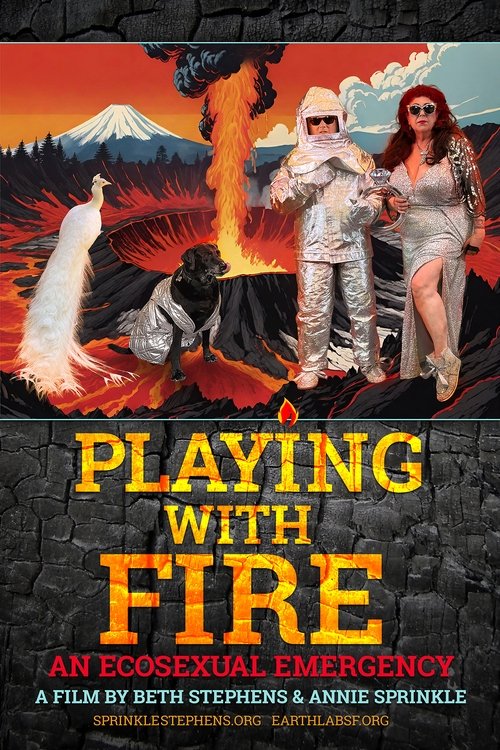
Playing with Fire: An Ecosexual Emergency
Narrative tropes
Nature Fights Back
highHuman-caused climate crisis is explicitly named as the driver of worsening wildfires, establishing the causal link between environmental harm and natural catastrophe. The CZU Lightning Complex fire is the central destructive event that drives the entire narrative. The Indigenous scholar and filmmakers explicitly connect climate change to the disaster. The resolution — the Wedding to Fire and the ecosexual call to action — centers on respecting and re-embracing nature as the necessary response.
About this trope: Humanity's exploitation or destruction of the environment triggers catastrophic consequences — nature retaliates through disasters, plagues, animal attacks, or ecological collapse, as if the planet itself is punishing human arrogance.
Humans Never Give Up
mediumFaced with catastrophic wildfire evacuation and worsening climate crisis, the filmmakers explicitly reject passive victimhood and instead organize a community to bear witness and co-create meaning. The film's culminating act — the Wedding to Fire — is framed as a 'defiant, loving call to action,' positioning resilient refusal to despair as the moral core. Hope and continued engagement persist despite the objectively worsening climate situation, and the emotional climax is the decision to keep going rather than any final victory.
About this trope: Facing impossible odds, humans endure, adapt, and find reasons to keep going. Resilience and refusal to surrender is humanity's defining and most admirable trait.
Cultural messages
Nature Knows Best
highThe ecosexual framework treats Earth as a lover and environmental stewardship as an act of love, positioning nature as spiritually superior to modern civilization. An Indigenous scholar provides traditional ecological knowledge, presented as meaningful wisdom about fire. The Boulder Creek redwood forest is idealized as a 'sanctuary.' Healing and meaning-making flow entirely through reconnecting with the natural world. The ceremonial Wedding to Fire — not technology or policy — is the resolution, while human-caused climate crisis represents the unfavorable modern contrast.
About this message: The natural world, indigenous peoples, or pre-industrial life is portrayed as inherently wise, pure, morally superior, or spiritually richer than modern civilization. Nature is a source of truth that technology has replaced.
The Old Ways Were Better
mediumTraditional and pre-modern practices are prominently validated: an Indigenous scholar contextualizes fire through traditional ecological knowledge; a witch-therapist and ceremonial rituals (including the Wedding to Fire) are treated as legitimate and effective responses to crisis. Modern industrial civilization causing the climate crisis is the implicit unfavorable contrast. Traditional ceremonial knowledge provides meaning and healing where conventional crisis response cannot.
About this message: Traditional, ancestral, rural, or pre-modern life is portrayed as inherently better than modern alternatives. Progress is corruption, not improvement. The past is idealized as a golden age.
Movies that share these tropes



Full plot (spoilers)
Playing with Fire: An Ecosexual Emergency is a 2025 documentary—the third installment in artist-activists Beth Stephens and Annie Sprinkle's trilogy of queer environmentalist films. The film opens with the couple's forced evacuation from their redwood forest home in Boulder Creek, Northern California, during the 2020 CZU Lightning Complex fires, a catastrophic lightning-ignited firestorm that tears through their sanctuary. Rattled by loss and grief, Sprinkle and Stephens use their ecosexual activist framework—which imagines the Earth as a lover and environmental stewardship as an act of love—to process and respond to the disaster. Rather than depicting passive victimhood, the film follows the pair as they gather a diverse community of collaborators to bear witness and co-create meaning from the crisis. These include formerly incarcerated firefighters who speak to fire's intersection with social injustice, an Indigenous scholar who contextualizes fire within traditional ecological knowledge, fire artists, neighbors, a witch-therapist, a fire-play massage fetishist, and a fire tassel-twirling burlesque queen. The narrative is partly voiced through the perspective of Albert, Boulder Creek's mythical white peacock, who serves as a whimsical and magical guide through the story. Acclaimed performance artists Guillermo Gómez-Peña, Balitronica, and Guillermo Galindo also appear as collaborators in ceremonial sequences. The film weaves grief with humor, community care, and art, examining fire's dual nature as both destroyer and regenerative force. It culminates in a ceremonial Wedding to Fire—a queer communal ritual held on a riverbank in the redwoods—in which Stephens and Sprinkle symbolically marry the element of fire itself, transforming personal and ecological loss into a defiant, loving call to action in the face of worsening climate crisis.
Sources: IDA (documentary.org) article, Frameline film page, Web search aggregated results (IMDb, Tomorrow Theater, Art Academy of Cincinnati, Athens Film Festival, Kampnagel, UCSC Sprinkle-Stephens site)