Movie
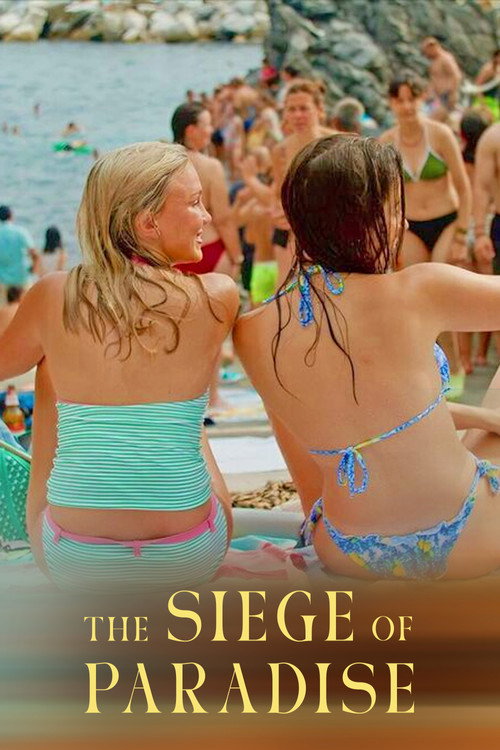
The Siege of Paradise
Cultural messages
The Old Ways Were Better
mediumThe film centers on traditional trades — terraced viticulture, artisanal fishing, an inherited family restaurant — depicted warmly against the corrosive backdrop of mass tourism, satisfying signal 1 (rural/traditional settings as warm and authentic). Bartolo, having once left Vernazza and returned to tend his vineyards, loosely satisfies signal 2 (a character who finds meaning by returning to traditional life). The fisherman Guido's ancient trade shrinking to fewer than seven practitioners and the mayor's warning that the town risks becoming 'Disneyland' explicitly frame modernization — here the tourist economy — as loss rather than progress, satisfying signal 5. All three core criteria are substantially met: traditional life is favored (criterion 1), mass tourism is the unfavorable modern contrast (criterion 2), and the documentary's entire structure implicitly validates preservation of the older ways even if the ending is tonally ambivalent (criterion 3).
About this message: Traditional, ancestral, rural, or pre-modern life is portrayed as inherently better than modern alternatives. Progress is corruption, not improvement. The past is idealized as a golden age.
Movies that share these tropes

Full plot (spoilers)
The Siege of Paradise is an 82-minute documentary directed by Irish filmmaker Gar O'Rourke, set in Cinque Terre on Italy's northern Riviera, a UNESCO World Heritage site where fewer than 3,000 to 4,000 year-round residents share their five clifftop villages with upwards of four million tourists every summer. Structured to feel like a single chaotic season compressed into one day, the film follows six subjects in parallel whose lives illuminate the full spectrum of overtourism's impact. Bartolo Lerici, a winemaker in Vernazza, tends steep terraced vineyards alongside his ailing wife Lise and represents the film's most nuanced voice: having once left and returned, he distinguishes between tourists who engage with the land and those who treat it purely as a backdrop, insisting 'Tourism is not the enemy; superficiality is.' Guido, a fisherman, witnesses his ancient trade dwindle to fewer than seven practitioners as the tourist economy reshapes the local waterfront. Carmelo Verduci, a restaurateur who inherited his family's kitchen from his mother, debates whether to pass it on to his 21-year-old daughter Giorgia—a decision tangled up in exhaustion from an ever-changing clientele and uncertainty about whether younger generations can afford to stay. Mayor Fabrizia Pecunia of Riomaggiore, elected on a platform of preserving the town's tranquility, confronts population decline as elderly residents die without successors, warning that Cinque Terre risks becoming 'something akin to Disneyland—a place built around, and preserved for, visitors.' Into this pressure-cooker arrive Grace Andrews and Izabel Stewart, two young Chicago-based lifestyle content creators who document every corner of the villages for their social media followers, embodying the very phenomenon their subjects are struggling to survive. The film uses their presence not as simple villainy but to probe complicity: locals have long courted the tourism economy, and the influencers themselves are eventually confronted with the downstream consequences of their posts. Blending dry comedy with genuine tenderness, the film asks whether a place of extraordinary beauty can survive its own popularity, landing on an ambivalent but humane answer. It received a Special Jury Mention at the 2026 Tribeca Film Festival.
Sources: Moveable Fest review, Modern Times Review, Tribeca Film Festival page, Web search (Cineuropa, Letterboxd, MUBI metadata)