Movie
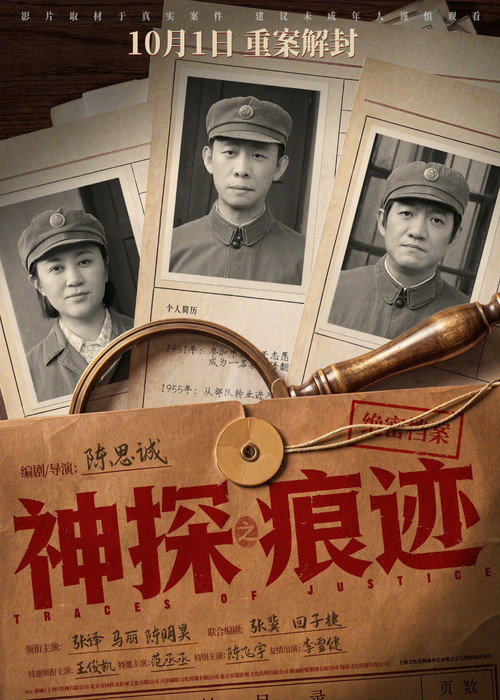
Traces of Justice
Narrative tropes
One Hero Changes Everything
highCui Xun is the singular exceptional figure who cracks cases 'that seem unsolvable to his contemporaries' across five decades and personally drives the modernization of China's forensic science. His individual skill is the decisive factor in every arc; his colleagues assist but cannot replace him. The film ends framing his lifetime as having 'helped transform China's approach to criminal investigation,' positioning one man's contribution above institutional or collective development.
About this trope: One exceptional individual matters more than institutions or collective action. Problems affecting millions are solved by a single remarkable person. Everyone else is passive.
Cultural messages
The Military Are Heroes
highThe film is an unambiguous tribute to Chinese public security professionals: a forensic specialist, pathologist, and detective are all portrayed as heroic, selfless, and morally righteous under the guiding principle of 'serving the people.' Cui's lifetime of service is honored as personal and institutional legacy. The criminals (bombers, serial killers) are presented as clearly evil, validating law enforcement's investigative mission. The career of Chinese public security is glamorized through the lens of forensic science's progression.
About this message: The military, intelligence agencies, or law enforcement are portrayed as fundamentally noble, heroic, and necessary. Service members are brave and selfless. Military force is justified and effective.
Movies that share these tropes




Full plot (spoilers)
Traces of Justice is a 2026 Chinese crime drama directed by Chen Sicheng, spanning roughly five decades of criminal investigation in China. The film is structured around four real criminal cases set across four distinct eras: 1971, 1983, 1998, and 2016. The narrative centers on Cui Xun, a trace-evidence specialist (played in youth by Zhang Yi and in old age by Li Xuejian), who is inspired by real-life forensic expert Cui Daozhi, nicknamed the 'Chinese Sherlock Holmes.' Working alongside forensic pathologist Huang Rende (Ma Li) and veteran detective Wang Weiguo (Chen Minghao), Cui Xun painstakingly analyzes physical evidence — bite marks, fragments, and other microscopic traces — to crack cases that seem unsolvable to his contemporaries. In the earliest episode, forensic science is still in its infancy in China and Cui must rely on instinct and rudimentary evidence analysis. As decades pass, the film shows him adapting to, and often driving, the modernization of investigative technique within China's public security system. Among the historical cases dramatized are the 1998 Wuhan bus bombing and a string of crimes linked to serial offender Gao Chengyong. Across all four arcs, Cui's guiding principle remains 'serving the people,' and his career is framed as a living testament to the development of New China — from early socialist-era policing through to contemporary forensic-science methodology. The film ends with Cui Xun in old age, his lifetime of service standing as both a personal legacy and an institutional one, having helped transform China's approach to criminal investigation. Specific scene-by-scene case resolutions are not yet available in English-language sources; the above is synthesized from promotional materials, trade reports, and distributor synopses.
Sources: TMDb overview, Wikipedia List of Chinese films of 2026, Wikidata, Variety box office report, CGTN press release, Far East Films trailer coverage, Letterboxd, The Arts Shelf (distributor synopsis), Trinity CineAsia